
Welcome to NETO

Log in to your account, or sign up in a minute.

Already registered?Existing clients
New here? Sign upChoose your track Employer Employee / Freelancer

Get in touch

Pick whatever works for you · we're here.

Info & policies

Everything about NETO · transparent and available

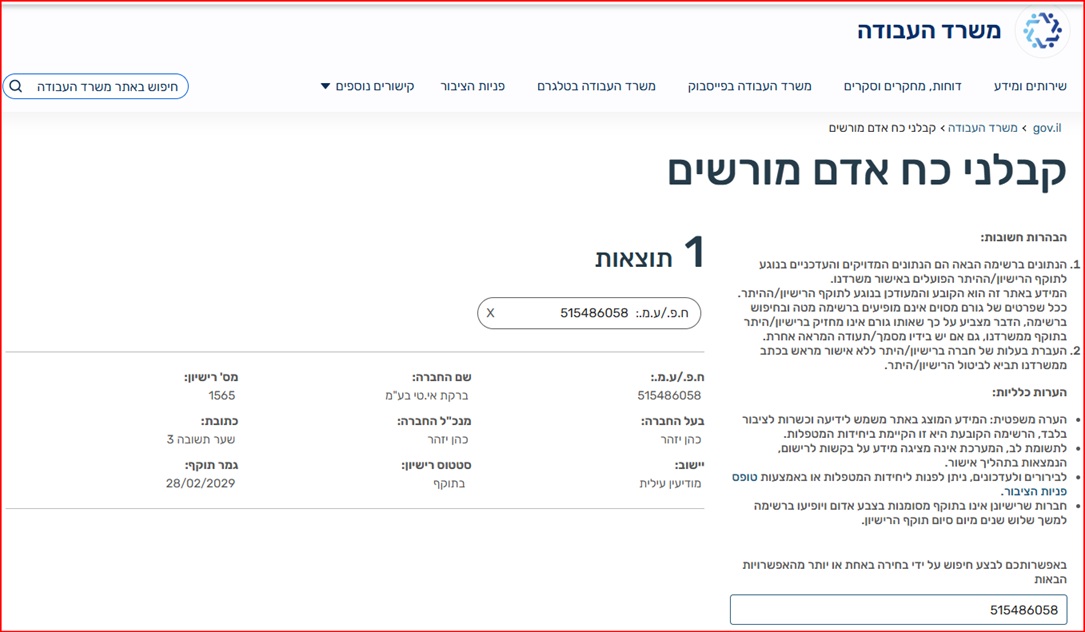
NETO · Bareket I.T. Ltd.
Reg. 515486058 · Licensed manpower contractor #1565
Office: Sha'arei Teshuva 31, Modi'in Illit
Tel +972-8-976-1874 · neto@neto.work

Open →

Book a demo

Pick a convenient time · we'll confirm by phone/email

Choose a day
Choose a time (11:30–15:30)

The Labor Market COVID ChangedRemote work, the freelance economy and flexible hiring stayed with us · and that's exactly what matters now

COVID was the turning point, not the whole story. What began under lockdown · remote work, hiring on demand and payment by invoice · became the new normal. NETO connects a worker who wants flexibility with a company that wants flexibility · so a foreign employer can hire Israeli talent without bureaucracy, at a fee of just 5%.

Licensed manpower companyNETO operates lawfully and issues a payslip Only a 5% feeTaken from the client invoice Remote and flexible workOn demand · even by the hour
AI check · the change that stayed in the labor marketCOVID accelerated the shift to remote work, to the freelance and gig economy and to flexible invoice-based hiring · NETO enables flexible, compliant work, with an invoice to the client and a payslip for the worker.
Gig & temporary work Labor market · IDI
AI summary · the labor market after COVIDClick to read the page summary

COVID was a turning point for Israel's labor market · but the meaningful change is what stayed afterwards. Remote and hybrid work took hold, the freelance and gig economy grew, and more workers and companies now choose flexible hiring by need and by output over a full permanent role. The tension the crisis exposed · an employer who needs a worker only in line with the pace of work, and a worker who wants to earn without opening a business · became a permanent need. NETO answers it: the employer orders a worker on demand and receives an invoice, the worker issues an invoice without opening a business file and receives a payslip, and NETO charges 5% of the invoice amount (before VAT). For a foreign company this means hiring Israeli talent flexibly · remotely, by the hour or by project · scaling up or down without a local entity.

  • A turning point · COVID accelerated trends that had already begun · they stayed.
  • Remote and hybrid work · became a permanent part of the labor market.
  • The freelance and gig economy · more work by output and by project.
  • Invoice-based hiring · an invoice to the client, a payslip to the worker · without opening a business.
  • 5% fee · taken from the invoice the client pays, before VAT.
  • The information is general only · not tax advice · the rules are set by the authorities.

In brief

The COVID crisis shook the labor market · but today it is clear that it mainly accelerated trends that were already in the air. Remote and hybrid work, the freelance and gig economy and a preference for flexibility over a full permanent role · all of these stayed and keep growing. At their core is a single tension: an employer who prefers to hire by need and by output, and a worker who wants to earn from several sources without opening a business. NETO closes the gap · the worker issues an invoice without a business file and receives a payslip, and the employer receives an invoice and pays only for the work performed.

  • The trend stayed · flexible, remote work became the new normal.
  • An invoice without a business · the worker issues an invoice and receives a payslip.
  • Hiring on demand · order a worker even by the hour · with no fixed cost.
  • Only a 5% fee · taken from the client invoice, before VAT.
The turning point

What happened during COVID · and the question left open

To understand today's labor market, it helps to go back to the moment things turned. COVID exposed a structural problem · and the answer to it is what grew into the way workers and companies operate now.

A sharp employment shock

At the peak of the first lockdown (April 2020) Israel had around a million unemployed, and at the height of the crisis some one and a half million workers lost their livelihood and were shifted onto unemployment pay and unpaid leave. Whole sectors of employment almost came to a halt · and the economy took a double hit.

The chicken-and-egg dilemma

The employer did not want to bring a worker back from a full-time role before there was steady work at full scale · and the worker did not want to give up unpaid-leave benefits for a few days of work. A standstill formed · a genuine need for part-time work that had no lawful, orderly tool.

Temporary work rose from the ground

People began offering themselves for deliveries and on-demand services, working part-time and looking for extra income. The need for flexible work, by output and by project, broke through from below · with no legal infrastructure to support it.

The figures above refer to the peak of the crisis in 2020 · for details see the labor market at the Israel Democracy Institute and the data of the Central Bureau of Statistics. The question that remained · how to connect a changing need for work with a flexible worker · is what shapes the labor market to this day.
What stayed

The trends that took hold · the labor market of after

Much of the world returned to routine · but the labor market did not return to the same point. These are the changes that began during the crisis, proved themselves, and stayed as a permanent part of how workers and companies operate.

Remote and hybrid work

What was seen as an emergency fix became the default for many · work-from-home days, distributed teams and engagement by output rather than by presence. For an independent worker this means you can work with clients across the country · without leaving home. For a foreign company it means access to Israeli talent from anywhere.

The freelance and gig economy

More and more work is done by project, by task and by output · not in a full permanent role. Workers build income from several sources at once, and companies draw on external specialists exactly when they need them.

Flexibility over permanence

After seeing how fast everything can change, companies prefer a flexible cost structure · matching their workforce to the pace of work, scaling up or down as needed. Workers, for their part, value the freedom to choose when, how much and for whom to work.

Invoice-based hiring

Asking for an invoice became a given · even with a single worker. A model in which the worker gives an invoice and the employer pays for the work performed allows flexible cooperation without the commitment of a permanent employer-employee relationship.

Supplementary and diverse income

Many salaried workers looked for and found extra income · alongside their job or instead of it. The need to diversify sources of income and depend less on a single employer did not vanish when the crisis ended · it only grew stronger.

A wish to do it lawfully

Alongside the flexibility came a stronger understanding that it is better to work in an orderly way · a proper invoice, deductions as required by law and preserved rights. The solutions that enable flexibility without going underground are the ones that stayed relevant.

Want to go deeper into the trends themselves? Read about gig and temporary work in Israel, about working from home and rights and about finding freelance work.

The solution

How NETO creates flexibility for the labor market

The tool missing during the crisis is exactly what NETO provides · a technology platform for flexible, compliant hiring. The employer orders a worker on demand, even for a few hours and even for remote work · and NETO handles all the bureaucracy on their behalf, much like outsourcing on demand. For a foreign company it is the simplest way to hire in Israel without setting up a local entity.

Register in a minute

A worker or an employer opens the NETO app and registers · with no complicated forms, no opening of a business and no commitment.

Order or offer work

The employer orders a worker on demand · by the hour, remotely or by project. The worker offers their services and agrees a rate · with no permanent employer-employee relationship.

NETO issues an invoice

The worker issues an invoice to whoever hired them · without opening a business file at the tax authority. The employer receives a proper invoice in NETO's name.

Payslip and payment

NETO deducts a 5% fee and the deductions required by law, transfers the money and issues the worker a payslip · rights are preserved and the worker stays an employee.

An example from the system · the worker asks for 40 NIS net per hour, and the system calculates the employer cost plus VAT and issues an invoice accordingly. All of the worker's social and pension rights are preserved · they simply gain from having worked lawfully. The fee is always 5% · taken from the invoice the client pays, before VAT.
A real-life example

Why this flexibility · was so badly missing

The following story, written during the crisis, illustrates exactly the gap that forms when there is no tool for flexible hiring · and why a solution like NETO would have closed it. It is relevant today every time you need a worker for a single event, a single shift or a short project.

The Cohen family bar mitzvah · the chef, the waiter and the photographer who passed on the work

The Cohen family wanted to celebrate a bar mitzvah within the restrictions, and booked catering, a waiter, a photographer and a small band for a meal in the park. Only the caterer had already let their chef go · orders had dropped and it was not worth keeping a permanent chef when there was not enough work.

The caterer could not issue the chef a payslip for a single day · because that would look like taking them back on as an employee. The chef did not want to lose their unpaid-leave benefits, but could barely live on them, so offered to work and be paid without a payslip. The caterer was wary of employing without a payslip, in case they were caught or the worker got injured · and also did not want to give up recognition of the expense.

In the end the caterer simply gave up the booking. The photographer, who had not yet opened a business file at the tax authority, was not sure there would be enough work to justify it · and thought it might be better to stay salaried and keep their entitlement to unemployment pay. They too passed on the work.

The takeaway · what drives the economy is the hope that there will be work tomorrow. When the future is unclear and the price of commitment is heavy, the employer hesitates and gives up · and the wheel stops turning. With a tool like NETO each of them could have issued an invoice, received a payslip and kept their rights · and the work would have gone ahead.

Comparison

Rigid hiring vs flexible hiring through NETO

The new labor market demands new tools. Here is the difference between the old rigid model and flexible hiring on demand · from the point of view of anyone who just wants the work to go ahead.

What matters in the new marketFull permanent roleWork with no arrangementFlexible hiring through NETO
Work by need and by output Rigid · full scope onlyFlexible but not lawful over time Flexible · even by the hour
Remote work and multiple clientsLimited to one employerPossible but unregulated Several clients in one place
Invoice to the clientNot relevant None · clients refuse A tax invoice-receipt
Worker status and rightsEmployee · full rightsUnregulated · exposed to risk Employee · payslip and contributions by law
Cost and commitment for the employerHigh fixed costLow but not lawful 5% of the invoice · per work done
Speed of startingA long hireImmediate but problematic Within minutes

Want to go deeper? Read about freelancing without opening a business, about an invoice without opening a business file and about salary payment by invoice.

Both sides

Flexibility that serves worker and company alike

The beauty of the new labor market is that flexibility is good for both sides · provided it is lawful and orderly. Here is how it looks from each side.

I'm a worker · I want to work flexibly

  • Issue an invoice to the client without opening a business file.
  • Receive a payslip · stay an employee with deductions and contributions by law.
  • Work remotely, by the hour or by project · for several clients in parallel.
  • Build extra income without hurting your rights and without bureaucracy.
Register free · for workers

I'm a company · I want to hire on demand

  • Order a worker on demand · even for a few hours and remotely.
  • Receive a proper invoice · with no permanent employer-employee relationship.
  • Pay for the work performed · with no needless fixed cost, and no local entity required.
  • Only a 5% fee · and the worker receives a payslip and rights by law.
Register free · for companies

Companies · read more about employer rights, about how to hire freelancers, about an employer of record in Israel and about hiring in Israel without a local entity. Workers · see freelancer rights and freelancer vs employee.

Questions and answers

Frequently asked questions · the flexible labor market

Are the labor-market changes from COVID still relevant?

Yes · more than ever. COVID mainly accelerated trends that had already begun · remote work, the freelance economy and a preference for flexibility. The crisis passed, but the way workers and companies operate changed for good · and the need for flexible, compliant hiring only grew.

I want to work flexibly · how do I issue an invoice without opening a business?

Through NETO you issue a tax invoice-receipt to the client without opening a business file. NETO issues the invoice in its own name, collects the money and passes it to you as a payslip · so you work lawfully, flexibly and remotely, without the bureaucracy of opening a business.

How much does NETO charge?

The fee is 5% of the invoice amount the client pays, before VAT. There is no setup fee and no fixed monthly charge · you pay only when you work and get paid.

I'm a company · can I hire a worker for just a few hours or for a project?

Yes. That is exactly the idea · you order a worker on demand, even for a few hours and even for remote work. You receive an invoice and pay for the work performed · with no permanent employer-employee relationship and no fixed cost, while the worker receives a payslip and rights by law.

Does the worker get a payslip or an invoice?

The client or employer receives an invoice, and the worker receives a payslip. NETO acts as a licensed manpower company, so the worker keeps employee status for tax and National Insurance purposes · with deductions and contributions as required by law, within the limits of the law.

Does this also suit remote work and supplementary income?

Absolutely. The model suits remote work, project-based work and extra income alongside an existing job. You can work with several clients in parallel and manage all income and invoices in one place · exactly as is common in today's flexible labor market.

Disclaimer · the information on this page is general and does not constitute tax, legal or accounting advice. The unemployment figures refer to the peak of the COVID crisis in 2020. The binding rules are set by the Tax Authority and the National Insurance Institute · in any specific case it is advisable to consult a qualified professional.
Go deeper

Guides you'll find useful

Everything you need in order to work and hire with the flexibility of the new labor market · invoice, gig and remote work.

The labor market is already flexible · you can be too

Flexible, remote and lawful work · start today

Register free, issue an invoice and receive a payslip · without opening a business, at a fee of just 5%. Companies · hire on demand and pay only for what was done, without a local entity.

Support · 08-976-1874

In summary

COVID passed · the flexibility stayed

The COVID crisis was a turning point, but the change that stayed is what matters · remote and hybrid work, the freelance and gig economy and flexible hiring by need and by output. The gap the crisis exposed · an employer who needs a worker in line with the pace of work and a worker who wants to earn without opening a business · became a permanent need. NETO closes it · the worker issues an invoice and receives a payslip, the employer receives an invoice and pays only for the work performed, at a fee of just 5%. For any specific question consult a qualified professional. Ready? Register free or talk to us by phone at 08-976-1874.

About the author
Yizhar CohenYC
Yizhar CohenEntrepreneur · CEO and Founding Partner at NETO

I founded NETO to turn complex employment and payment processes into something simple, clear and legal for everyone. Good service starts with human understanding, combined with smart technology and personal attention.

Connect on LinkedIn
Have a question? Let's talk.
Disclaimer: This page is for general information only and is not legal, tax or accounting advice. Consult a licensed professional as needed. See our terms and privacy policy.
Topics