
Employ people in Israel without opening a local company
The Employer of Record model lets a foreign company hire employees in Israel quickly and lawfully · without setting up an entity. NETO is the licensed registered employer that handles the contract, payroll, filings and rights · you simply manage the employee.
Already decided? Start employer registration
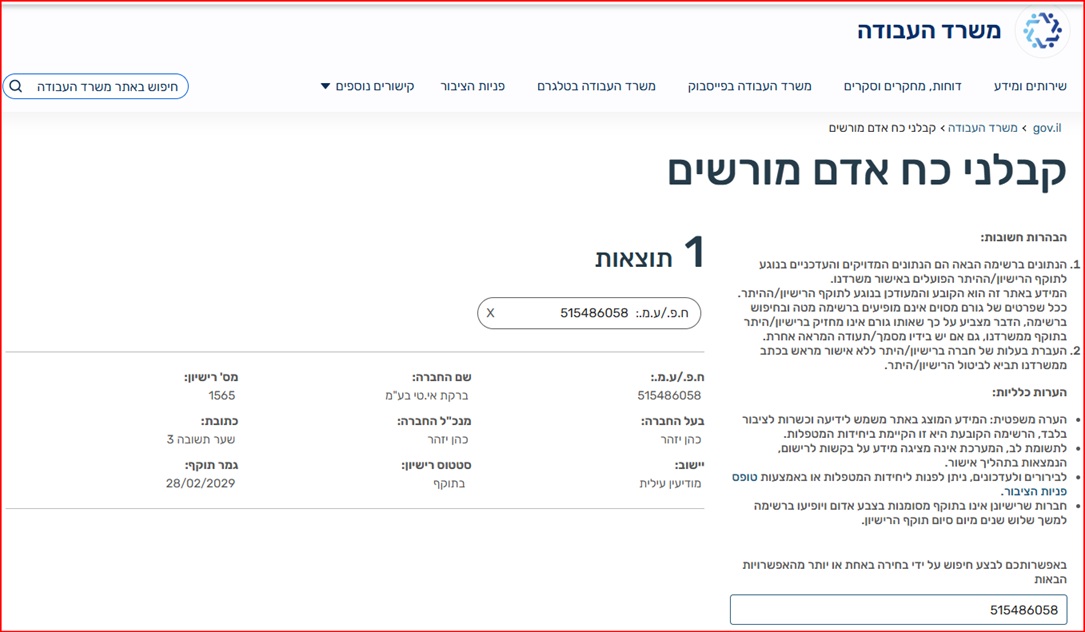
- License no. 1565 · verify
- Bank guarantees for wages
- Operating since 2016
01Division of responsibility
Who is responsible for what
An Employer of Record (EOR) is not a staffing agency and not merely a payroll provider. It is the legal employer for every purpose, including compliance with Israeli labor law. You keep full professional control of the work.
Your company
Directs the work
Sets tasks and goals, manages performance, and pays one itemized monthly invoice. No legal structure to set up or dismantle.
NETO
Legal employer in Israel
Signs the contract, pays wages, withholds taxes, contributes to pension and funds, files with the authorities and handles the end of employment.
Your employee
Salaried from day one
A law-compliant contract, a proper payslip, pension and social rights exactly as in direct employment. Works with your team from Israel.
03Cost and transparency
What you pay, line by line
One monthly invoice that includes wages, employer costs and management fees. No surprises and no hidden charges. Everything is presented up front.
Gross salary
The salary agreed with the employee, including additional components, if any
Employer costs
Pension, severance and recuperation pay, plus the employer's share of National Insurance
NETO service fee
5% of the invoice amount before VAT. No other fees.
Example for one employee at a gross monthly salary of ILS 20,000, using 2026 statutory rates: employer National Insurance, pension 6.5%, severance 8.33% (Section 14) and 10 days of recuperation pay. Excludes travel allowance and study fund. All amounts before VAT.
Not on your invoice
- No company-setup cost
- No fixed retainer for lawyers and accountants
- No payroll systems or in-house HR team
What moves the price
- Type of employment and level of complexity (bonuses, options, reimbursements)
- Number of employees and how many changes occur during the month
- Document requirements and special onboarding processes
- International payments and foreign currency, if relevant
06Hiring quote
Get an itemized hiring quote
Tell us about your hire and we reply by email with a line-by-line breakdown: gross salary, employer costs, the NETO service fee and the monthly total. No commitment and no account to open.
- Based on 2026 statutory rates
- Short form, under a minute
- Your details are used for this request only
Thank you. We have your request.
We will reply to with an itemized breakdown.
Prefer to register now? Start employer registrationAI summary · Hiring employees in Israel through an EORClick to read the page summary
Employer of Record (EOR) is a lawful solution that lets a foreign company hire employees in Israel without opening a local entity. The registered employer · NETO · is the legal employer for every purpose: it signs the employment contract, pays wages, withholds taxes, contributes to funds and files reports with the authorities. You continue to manage the employee professionally day to day and receive a single itemized invoice. The model reduces the risk of misclassification (contractor instead of employee), gives the employee full social rights, and lets you start hiring within 24 to 48 hours instead of the months it takes to set up a company. It is important to work with a supervised, licensed manpower contractor (NETO · no. 1565) that deposits bank guarantees against employee wages.
- Foreign company · hires in Israel without opening a subsidiary or branch.
- Registered employer · NETO is the legal employer · full responsibility.
- Correct classification · employment as a salaried worker from day one · no retroactive risk.
- Fast · onboard an employee within 24 to 48 hours.
- Transparency · one invoice · wages, employer costs and management fees.
- The information is for guidance only · it is not legal or accounting advice.
- In brief · key points
- What the EOR model is and how it works
- Why foreign companies choose a registered employer
- Why you must work with a holder of License 1565
- Which legal risks an EOR reduces
- Real-life examples · scenarios
- The difference between EOR and Payroll
- How to onboard an employee · step by step
- What a full EOR service includes
- Comparison table
- Who it suits (and when it does not)
- Mandatory rights, pay and termination
- What affects the cost
- Explainer video
- Questions and answers
- In summary
In brief
Want to hire an employee in Israel but do not want to open a company, run payroll and deal with local regulation? The Employer of Record model gives you exactly that: NETO becomes the employee's legal employer, and you continue to manage them professionally · with one transparent invoice at the end of the month.
- No local entity · lawful employment in Israel without setting up a subsidiary or branch.
- Full legal responsibility · contract, payroll, filings and rights · on the registered employer.
- No misclassification · the employee is salaried from day one · no retroactive exposure.
- Fast and supervised · onboarding within 24 to 48 hours · Manpower License 1565 and bank guarantees.
What the EOR model is and how it works in practice
An Employer of Record is a party that takes on the role of the employee's legal employer. Legally, the EOR is the one who signs the employment contract, pays the wages, withholds taxes and contributes to funds. Operationally · your company sets the tasks, goals and performance management.
This distinction matters: the EOR is not a staffing agency that supplies workers, nor is it merely a payroll provider. It is the legal employer for every purpose, including responsibility for compliance with Israeli labor law. The upshot · you can hire employees in Israel without opening a local entity, and without worrying that you will miss a regulatory obligation.
In simple terms
- You manage the employee professionally day to day
- NETO is the legal employer · contract, payroll, rights and filings
- You receive one invoice with a full, transparent breakdown
Why foreign companies choose a registered employer over opening a company
Setting up a subsidiary or branch in Israel is a months-long process · registration with the Companies Registrar, opening files with the Tax Authority and National Insurance, local accountants and lawyers and ongoing upkeep. With an EOR you start hiring within days. Here is what you save.
Setup time drops to zero
No Companies Registrar filing and no infrastructure to build · onboard an employee within 24 to 48 hours instead of months of bureaucracy.
Savings on ongoing costs
No fixed retainer for local accountants and lawyers, and no payroll systems or in-house HR team · everything is included in the service.
Market entry without risk
Test the Israeli market with one to ten employees before a large investment · with no commitment to setting up an entity.
Regulatory certainty
The registered employer knows labor and tax law inside out · no errors in filings and no gaps that surface later.
Full rights for the employee
The employee receives a law-compliant contract, a proper payslip, and pension and fund contributions · exactly as in direct employment.
Full transparency
One monthly invoice that includes wages, employer costs and management fees · no surprises and no hidden charges.
Why you must work with a license holder (no. 1565)
Why does it matter to a company from abroad?
- You do not want to experiment on employees in Israel
- You want documents, payslips and rights in line with the law
- You want a provider that understands local regulation in depth
In an unregulated market it matters who you work with. In Israel the law requires a special license to broker and employ workers. NETO operates under registered Manpower Contractor License no. 1565 issued by the Ministry of Labor. This is not a formality on paper · it is your safety belt.
Working with a supervised, licensed body shows up in three areas.
Money protected by guarantees
The regulator requires NETO to deposit bank guarantees against employee wages · the money is protected even if something happens to the provider.
Integrity and oversight
Compliance with strict regulation and ongoing conformity checks by the Ministry of Labor.
Operational efficiency
Payroll, filing and fund-transfer processes handled in an orderly, transparent way. View our official license.
Which legal risks the EOR model reduces
One of the biggest challenges in international hiring is the risk of misclassification. Many companies pay workers as contractors or freelancers, but in practice an employer-employee relationship exists. In such a case, the authorities in Israel may demand retroactive payment of social rights, severance and fines.
The EOR prevents this risk by employing the worker as a salaried employee from day one. The employee receives a law-compliant contract, a proper payslip, pension and fund contributions and all the rights set out in labor law. In addition, the EOR handles filings to the tax authorities and National Insurance · so there are no gaps or omissions.

Scenarios of foreign companies hiring in Israel
Three common situations · click to open the full detail. The examples are illustrative only.
A US tech company recruits a developer in Tel Aviv
A software company from San Francisco found a talented developer in Israel and does not want to open a subsidiary. Option A · independent contractor: simple in the short term, but if the developer works only for the company, receives day-to-day instructions and uses its tools · they may be deemed an employee for every purpose, and the company would pay severance, contributions and National Insurance retroactively.
Option B · EOR: the company signs an agreement with NETO, the developer is onboarded as a salaried employee with full rights, and the EOR handles everything else. The company pays one monthly invoice · wages, employer costs and management fees. Simple, lawful and safe.
A startup with no HR department onboards two employees
A small startup wants to hire two employees in Israel, but it does not have the resources for complex payroll management and it is not worth setting up an entity. The EOR takes on the entire burden · contracts, payslips, contributions and filings · and the team is freed up to focus on the product. If activity grows later, the company can decide to set up an entity · with no risk during the trial stage.
A project company hires for a defined period
An international company needs employees in Israel for a project lasting a few months. Setting up an entity and making a long-term commitment do not fit. The EOR model provides flexibility · full lawful employment for the duration of the project, and at the end an orderly termination in line with the law · notice period, final settlement and release of funds · with no legal structure to dismantle.
The two paths · at a glance
- Independent contractor: looks easy · but legally risky if an employment relationship actually exists.
- EOR: salaried employment from day one · contract, payslip, rights and filings.
What is the difference between EOR and Payroll only
Payroll providers calculate wages and produce payslips, but they do not take on legal responsibility · they are not the employer. If a regulatory issue arises, the responsibility stays with you. EOR is something entirely different: the registered employer is the party that signs the employment contract, is responsible for ensuring the employee receives all their rights, that filings are submitted on time and that there are no labor-law breaches. If something goes wrong · the EOR stands before the authorities.
| Criterion | Payroll only | Full EOR |
|---|---|---|
| Signing the employment contract | Your company | The EOR |
| Legal responsibility | Your company | The EOR |
| Filings to the authorities | Sometimes included | Always included |
| Managing social rights | Partial or none | Full |
| Handling termination | Not included | Included |

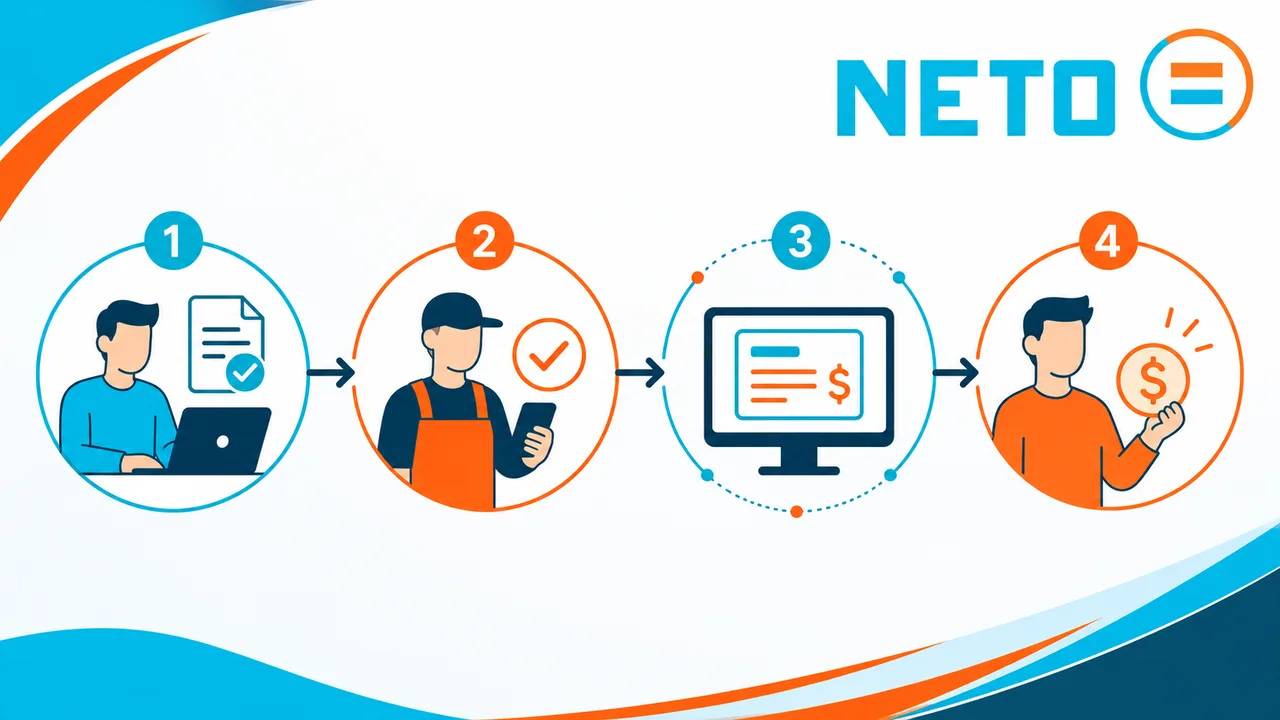
Onboarding an employee through NETO · step by step
The process is simple and fast · usually completed within minutes to a few hours, sometimes 24 to 48 hours from the moment the details are ready.
Share the details
You send over the employee's details and the employment terms · role, scope, salary and start date.
Contract and signature
NETO prepares an employment contract compliant with Israeli law and sends it for the employee's digital signature.
Registration in the systems
The employee is registered in the payroll systems and with National Insurance · all filings to the authorities are submitted automatically.
Ongoing management
Every month · payroll calculation, tax and contribution withholding and payslip issuance. You receive a single itemized invoice.
What to prepare in advance?
- Employee details and role / scope of the position
- Proposed salary and components (if any)
- Estimated start date
- A contact on your side for professional management
Once the right employee has been found, the employee onboarding process is carried out by the EOR. Bonuses or expense reimbursements? No problem · we handle them in a reported, orderly way, and every change in terms is updated in the system.
What a full EOR service includes
A comprehensive EOR service includes everything needed for lawful employment in Israel. It starts with a law-compliant employment contract and continues with full monthly payroll management · gross and net calculation, income-tax withholding, National Insurance and health contributions and pension and fund contributions.
The service also includes managing social rights · annual leave, sick days, recuperation pay and travel. All periodic filings to the tax authorities and National Insurance are submitted on time, including Forms 102 and 126. At the end of employment the EOR handles the final settlement, the severance calculation and the filing of Form 161.
Hiring employees in Israel? Start onboarding today
NETO handles the entire legal side · contract, payroll, filings and rights · so you can focus on your business.
Hiring employees in Israel · four approaches put to the test
A comparison between direct employment through a local company, a global HR company without an entity, an EOR without a manpower-contractor license, and hiring through NETO as a licensed EOR.
| Parameter | Direct employment (local company) | Global HR without an entity | EOR without a manpower license | NETO · licensed EOR |
|---|---|---|---|---|
| Time until employment begins | Months (entity setup) | Weeks | Days | Within minutes to a few hours |
| Initial setup cost | High (lawyer, accountant, registration) | Medium | Low | Low to negligible |
| Ongoing upkeep | Required (bookkeeping, filings) | Partial | Partial | Included in the service |
| Manpower-contractor license | Not applicable | None | None | License no. 1565 |
| Bank guarantees to the Ministry of Labor | None | None | None | Deposited as required |
| Full legal responsibility | On the company | Partial only | Limited | On the EOR |
| Compliance with Israeli labor law | On the company | Partial knowledge | Unsupervised | Full and supervised |
| Managing social rights | On the company | Partial | Partial | Full |
| Flexibility to terminate | Complex entity closure | Complex | Moderate | Simple, orderly termination |
Who an EOR service suits · and when it is not the solution
International companies entering the Israeli market for the first time are a natural target audience · instead of investing in setting up an entity before knowing whether the activity will succeed, you can start with one or two employees. Small startups without an HR department benefit from the EOR taking on the burden, and project companies get a flexible solution with no long-term commitment.
Companies that have already been burned by misclassification, or that fear such a risk, also prefer to employ lawfully from day one instead of paying contractors and hoping for the best. The EOR also helps in understanding the differences between an employee and a self-employed person, including the topic of insurance contribution rates.
Especially suitable if
- You are hiring 1 to 10 employees in Israel
- You want to start fast without opening a company
- Lawful employment and regulatory peace of mind matter to you
- You do not have a local HR team
Mandatory rights, payslip and termination in Israel
A salaried employee in Israel is entitled to a range of rights set out in law. The Annual Leave Law sets leave days by seniority, recuperation pay is paid each year, and there is entitlement to paid sick days, travel allowance and contributions to pension and severance.
The EOR is responsible for ensuring all rights are applied · accrual of leave, timely payment of recuperation pay, monthly contributions to funds and handling of termination, in line with the law and while safeguarding employee rights.

What appears on the payslip
Base salary and additional components, employee deductions (income tax, National Insurance and health), pension and fund contributions and leave and sick-day balances · all itemized.
Employer costs
Beyond the employee's net pay there are employer costs · contributions to pension, severance and a study fund and the employer's share of National Insurance · all shown on the payslip.
Orderly termination
Statutory notice period, a hearing where required, final settlement (leave and recuperation), release of funds and issuance of termination documents · the EOR manages the entire process.
What affects the cost of an EOR service
The cost of an EOR is made up of several components · the largest is the salary itself, including employer costs, and beyond that management fees charged by the EOR. When comparing costs it is important to look at the full picture: there is no company-setup cost, no fixed retainer for lawyers and accountants, and no payroll systems or in-house HR team. For companies that employ a small number of workers · the EOR is almost always cheaper than the alternative.
Variables that affect the price
- Type of employment and level of complexity (bonuses, options, reimbursements)
- Number of employees and how many changes occur during the month
- Document requirements and special onboarding processes
- International payments and foreign currency (if relevant)
One digital system · end-to-end transparency
NETO centralizes the entire employment process in a digital system · at any moment you can see the status of employees, payments and filings, all transparent and accessible. The local team knows Israeli labor and tax law in depth, so you do not need to be an expert · a question about leave, a bonus or termination gets a professional answer throughout the employee's life cycle.
The system also supports complex payments · bonuses, commissions and expense reimbursements. Everything is documented, everything is reported, everything is in line with the law · with no worry that something will slip through the cracks.
What you get
- A digital system with full transparency
- One orderly invoice
- Contracts, payslips, filings and rights
- A professional response throughout the employee's life cycle
Watch · how NETO's EOR model works
A short video showing what the employment process through NETO looks like · from the very first moment to ongoing management.
Companies and employers that already work with NETO
Illustrative testimonials · reflecting the typical kinds of clients of the EOR service.
We recruited a developer in Tel Aviv within two days without opening a company in Israel. One clear invoice every month, with no regulatory headache.
What mattered most to us was that the employee would receive all their rights under the law. NETO nailed it from day one · contract, payslip, contributions.
The license and the bank guarantees gave us peace of mind. We knew we were working with a supervised body and not a gray-area solution.
We hired for a project period and wrapped up in an orderly way · final settlement and statutory notice, with no entity to dismantle.
The team answered every question about pay and bonuses. It felt like we had a local HR department without hiring one.
Frequently asked questions about EOR in Israel
Is the EOR the day-to-day manager of the employee?
No. The EOR is the legal employer only. Your company manages the employee in practice · tasks, goals and performance. The EOR handles the formal side: contract, payroll, filings and rights.
Can senior managers be employed through an EOR?
Yes. The EOR model can also suit senior roles · depending on the employment terms, additional components and the parties' agreements.
How long does it take to start?
In most cases an employee can be onboarded within a few days. When the documents are ready and the terms are clear, things can move very fast · sometimes within 24 to 48 hours.
What happens if something changes mid-way (salary / bonus / scope)?
Changes to terms are handled by the EOR: updating salary, bonuses or changing the scope of the role. You let us know, and the system adjusts the calculations and filings accordingly.
What happens if the employee wants to leave?
The process is the same as a regular resignation: notice period, final settlement and release of funds. If there is an entitlement to severance under the law · we handle it as required.
Does NETO also handle the employment of foreign nationals in Israel?
No. NETO acts as employer of record for Israeli citizens and permanent residents only. Employing foreign nationals in Israel is outside the scope of our service.
Can employees be hired remotely through an EOR?
Absolutely. The EOR model is especially well suited to remote employment. The employee works from home or from another location in Israel, and NETO handles all the legal aspects exactly as in regular employment.
What about the employee's health insurance and pension?
Every salaried employee in Israel is entitled to national health insurance. In addition, the EOR contributes to pension and funds as required by law. All contributions are made automatically and reported.
In summary
The Employer of Record model is the fast, lawful and safe way for a foreign company to hire employees in Israel · without setting up a local entity. NETO becomes the licensed registered employer, takes full legal responsibility for the contract, payroll, filings and rights, and reduces the risk of misclassification. You continue to manage the employee professionally and receive one transparent invoice · under Ministry of Labor supervision, holding Manpower License 1565 and backed by bank guarantees.
More content you may find interesting
The law requires 6% · at NETO it is 8.33%
The mandatory pension extension order obliges every employer to contribute 6% of salary to the severance component, and section 14 of the Severance Pay Law applies to that money automatically. NETO contributes the full severance component by default · 8.33% · so the ongoing contribution replaces severance pay in full and no top-up is due when the employment ends. An employer contributing less than 8.33% must top up severance at the end of the employment relationship.
A worker who declares they have no active pension fund, in a one-off engagement · there the contribution obligation begins only after six months of work. A worker with an active pension arrangement is entitled from day one, with contributions made retroactively after three months or at the end of the tax year, whichever is earlier.
General information · not legal advice. The binding text is the statute and the extension order themselves.