Employer Rights in Israel
Many people think employers in Israel have only obligations · but employers have rights too. This guide covers the managerial prerogative, setting vacation dates, disciplinary measures, a good-faith hearing before dismissal, the notice period and lawful termination · and how NETO protects the rights of both sides on every single payslip.
AI Summary Smart overview of this page · click hereClick to read the page summary
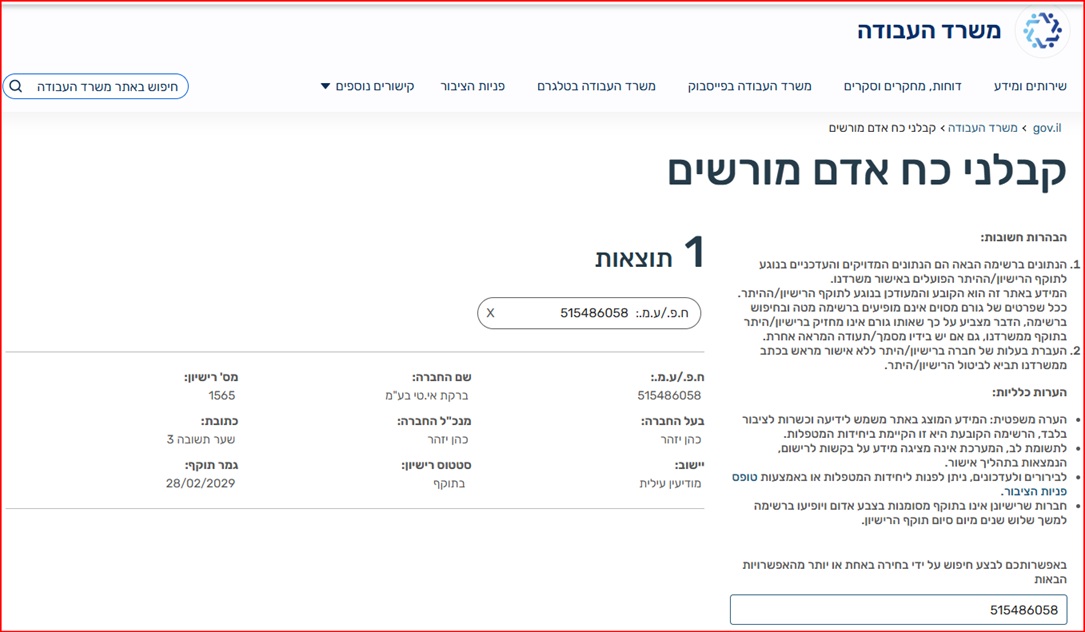
Employers in Israel have rights, not only obligations. The core right is the managerial prerogative · the right to run the business as the employer sees fit: to change the organizational structure, procedures, pricing and commercial terms, to set the timing of annual leave, to take proportionate disciplinary measures, and to end employment lawfully · all while respecting employees' rights. The main limit is the prohibition on a unilateral worsening of conditions. Before dismissal the employer must hold a good-faith hearing (no predetermined decision), give advance notice (accruing in the first year, up to a full month from the second year), and settle severance and the final account. An unlawful dismissal exposes the employer to a lawsuit and an administrative fine. NETO, a licensed manpower contractor (#1565), codifies Israeli labor law into software so the rights of both the employer and the employee are enforced in full.
This summary is generated from the page content and the linked sources · full detail below. It is not legal advice.
Guide Summary
Everything an employer in Israel should know about their own rights · and the limits on them, in brief:
- Employers hold a managerial prerogative to run the business lawfully.
- The employer sets the timing of annual leave, within legal limits.
- Disciplinary measures are allowed · gradually and by the workplace rules.
- Dismissal requires a good-faith hearing, notice and a lawful process.
Do Employers Really Have Rights?
Israeli labor law talks a great deal about employee rights, so many people mistakenly assume that employers have only obligations. In practice, employers have rights too · and it is important to know them.
Employers hold operational and managerial rights to run their business as they see fit. They may change the organizational structure, the work procedures and processes, the pricing and the commercial terms · without this automatically being treated as a worsening of employees' conditions.
At the same time, any employer who wants to change work arrangements should know its rights and obligations and study labor law, to make sure those changes do not harm employees. For example, extending operating hours, banning sitting at work, shortening breaks, or even cutting back on air conditioning can be treated as harmful and as a worsening of conditions. But many managerial decisions fall squarely within the employer's rights · and sometimes even its duty · so the business can survive and succeed.
The Managerial Prerogative
The employer has the right to run the business as it sees fit · as long as this does not harm the employee or worsen their conditions.
The organizational structure and work procedures, the processes, pricing and commercial terms, and the way employees are managed within the law.
Some changes can be treated as harmful, such as extending operating hours, shortening breaks, banning sitting at work, or cutting back on air conditioning.
The more material the change, the greater the duty to inform, explain and sometimes obtain the employee's consent · otherwise it may be read as a constructive dismissal.
Setting the Timing of Annual Leave
The Annual Leave Law requires the employer to allow annual vacation, but the employer sets the timing according to operational needs.
The employer chooses when employees take leave, subject to operational constraints. An employee cannot take leave without the employer's approval.
The employer must let the employee take at least one continuous stretch of 7 days once a year, and must allow the employee to actually use their leave days.
The employer may decide to reset the leave accrual each year, but must let the employee realize their entitlement. An employee cannot be absent for illness without a medical certificate.
The Right to Take Disciplinary Measures
Employers may take disciplinary measures against employees · gradually and according to the workplace disciplinary rules.
If an employee breached trust or committed serious offenses, the employer may issue a warning, summon a hearing and, in exceptional cases, dismiss.
In extreme cases defined by law the employer may even be exempt from paying severance · it is important to consult a labor law professional first.
The employer must verify that the situation truly justifies dismissal without severance, since labor courts scrutinize employers who appear to be avoiding lawful severance.
The Hearing and Dismissal · The Employer's Position
Ending employment is sensitive and calls on the employer for humanity, sympathy and empathy · but also for care and strict adherence to a lawful process. If the dismissal is carried out unlawfully, the employee may sue for compensation, and an administrative fine can be imposed. It is therefore important, on a human level too, to understand the situation and part ways respectfully and by consent wherever possible.
How to conduct a good-faith hearing
- Summon and attendance. Summon the employee to a hearing and allow them to be accompanied by a lawyer, a workers' committee member or a family member.
- Present the reason. During the hearing, explain to the employee why the hearing is being held.
- The right to argue. Let the employee present their side and give them the chance to fight for their job.
- Good faith. The employer must arrive without a predetermined decision · it cannot decide on dismissal immediately at the end of the hearing, and should take time to consider before deciding.
- The decision. The employer may give the employee another chance, or deliver a termination letter and a release letter for the accrued severance funds.
The Employer's Right to Know · Advance Notice
Both the employer and the employee must give advance notice before ending the employment relationship.
An employee who wants to resign must give a resignation letter and notify in advance, so the employer can prepare and find a replacement.
If the employee chose not to give notice, the employer may offset the value of the missing notice in the final payslip (the final settlement).
For a monthly-salaried employee, notice accrues one day per month of work for the first six months, then 6 days plus 2.5 days for each month after the sixth (21 days at the end of the first year), and reaches a full month (30 days) from the second year onward.
Lawful Termination · What the Employer Must Verify
The employer's rights are real, but they come with a duty to follow a lawful process. Awareness of these rights lets employers deal with employees who act unlawfully · while protecting both sides. When you know the law and the case law, you can manage the relationship correctly and reduce exposure to claims.
| Area | The right / the duty | How NETO safeguards it |
|---|---|---|
| Annual leave | Employer sets timing · duty to allow a continuous stretch and realization | Managed automatically on every payslip |
| Disciplinary measures | Warning, hearing, dismissal by the rules | Orderly, available documentation |
| Advance notice | Offset for missing notice in the final account | Calculated lawfully in the final payslip |
| Rights of both sides | Adherence to the law and the case law | Labor law codified into software |
How NETO Protects Both Sides
NETO codified Israeli labor law into an automated employment system, so every right is enforced in full · for the employee and for the employer alike. For companies hiring in Israel, NETO acts as the legal Employer of Record (EOR) and handles the entire process end to end.
Every change to employment terms is reflected on the payslip and recorded in the system · reducing disputes over what changed and when.
Hearings, notice periods and final settlements are handled correctly, helping the employer prove a proper process.
As the licensed legal employer (#1565), NETO carries employer responsibility toward the worker.
Just like your own team · only without the bureaucracy. Learn more about NETO's EOR in Israel.
Frequently Asked Questions
Do employers in Israel have rights, or only obligations?
Employers have rights too, not only obligations. An employer holds a managerial prerogative to run the business, including changing the organizational structure, procedures, pricing and commercial terms, without this being treated automatically as a worsening of conditions. Still, changes must not harm employees.
Who sets an employee's vacation dates in Israel?
The Annual Leave Law requires the employer to allow vacation, but the employer sets the timing according to operational needs. An employee cannot take leave without approval. The employer must allow at least one continuous stretch of 7 days a year and must let the employee use the accrued days.
What disciplinary measures may an employer take?
If an employee breached trust or committed serious offenses, the employer may issue a warning, summon a hearing and, in exceptional cases, dismiss. In extreme cases defined by law the employer may be exempt from severance, but this should be verified with a labor law professional, since labor courts scrutinize employers avoiding lawful severance.
How do you conduct a good-faith hearing before dismissal?
Summon the employee in advance, allow accompaniment by a lawyer, committee member or family member, explain the reason, and let them present their side. The employer must arrive without a predetermined decision and should take time to consider. A sham hearing can render the dismissal unlawful.
What happens if a dismissal is unlawful?
If the dismissal was carried out unlawfully, the employee may sue for compensation, and an administrative fine can be imposed. It is important, also on a human level, to part ways respectfully and by consent wherever possible.
How many days of prior notice must be given in Israel?
Both sides must give advance notice. For a monthly-salaried employee, notice accrues gradually in the first year (one day per month of work for the first six months, then 6 days plus 2.5 days for each month after the sixth) and reaches a full month from the second year onward. If an employee leaves without notice, the employer may offset the value of the missing notice in the final payslip.
Summary
Employer rights in Israel are real: the managerial prerogative to run the business, the right to set the timing of annual leave, the right to take proportionate disciplinary measures, and the right to end employment lawfully. The central limit is the prohibition on unilaterally worsening conditions · and dismissal requires a good-faith hearing, advance notice and a settled severance account.
Awareness of these rights lets employers manage the relationship correctly and reduce exposure to claims. NETO codifies Israeli labor law into software, so the rights of both the employer and the employee are enforced in full · and for companies hiring in Israel, NETO handles the entire process as the legal Employer of Record. Contact us to learn more.
Last updated: 09/07/2026 · general information, correct for 2026 and updated periodically.
Hire in Israel with Both Sides Protected
Let NETO handle employment, payroll and the legal process · so your team is managed correctly and lawfully. Register free for a payroll simulation, or ask us on WhatsApp.