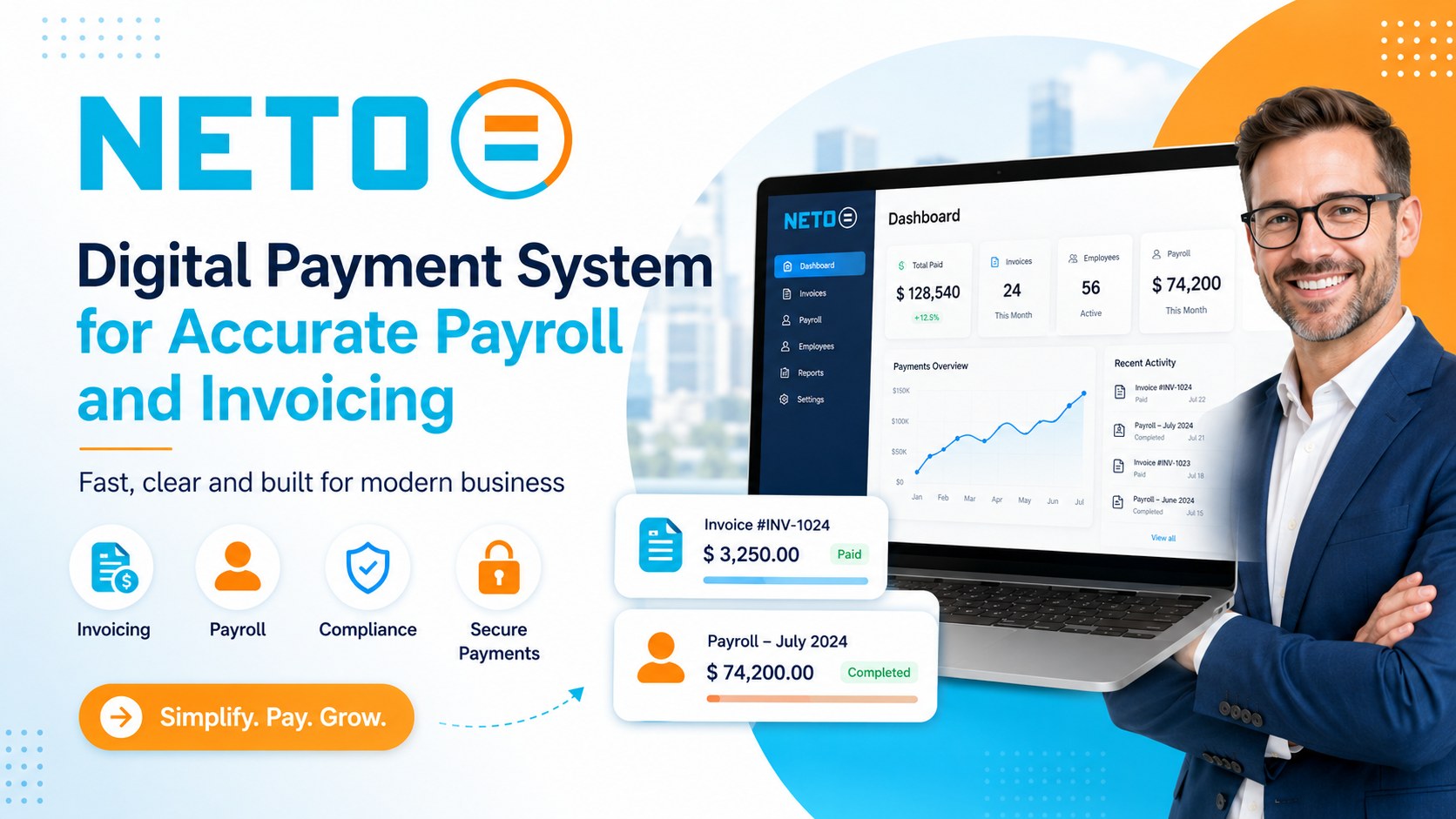
Salary payment by invoice
Pay a regular or casual worker · you receive a tax invoice and NETO handles all the rest.
Read moreWe use essential cookies to make the site work. With your consent, we also use measurement and advertising cookies from Google and Microsoft to understand how the site is used, improve it and measure our advertising. We never sell your data.
You can change your choice at any time via “Cookie settings” at the bottom of every page.

Log in to your account, or sign up in a minute.
Pick whatever works for you · we're here.
Everything about NETO · transparent and available
Pick a convenient time · we'll confirm by phone/email
Want to measure workers by their output and pay generously · but only when there are results? Here is how it works under Israel's Minimum Wage Law and labor law, and how NETO lets you employ a worker as if they were a freelancer · high, performance-based reward, without the worker opening a registered business.
This guide explains employing workers by output and paying by results in Israel, and what is allowed under the minimum wage law and labor law. You generally cannot pay strictly by output without meeting statutory floors, but you can combine a base with bonuses. NETO offers a solution that lets you employ a worker as if they were a freelancer while rights are handled compliantly. The page compares standard employment with the NETO model.
Can you employ a worker and pay strictly by output?
Not entirely. Under Israeli labor law, the Minimum Wage Law and the Wage Protection Law, a worker must be paid wages and social benefits based on the hours actually worked. So the pay for every hour must reach at least the minimum wage. You can certainly reward by results, usually by splitting the wage into a base and bonuses tied to output. With NETO you can also engage a worker as if they were a freelancer · a high, performance-based reward, while the employer receives a lawful tax invoice, and it is entirely legal.
Employing workers by output and paying by results sounds great · but it does not suit every business. Some employers want to measure workers by their output and pace, and typically pay generously · but only on condition that there are results, and in line with the results achieved.
This way the employer can reduce financial risk and the amount of supervision and management the worker requires, and secure motivated, high-performing workers with a shared goal and interest · profit. The method is common across industries such as manufacturing, agriculture, logistics and services · for example sales agents, website builders and couriers.

Not really. The issue is that under Israeli labor law, the Minimum Wage Law and the Wage Protection Law, a worker must be paid wages and social benefits based on the hours actually worked. So a situation can arise where the worker earns and the employer loses.
Of course, once the employer sees that a worker is causing a loss, they will most likely not keep them on · but reality is dynamic and not always clear-cut, with ups and downs and seasonality. That is why it is important to build a reward model that complies with the law while still rewarding performance.
The wage is usually split into a base and bonuses paid according to results. There is one essential point to remember. The Israeli labor court has already ruled that a sales bonus is treated as wages for all purposes. So social and pension contributions apply to it · exactly as they do to base pay.
Minimum wage comes first. Even when rewarding by output, the pay for every hour worked must reach at least the minimum hourly wage · even if the worker did not complete enough units in that hour.
Output-based pay is a compensation method in which the worker is paid according to the number of units they produce or complete. Before building such a model, it is worth knowing three legal layers:
The Minimum Wage Law does not explicitly use the terms "output" or "pay by results", yet it sets a minimum hourly wage · which is effectively a minimum payment for a certain output. By contrast, many collective agreements and labor court rulings do use these terms to describe compensation methods in which the worker's wage depends on the number of units they produce or complete.
Legal bottom line: output-based pay is a lawful compensation method in Israel · but it must comply with the Minimum Wage Law, the collective agreements and the employment contracts.
Please note: the information on this page does not constitute legal advice. In specific cases, it is advisable to consult a lawyer who specializes in labor law.
With the NETO system you can engage a worker as if they were a freelancer. You can enjoy the best of all worlds:
You can work even with people who have not opened a registered business. The worker issues an invoice through NETO and is paid via a payslip.
Great flexibility for the employer (who orders the service) and the worker (the freelancer) · without the bureaucracy of a traditional manpower company.
The reward can be high and tied to results. The employer receives a lawful tax invoice and NETO handles all the rest.
| Point | Standard output-based employment | Employment through NETO |
|---|---|---|
| Meeting the minimum wage | The employer must verify it every hour | Guaranteed · NETO ensures legal compliance |
| Worker without a registered business | Not possible · the worker needs an employment framework | Possible · the worker invoices through NETO |
| Bureaucracy for the employer | Payroll, contributions and reporting | You receive one tax invoice · everything handled |
| High performance-based reward | Possible · subject to contributions on bonuses | Possible · flexible and tied to results |
| Social and pension contributions | The employer's responsibility · including on bonuses | Handled within the service |
Two minutes that show the whole model, start to finish.
Not entirely. Under Israeli labor law, the Minimum Wage Law and the Wage Protection Law, wages and social benefits must be paid based on the hours actually worked. You may reward by output, but the pay for every hour must reach at least the minimum wage.
The wage is usually split into a base and bonuses paid according to results. Note that the labor court ruled that a sales bonus is treated as wages for all purposes, so social and pension contributions apply to it.
The Minimum Wage Law, 5747-2007, sets a minimum hourly wage for every worker. Output-based pay must guarantee at least the minimum wage for every hour worked · even if not enough units were completed.
With NETO you can engage a worker as if they were a freelancer · they issue an invoice and are paid via a payslip, the employer receives a lawful tax invoice, and the reward can be high and performance-based · without opening a registered business.
Yes. The labor court ruled that a sales bonus is treated as wages for all purposes, so social and pension contributions apply to it · exactly as they do to base pay.
The method is common in manufacturing, agriculture, logistics and services · for example sales agents, website builders and couriers. Even so, each case should be examined on its merits · here is how to pay a freelancer without a registered business.
Register as an employer and start engaging a worker as if they were a freelancer · a high, performance-based reward, without the bureaucracy. Have a question? We are here on WhatsApp.
Pay a regular or casual worker · you receive a tax invoice and NETO handles all the rest.
Read more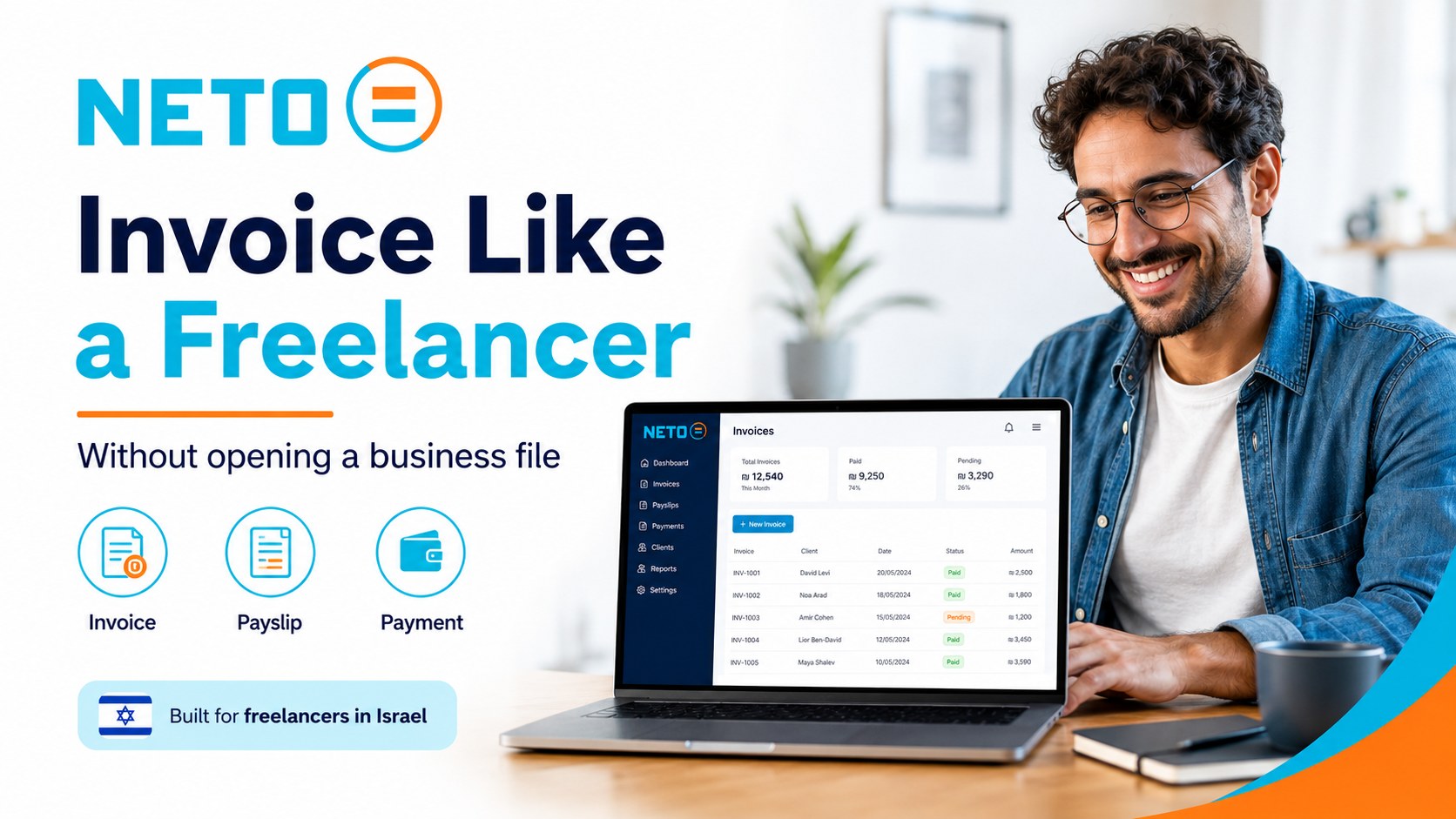
The legal way to issue an invoice to a client without opening a registered business.
Read more
Hire in Israel without a local entity · NETO acts as the legal employer under license 1565.
Read more YC
YCEvery section, organized by topic. Browse the full hierarchy or jump straight in.
Adjust the site to your needs
Here you can ask to see the data we hold about you, correct it, delete it, withdraw consent you gave, or stop receiving our emails and alerts. We reply within 30 days, and handle removal requests within 7 business days. Privacy policy
Barkat I.T Ltd · trading as NETO · is a licensed manpower company (license 1565), supervised by the Israeli Ministry of Labor.
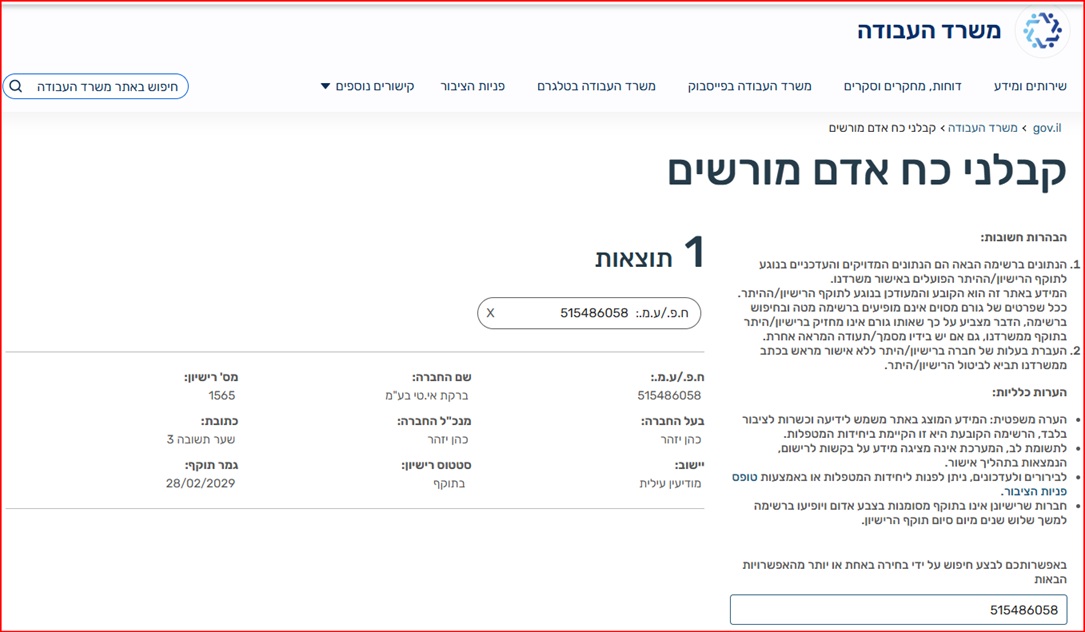 Verify the license on the Ministry of Labor website
Full details · Manpower contractor license page →
Verify the license on the Ministry of Labor website
Full details · Manpower contractor license page →