Travel Expense Reimbursement in IsraelWho is entitled, how it is calculated, and the ₪22.60 daily cap · 2026
Under Israeli law, most employees are entitled to travel expense reimbursement as part of their employment terms · governed by Ministry of Labor extension orders, whatever the type of transport. Here is exactly who qualifies, how the amount is calculated, and what must appear on the payslip.

AI summary · Travel Reimbursement Israel 2026Click to read the page summary
This guide explains who is entitled to travel expense reimbursement in Israel and how it is paid, updated for 2026. Entitlement follows the 500-meter rule, and reimbursement is capped at ILS 22.60 per day. It sets out the rules for public transport versus a private car and the payslip requirements, with three worked examples. NETO automates travel reimbursement for the employees it pays.
What actually lands in your account?
Drag the gross and watch the real take-home. Credit points move the answer more than anything else, which is why they are here.
More tools to help you decide
Travel expense reimbursement · key points
Travel allowance is a mandatory employment benefit in Israel for most salaried workers, set by extension orders issued by the Ministry of Labor. It applies regardless of the type of transport used · public transit, private car, or a combination of both.
- Eligibility: every employee traveling more than 500 meters to work is entitled to reimbursement · regardless of salary level or position.
- Public transport: reimbursement equals the actual cost of the cheapest available route for the commute.
- Private car: reimbursed at the public transport equivalent rate · not fuel or vehicle expenses.
- Daily cap: maximum reimbursement of ₪22.60 per day (the public transport cap).
- Payment: calculated per actual workday and paid together with the monthly salary · documented on the payslip.
Am I entitled to travel expense reimbursement in Israel?
If your commute to work is longer than 500 meters, yes · regardless of your salary level or position. Public transport users are reimbursed the actual cost of the cheapest available route; private car commuters are reimbursed at the equivalent public transport rate. The maximum is ₪22.60 per day, calculated per actual workday and paid together with the monthly salary.
Who is entitled: the 500-meter rule
Under Israeli labor law, every employee whose commute to work exceeds 500 meters (about half a kilometer) is entitled to reimbursement of travel expenses. This right applies to all employees regardless of salary level or position · full-time, part-time, junior or senior.
The right is governed by extension orders issued by the Ministry of Labor, and it applies whatever the type of transport used · public transit, private car, or a combination of both. It sits alongside the other mandatory employee benefits in Israel such as pension and convalescence pay, as part of the wider framework of employee rights in Israel.
- Commute over 500 meters · the single eligibility test.
- No salary threshold · seniority and position are irrelevant.
- Any mode of transport · bus, train, private car, or a mix.

Public transport vs private car · what you get
The calculation rule depends on how you actually get to work · but in both cases it is anchored to public transport prices, never to fuel receipts.
If the employee uses public transportation (bus, train, etc.), the employer must reimburse the actual cost of the cheapest available route. The maximum daily reimbursement is capped at the applicable extension order rate · ₪22.60 per day.
If the employee travels by private car, the employer reimburses at the rate equivalent to the cheapest public transportation option for the same route · not necessarily the full cost of fuel or vehicle expenses. The same daily cap applies.
How travel reimbursement is calculated and paid
Five rules cover almost every case. They also define what employers must show on the payslip · accurate documentation is a legal requirement, protected by the Wage Protection Law.
Count actual workdays: reimbursement is calculated based on the number of days the employee actually commuted to work that month.
Price the cheapest route: the benchmark is the cheapest available public transport option for the commute · for car commuters too.
Apply the daily cap: the reimbursement per day cannot exceed ₪22.60, the public transport cap set by the extension order.
Exclude remote days: employees who work from home on certain days are not entitled to reimbursement for those days.
Pay with the salary: travel reimbursement is paid together with the monthly salary and itemized on the payslip.
Document or risk claims: failure to calculate and pay correctly can result in claims and penalties · accurate payslip documentation is both a legal requirement and a best practice.
Worked examples: what reimbursement actually looks like
Three common scenarios, calculated with the rules above. All figures use the ₪22.60 daily cap from the applicable extension order; the workday counts are illustrative.
Example 1 · Daily commuter by bus
Maya takes the bus to the office every working day · say 22 workdays this month. Her employer checks the cheapest available route for her commute. If that route's daily cost is below the cap, she is reimbursed the actual fare for each of the 22 days. If it is at or above the cap, each day is reimbursed at ₪22.60.
Maximum for the month: 22 days × ₪22.60 = ₪497.20 · paid together with her monthly salary and itemized on the payslip.
Example 2 · Hybrid employee, 3 office days a week
Daniel works from home twice a week and commutes to the office three times a week · say 13 office days this month. Work-from-home days carry no travel entitlement, so only the 13 commuting days count. Each commuting day is reimbursed at the actual cost of the cheapest route, up to the daily cap.
Ceiling for the month: 13 days × ₪22.60 = ₪293.80 · his 8 home-office days add ₪0.
Example 3 · Employer budgeting for a new hire who drives
An employer hires a full-time employee who commutes by private car · say 21 workdays in a typical month. The law does not require covering fuel or vehicle expenses: the reimbursement equals the cheapest public transport option for the same route, capped daily. For budgeting, the employer can pencil in the worst case.
Worst-case monthly budget: 21 days × ₪22.60 = ₪474.60 · less if the equivalent public transport fare for the route is cheaper.
How NETO automates travel reimbursement
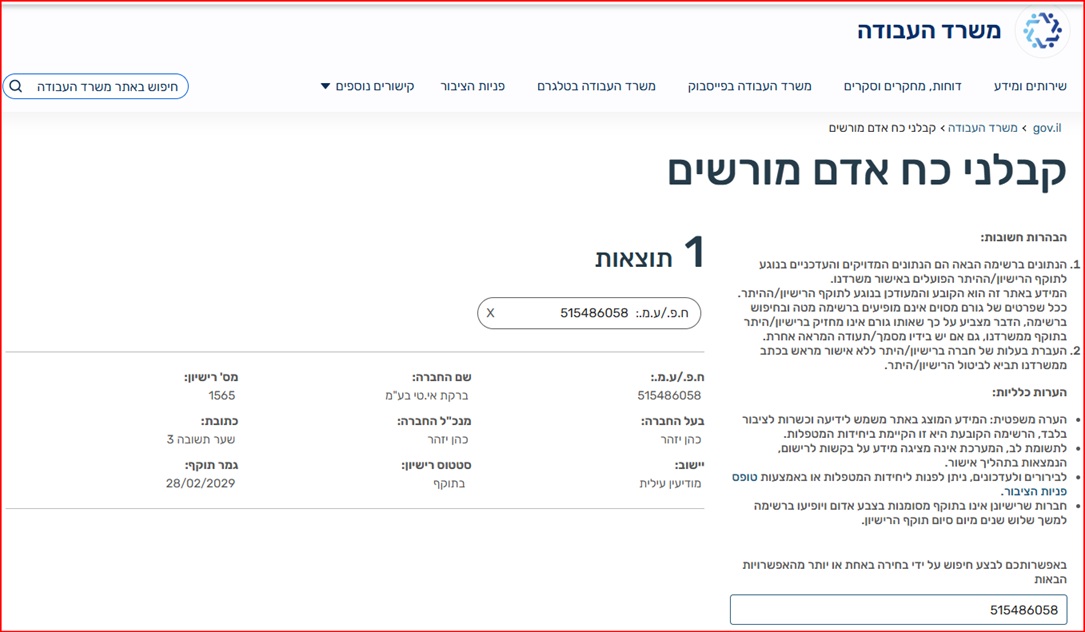
NETO · a licensed manpower contractor (#1565) under Ministry of Labor supervision, operating since 2016 · calculates travel expense reimbursements automatically as part of the monthly payroll. No manual tracking, no spreadsheet of bus fares, no risk of a missing payslip line.
For employers, the model is simple: NETO charges the client company a 5% commission on the invoice (pre-VAT) · billed to the client company, never to the worker. Travel allowance, pension, and every other mandatory benefit are handled inside Israeli payroll, and the full picture of what an employee costs is in our employer cost in Israel guide.
- Employees and freelancers working through NETO get travel expenses calculated and paid automatically according to Israeli law · along with salary, pension contributions, and all other mandatory benefits. See the freelance payroll solution.
- Employers get compliant payslips and correct travel allowance for every worker placed through the platform · including via Employer of Record in Israel.
- Questions? Start with the NETO FAQ or talk to us.
Video: how to pay workers in Israel · the NETO employer guide
Travel allowance is one line of a compliant Israeli payslip. This short guide shows employers how paying workers through NETO works end to end · salary, benefits, and reimbursements included.
Watch · in under 2 minutes, see how simple it is to pay a worker in Israel · salary, benefits and travel reimbursement · through NETO.
Travel expense reimbursement · frequently asked questions
Which employees are entitled to travel expense reimbursement in Israel?
What is the maximum daily travel reimbursement?
How is reimbursement calculated for public transport users?
How is travel reimbursement calculated for private car users?
Are work-from-home days included?
When and how is travel reimbursement paid?
What happens if an employer does not pay travel expenses?
How does NETO handle travel expense reimbursement?
Never miss a travel allowance line again
NETO calculates travel expense reimbursement automatically with every monthly payroll · alongside pension and every other mandatory benefit. Licensed manpower contractor #1565, operating since 2016, with a simple 5% commission on the invoice (pre-VAT) billed to the client company · never to the worker.