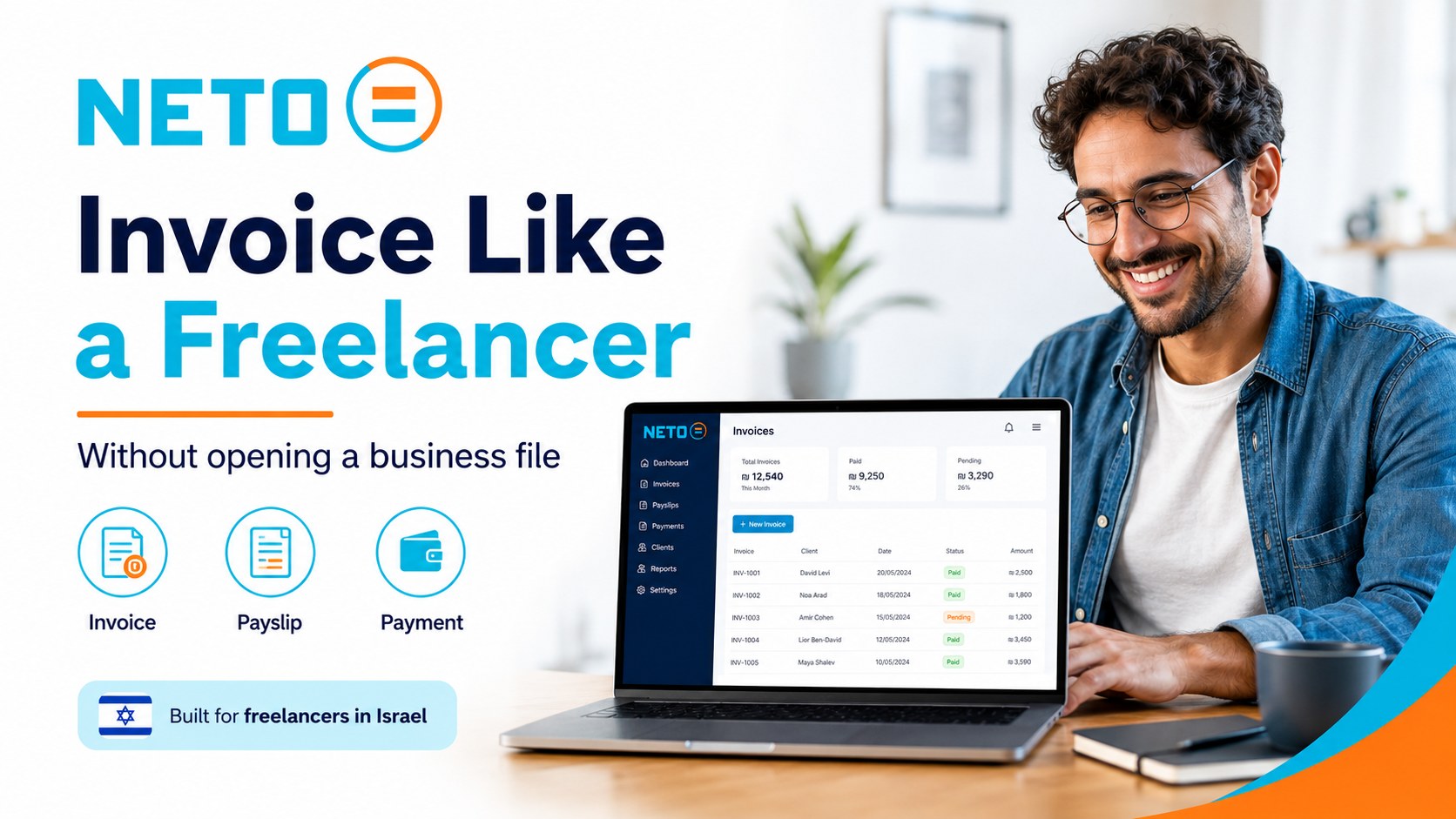
Invoicing for freelancers
The legal way to issue an invoice to a client without opening a business · how it works.
Read moreWe use essential cookies to make the site work. With your consent, we also use measurement and advertising cookies from Google and Microsoft to understand how the site is used, improve it and measure our advertising. We never sell your data.
You can change your choice at any time via “Cookie settings” at the bottom of every page.

Log in to your account, or sign up in a minute.
Pick whatever works for you · we're here.
Everything about NETO · transparent and available
Pick a convenient time · we'll confirm by phone/email
Invoicing through a service lets you work as a freelancer and receive a payslip · opening a licensed business (osek murshe) requires registering as self-employed with the tax authorities. Both routes are legal and fit different situations. Here we compare them in depth · and show how to start working within minutes, without opening a file.
This guide compares invoicing through a service versus opening a licensed business (osek murshe) in Israel. It weighs costs, taxation, social rights, and paperwork in a full comparison table, and explains who each track suits best. Opening a business gives independence but adds ongoing reporting and administration. Invoicing through a service like NETO keeps you an employee with rights and less bureaucracy.
What is the difference between invoicing through a service and opening a licensed business?
Invoicing through a service is a model in which a licensed manpower company issues a tax invoice on your behalf, you receive a payslip and you do not need to open a file with the authorities · zero paperwork, and the rights of a salaried employee. Opening a licensed business (osek murshe) requires registering as self-employed with VAT, the Tax Authority and the National Insurance Institute · more flexibility and the ability to offset input VAT, but also ongoing filings and accountant fees.
The choice depends on the scale of activity, the level of commitment you want and your personal needs. For anyone who wants to start quickly · issuing an invoice through a service is the simple route, and you can always switch to a licensed business as the business grows.
Invoicing through a service is an employment model in which a licensed manpower company issues an invoice to the client on the worker's behalf. The worker is not required to open a business file with the tax authorities, and receives a payslip from the intermediary company. According to the National Insurance Institute, such a worker is defined as a salaried employee for all intents and purposes.
The model works as follows: the worker performs the work for the client, the intermediary company issues a tax invoice to the client, collects the payment and transfers the money to the worker after deducting a commission and taxes. The worker receives a legal payslip that includes all the required deductions.
The main advantage is the absence of paperwork. There is no need to open files with VAT, the Tax Authority or National Insurance. There are no monthly or bi-monthly filings, and no need for accounting services for day-to-day management. The worker enjoys the social rights of a salaried employee, including pension contributions and vacation days.
The commission charged by the intermediary company reduces net income. It is usually a commission of 3.5% to 5% of the invoice amount. Over time, the sums add up to a significant amount. There is also no full flexibility in managing business expenses and offsetting input VAT.
Opening a licensed business requires registration with three bodies: VAT, the Tax Authority and National Insurance. The process begins at the VAT office with Form 821 and continues by opening a file at the Tax Authority using Form 5329. Finally, you must register with National Insurance using Form 6101.
According to the Kol Zchut guide, a licensed business must charge VAT to its clients and remit it to the authorities. In return, it is entitled to offset input VAT on business expenses. The VAT reporting obligation is monthly or bi-monthly, depending on the annual turnover.
A quick look at the key differences between the two tracks · each row focuses on one point of comparison:
| Topic | Invoicing through a service | Opening a licensed business |
|---|---|---|
| Registration with authorities | None · you receive a payslip from the company | Register with VAT, Tax Authority and National Insurance |
| Tax status | Salaried employee · deductions at source | Self-employed · periodic filings and advances |
| Ongoing paperwork | No filings · no accountant | Monthly/bi-monthly VAT filings and an annual return |
| Cost | Commission of 3.5%–5% per invoice | Accountant · roughly ILS 300 to 1,000 per month |
| Input VAT offset | Not available | Yes · savings on business expenses |
| Social rights | Salaried · pension, unemployment, work-injury | Self-managed · no unemployment benefits |
| Best suited to | Extra income and getting started · variable scale | Steady, high-volume activity and regulated professions |
The cost of invoicing through a service consists of a fixed commission on each invoice. For example, on an invoice of ILS 10,000 with a 5% commission, the cost is ILS 500. In addition, taxes are deducted from the payslip.
The cost of running a licensed business includes accountant fees ranging from ILS 300 to 1,000 per month, depending on the scale of activity. To this you must add the cost of the time invested in ongoing filings and in submitting the annual returns. On the other hand, a licensed business benefits from offsetting input VAT, which can amount to thousands of shekels a year.
Invoicing through a service suits salaried employees who want additional income without dealing with paperwork. It also suits freelancers at the start of the road who do not yet know whether the activity will develop into a permanent business. It likewise suits anyone who prefers to focus on the work itself rather than on bookkeeping.
Opening a licensed business suits anyone planning steady, long-term business activity. It also fits when income is high and the per-invoice commission becomes relatively expensive. A licensed business is essential for regulated professions such as lawyers, accountants and doctors, who are required to register this way by law.
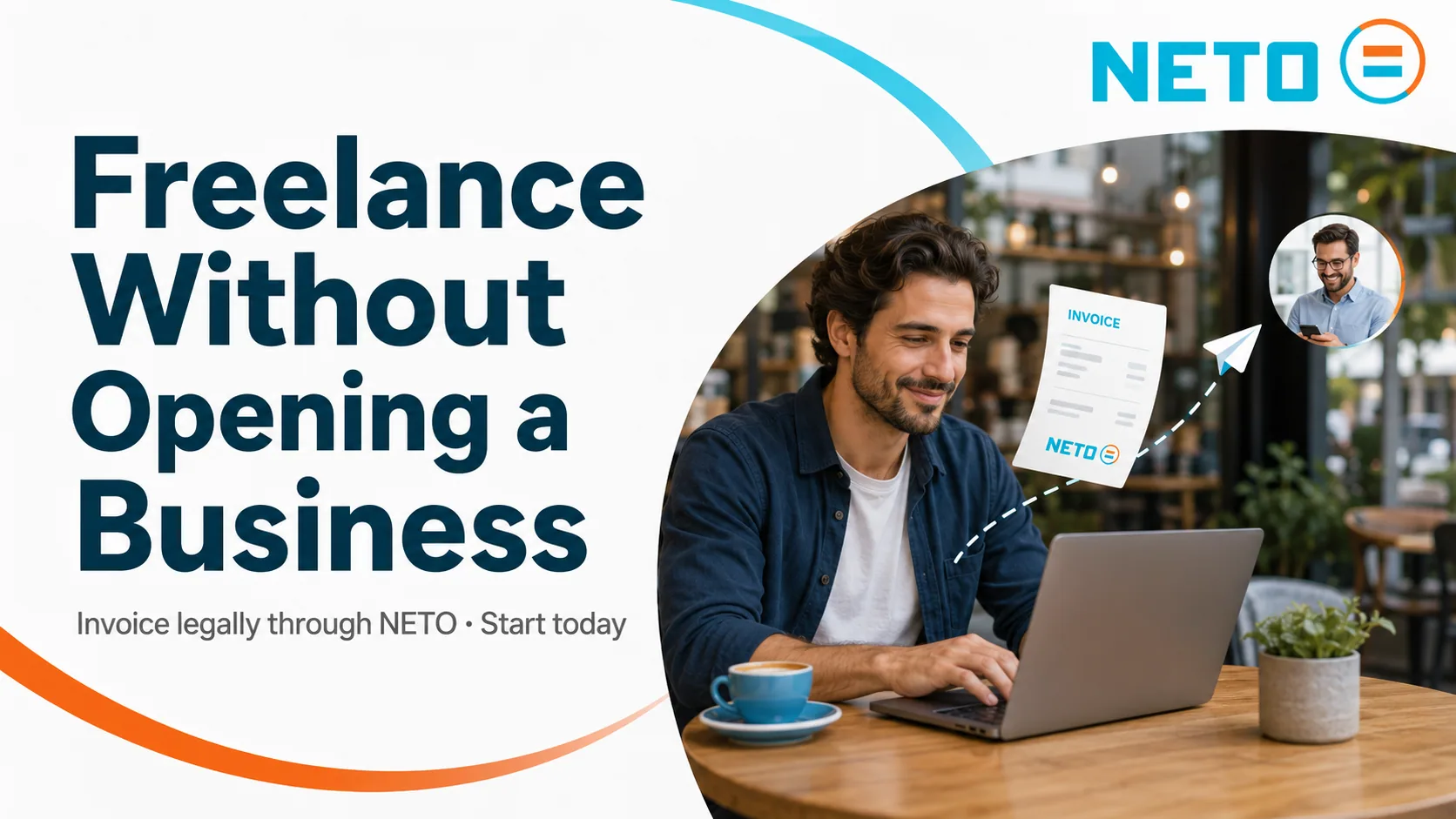
In the invoicing-through-a-service model, the worker is reported as a salaried employee to the tax authorities. Deductions are made at source from the payslip, including income tax, National Insurance and health insurance. There is no need to submit independent VAT returns.
A licensed business reports as self-employed and is required to submit periodic returns to VAT and the Tax Authority. Payments are based on monthly advances calculated according to the sector and expected turnover. At year-end a final calculation is made, which may result in a refund or an additional payment demand.
Yes, switching between the tracks is possible at any stage. A freelancer working through a service can decide to open a licensed business as the business expands. Similarly, a licensed business owner who wants to close the file can move to working through a service.
Closing a licensed-business file requires submitting a request to all the authorities and settling any open liabilities. The process may take several weeks and requires coordination with the accountant.
Some businesses and government bodies prefer to work with a licensed business that issues a tax invoice directly. Others are happy to receive an invoice from a licensed manpower company.
A licensed business with significant expenses on equipment, software or professional services benefits from offsetting input VAT · an advantage not available in the invoicing-through-a-service model.
A service suits a fast start and variable scale · a licensed business suits steady, long-term, high-volume activity where the commission becomes relatively expensive.
Two minutes that show exactly what happens from signup to payslip · before you commit to anything.
Yes. Invoicing through a service is fully legal when carried out by a licensed manpower company. The company employs you as a salaried employee, issues you a payslip and issues a tax invoice to the client.
A licensed business can offset input VAT on business expenses, which may save thousands of shekels a year. In addition, there is no commission on each invoice and you have full flexibility in running the business.
Yes. A worker who invoices through a service receives a payslip and enjoys the rights of a salaried employee. This includes accruing seniority toward unemployment benefits, pension contributions and work-injury insurance.
The commission is usually between 3.5% and 5% of the invoice amount. For example, on an invoice of ILS 10,000 the commission would be between ILS 350 and ILS 500.
For anyone who wants to start quickly, without dealing with the authorities · NETO issues invoices within minutes, with orderly payslips and professional support. No opening a file, no paperwork.
*As part of our agreements with the National Insurance Institute, we are required to clarify that Bareket IT Ltd, under its commercial name NETO, operates as a manpower company (Licence No. 1565), and is therefore permitted to employ workers to perform work for service purchasers (clients), within the framework of the Classification of Insured Persons and Determination of Employers Order. NETO is permitted to employ service providers even if they do not meet all the definitions of an employer-employee relationship. However, for workers who do not meet the definition of manpower workers, the National Insurance Institute may examine their status and decide whether they meet the criteria and are entitled to be insured as employees or as self-employed (mainly regarding benefits such as unemployment).
**It is important to clarify that NETO provides full social terms by default, but the worker or the employer does not always choose this, so the employment agreement will spell it out. NETO also operates in some cases according to labor law and in some cases according to the Classification of Employers and Determination of Insured Persons Order · this varies according to the nature and period of the work, the terms of the agreement and the definitions in the law. There are cases in which the employer-employee relationship exists as a triangular relationship, as defined in the Manpower Contractors Law.
***The information on this page provides a general overview only and does not constitute legal, accounting, tax or professional advice of any kind. Use of this information is at the reader's sole responsibility, and it should not be relied upon for making decisions. Before taking any action, it is recommended to consult a qualified lawyer, accountant or tax advisor.
NETO's services are provided according to the circumstances, in accordance with labor laws and in accordance with the terms of Manpower Contractor Licence No. 1565.
The legal way to issue an invoice to a client without opening a business · how it works.
Read more
The government licence behind the service · what it requires and why it matters to you.
Read more
The Classification Order · when you are recognized as salaried and when as self-employed.
Read more
When a freelancer is considered an employee · the tests, the meaning and the rights involved.
Read moreWhich social rights a worker employed through a manpower company is entitled to.
Read moreThe legal way to issue an invoice to a client without opening a business · how it works.
Read moreThe government licence behind the service · what it requires and why it matters to you.
Read moreThe Classification Order · when you are recognized as salaried and when as self-employed.
Read moreWhen a freelancer is considered an employee · the tests, the meaning and the rights involved.
Read moreWhich social rights a worker employed through a manpower company is entitled to.
Read more YC
YCEvery section, organized by topic. Browse the full hierarchy or jump straight in.
Adjust the site to your needs
Here you can ask to see the data we hold about you, correct it, delete it, withdraw consent you gave, or stop receiving our emails and alerts. We reply within 30 days, and handle removal requests within 7 business days. Privacy policy
Barkat I.T Ltd · trading as NETO · is a licensed manpower company (license 1565), supervised by the Israeli Ministry of Labor.
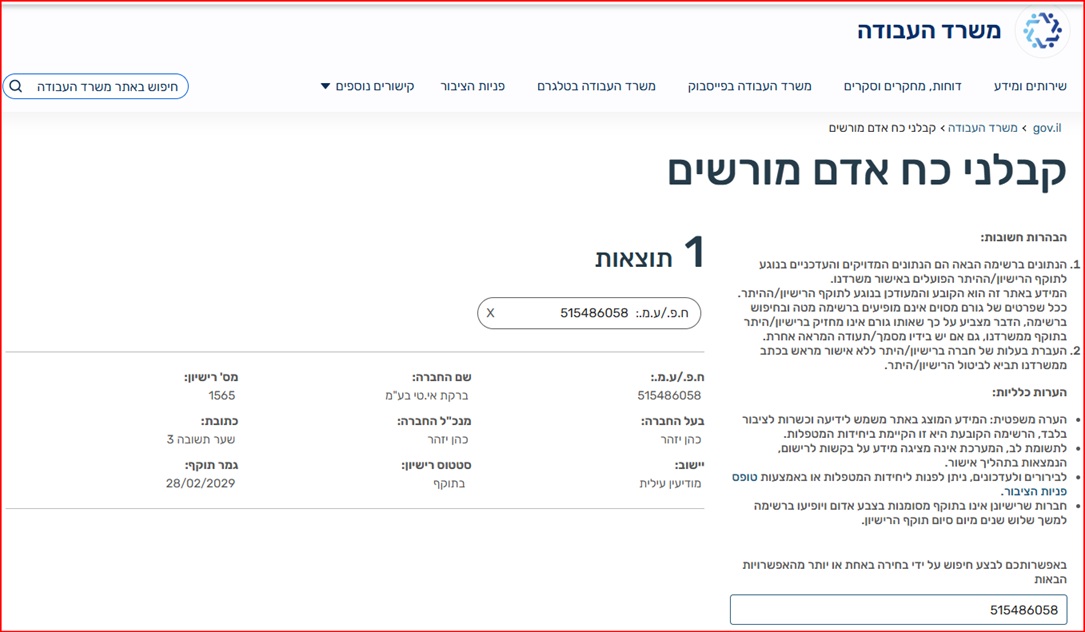 Verify the license on the Ministry of Labor website
Full details · Manpower contractor license page →
Verify the license on the Ministry of Labor website
Full details · Manpower contractor license page →
Social rights · what is the difference?
A worker who issues invoices through a service enjoys the rights of a salaried employee. They accrue seniority toward eligibility for unemployment benefits, receive pension contributions from the employer and are covered by work-injury insurance. According to National Insurance clarifications, these workers are recognized in the system as salaried employees for the purpose of receiving benefits.
A licensed business is not entitled to unemployment benefits. It is independently responsible for pension contributions and for disability insurance. Since 2017 there has been a legal obligation for the self-employed to contribute to a pension, but the contribution comes entirely out of their own pocket, with no employer participation.