Ending Employment in Israel
Proper termination in Israel needs three steps you cannot skip · a good-faith hearing, advance notice by seniority, and severance pay. NETO turns the whole process into an orderly workflow, and for companies abroad handles it end to end as your Employer of Record.
AI Summary Smart overview of this page · click hereClick to read the page summary
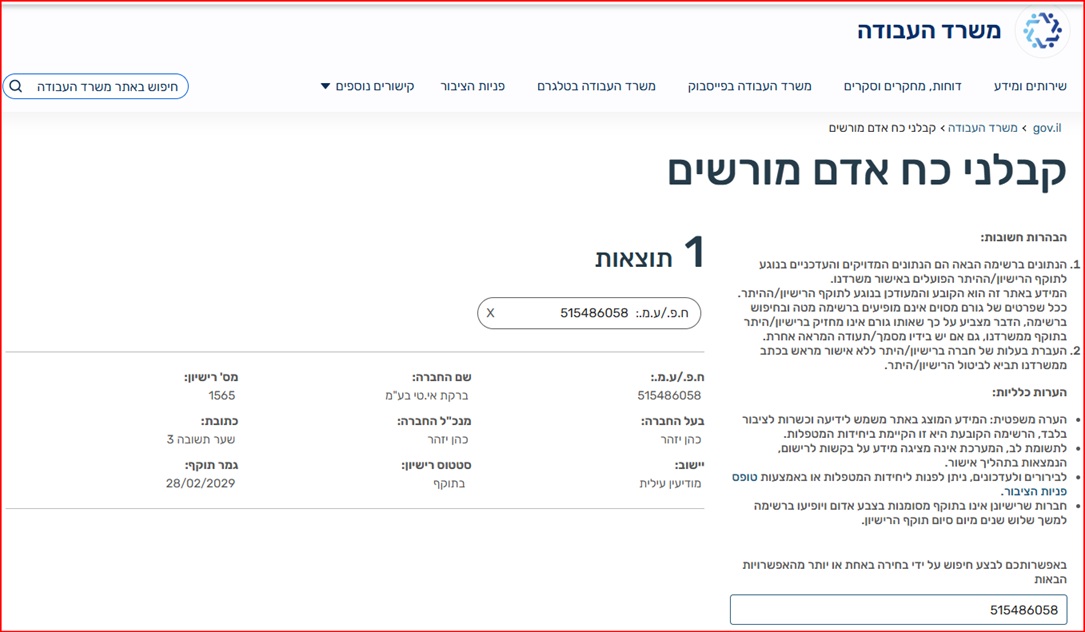
Proper termination in Israel rests on three steps you cannot skip. First, a good-faith hearing before the decision is made · required by case law · where the employee is summoned in advance and allowed to present their case. Second, advance notice according to seniority: for a monthly-salaried employee it accrues in the first year (one day per month of work for the first six months, then 6 days plus 2.5 days for each month after the sixth) and reaches 30 days from the second year onward, or compensation in lieu of notice. Third, severance pay of one month's salary per year of seniority for an employee dismissed after at least one year (with a pro-rata share for partial years); when Section 14 applies, the accrued severance funds pass to the employee. Alongside these, settle the final account · leave redemption, recuperation pay, the last payslip and reporting to the authorities. An unlawful process exposes the employer to a lawsuit and a fine. NETO, a licensed manpower contractor (#1565), turns this into an orderly workflow and, for companies abroad, runs it end to end as the Employer of Record.
This summary is generated from the page content and the linked sources · full detail below. It is not legal advice.
Guide Summary
Ending employment in Israel is not just a form · it is an orderly process. The essentials:
- Hearing · summon and hear the employee before deciding.
- Notice · 1 to 30 days by seniority, or pay in lieu.
- Severance · one month's salary per year of seniority.
- Final account · leave redemption, release of funds and reporting.
Ending Employment Is Not Just a Form · It Is a Process
Ending employment in Israel involves money, documents, rights and operational risk. This guide gives a clear answer · what to check, what to document, when a professional is needed, and how NETO can turn the process into an orderly workflow.
The three steps that make up a proper termination are the hearing, the notice period and severance pay. Skipping one of them, or performing it incorrectly, exposes the employer to a lawsuit. Orderly documentation throughout reduces the risk · so it is important to record what is known, what is missing and who approves each step.
NETO codified Israeli labor law into an automated system, so every right is enforced in full · for both the employee and the employer. For companies abroad, NETO acts as the Employer of Record (EOR) and handles the entire bureaucracy.
The Hearing Before Dismissal
The hearing is the first step · and it must take place before a dismissal decision is made.
The employer must notify and summon the employee in advance. The hearing is held before the decision, not after it.
The employee may raise their arguments and try to persuade the employer to keep them. A sham hearing, where the decision was already made, is prohibited.
The employer must hear and weigh the employee's arguments · so the dismissal cannot be decided immediately at the end of the hearing.
Notice Period by Seniority
The notice period is set by the employee's seniority · between one day and 30 days.
In the first year, notice accrues gradually for a monthly-salaried employee · one day per month of work for the first six months, then 6 days plus 2.5 days for each month after the sixth, reaching 21 days at the end of the first year.
From the second year onward, the notice period is 30 days · for both dismissal and resignation.
The employer may let the employee work through the notice period, or pay compensation in lieu of notice instead.
Severance Pay and the Final Account
An employee dismissed after a year of work is entitled to severance · and the final account must be settled alongside it.
An employee dismissed after at least one year is entitled to severance of one month's salary per year of seniority, with a pro-rata share for partial years.
When Section 14 applies, the severance funds accrued in the fund pass to the employee at the end of employment. A release-of-funds confirmation must be issued close to the termination.
Redemption of remaining leave days, pro-rata recuperation pay accrued, the last payslip and reporting to the authorities.
The Orderly Process · Step by Step
Four steps that turn termination from a risk into a controlled process. At each step, record what is known, what is missing and who approves the next step.
- 1 · Hearing before the decision. Summon the employee in advance, let them argue, and weigh the arguments in good faith · before any decision is made. Document the whole process.
- 2 · Lawful notice. Calculate the notice period by seniority (1 to 30 days), and decide whether the employee works through it or receives compensation in lieu.
- 3 · Severance and rights. Calculate severance (one month's salary per year of seniority), leave redemption and recuperation, and check whether Section 14 applies for releasing the funds.
- 4 · Documentation and reporting. Issue the last payslip, a release-of-funds confirmation and orderly letters, and report to the authorities · orderly documentation reduces risk.
Decision Table · What to Check and What to Do
| Topic | What it means in practice | Recommended action |
|---|---|---|
| Hearing before the decision | Required by case law before dismissal | Summon, hear and document |
| Lawful notice | 1 to 30 days by seniority | Calculate days or pay in lieu |
| Severance and rights | One month's salary per year of seniority | Calculate, release funds and report |
| Orderly documentation | Reduces operational and legal risk | Record what is known, missing and who approves |
Official Sources
For official and binding information, go directly to the authorities' websites:
Government information on employment rights and ending employment. See gov.il · work rights.
Employer obligations and reporting on ending an employment relationship. See Bituach Leumi.
Tax aspects of the final account and release of severance funds. See the Israel Tax Authority.
The NETO EOR Solution
NETO manages the entire termination process through orderly documents · a summons to a hearing, a notice letter, the severance calculation, a release-of-funds confirmation and reporting to the authorities. For companies abroad, NETO acts as the legal Employer of Record (EOR) and handles the process end to end, so you do not manage the bureaucracy alone.
Summons, notice letters and termination documents · prepared and recorded in the system.
Notice, severance, leave redemption and recuperation · calculated lawfully in the final payslip.
Release-of-funds confirmation and reporting to the authorities · handled for you.
As the licensed legal employer (#1565), NETO carries employer responsibility · see NETO's EOR in Israel.
Watch · how employers work with NETO
Two minutes that show exactly what happens from signup to payslip · before you commit to anything.
Frequently Asked Questions
What are the stages of a proper termination in Israel?
Three steps you cannot skip: a hearing before the decision (required by case law), advance notice according to seniority (1 to 30 days), and severance pay of one month's salary per year of seniority. Alongside these, settle the final account, release the accrued severance funds and report to the authorities.
Is a hearing mandatory before dismissal?
Yes. Under Israeli case law the employer must summon the employee in advance, before deciding on dismissal, allow them to present their arguments, and consider them in good faith. It is prohibited to decide in advance and then hold a sham hearing.
How much notice is an employee entitled to?
The notice period is set by seniority. For a monthly-salaried employee it accrues gradually in the first year (one day per month of work for the first six months, then 6 days plus 2.5 days for each month after the sixth) and reaches 30 days from the second year onward. An employer who does not let the employee work through the notice must pay compensation in lieu.
How is severance pay calculated?
An employee dismissed after at least one year is entitled to severance of one month's salary per year of seniority (and a pro-rata share for partial years). When Section 14 applies, the severance funds accrued in the fund pass to the employee. The final account, leave redemption and release of funds are settled close to the termination.
How does NETO help with ending employment?
NETO manages the entire process through orderly documents: summons to a hearing, a notice letter, the severance calculation, a release-of-funds confirmation and reporting to the authorities. For companies abroad, NETO acts as the Employer of Record (EOR) and handles the process end to end.
Is the information on this page legal advice?
No. The information is general information only and is not legal or tax advice. Before any binding action, check your specific case with a lawyer or the competent authority.
Summary
Ending employment in Israel requires balancing convenience, legality, rights and cost · and the best decision rests on clear data and orderly documentation. The three steps you cannot skip are the hearing, the notice period and severance pay, alongside the final account: leave redemption, release of funds and reporting.
At NETO the process becomes an orderly workflow, and for companies abroad it is handled end to end as the legal Employer of Record, under license #1565. Want to understand the right course of action? Talk to us.
Last updated: 09/07/2026 · general information, correct for 2026 and updated periodically.
End Employment in Israel the Right Way
Let NETO handle the hearing, the notice, severance and the final account · lawfully and end to end. Register free, or ask us on WhatsApp.