Freelancer Rights in Israel · Sick Days, Pension & Severance
A self-employed freelancer in Israel is responsible for their own tax, National Insurance and pension · and usually gets no sick days, no employer pension match and no severance. This 2026 guide sets out what freelancers do and don't get, and how working through NETO restores employee-like protection while keeping the flexibility.
AI Summary Smart overview of this page · click here · click hereClick to read the page summary
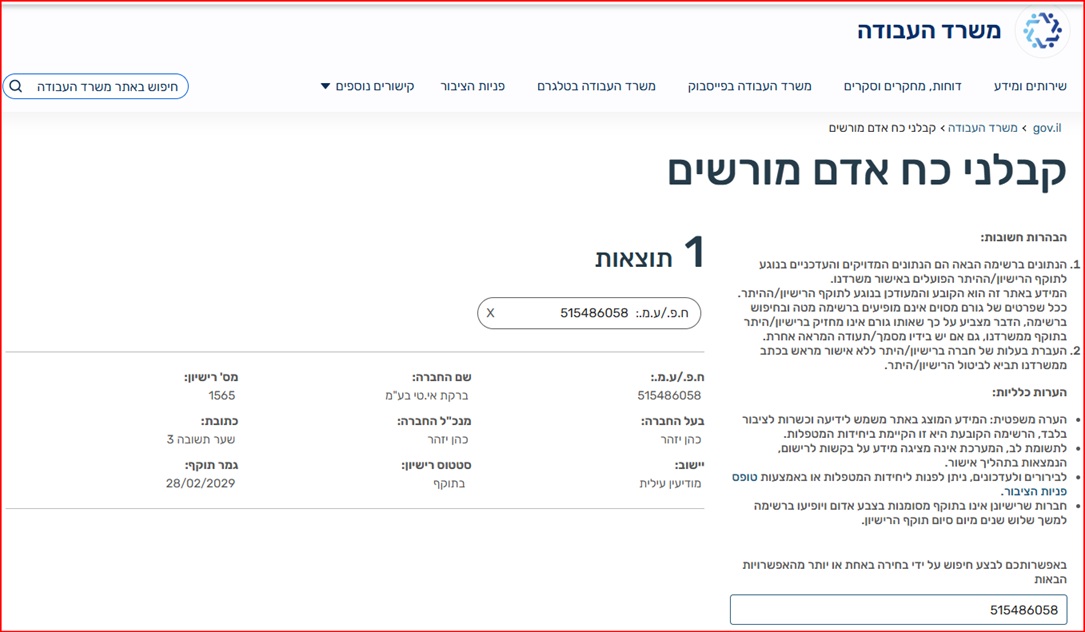
Freelancer rights in Israel are different from an employee's. A self-employed freelancer sells a service, not working time, and is generally responsible for their own income tax, National Insurance and pension. That means no automatic sick days, no employer pension contribution, no severance and no paid vacation or recuperation. A salaried employee, by contrast, accrues up to about 18 sick days a year (one and a half per month, up to 90 days), 16 vacation days, recuperation pay, plus pension (6% employee, 6.5% employer) and severance (8.33%). Working through NETO, a licensed manpower contractor (#1565), a freelancer becomes a salaried employee: an invoice goes to the client, and the worker receives a payslip with full social rights · without opening a business file. The ~5% fee derives from the client's pre-VAT invoice.
This summary is generated from the page content and the linked sources · full detail below. It is not legal advice.
The law requires 6% · at NETO it is 8.33%
The mandatory pension extension order obliges every employer to contribute 6% of salary to the severance component, and section 14 of the Severance Pay Law applies to that money automatically. NETO contributes the full severance component by default · 8.33% · so the ongoing contribution replaces severance pay in full and no top-up is due when the employment ends. An employer contributing less than 8.33% must top up severance at the end of the employment relationship.
A worker who declares they have no active pension fund, in a one-off engagement · there the contribution obligation begins only after six months of work. A worker with an active pension arrangement is entitled from day one, with contributions made retroactively after three months or at the end of the tax year, whichever is earlier.
General information · not legal advice. The binding text is the statute and the extension order themselves.
Guide Summary
Everything a freelancer in Israel should know about their rights · what you get, what you don't, and how to fix it:
- A freelancer sells a service, not time · so sick days are not automatic.
- Self-employed freelancers get no employer pension, no severance, no paid vacation.
- Employees accrue up to about 18 sick days a year and full social rights.
- Correct classification is decided by substance, not the contract label.
- Via NETO you are a salaried employee · full rights, without a business file.
- The ~5% fee derives from the client's pre-VAT invoice · no hidden costs.
Employee rights a freelancer is missing · key figures 2026
What Are Freelancer Rights in Israel?
Freelancer rights are different from the rights of a salaried employee. A self-employed freelancer sells a service to a client · not working time like an employee. They are generally responsible for reporting and paying their own income tax and National Insurance, and for arranging their own pension. Every decision therefore begins with a basic question: what is the true nature of the engagement. A small mistake in the payment route or in classification can turn into an expensive bureaucratic project.
The main risk is choosing a route that does not fit the substance of the work · for example, calling someone a freelancer when in practice an employer-employee relationship exists, or receiving income without proper documentation and reporting to the authorities. The earlier things are documented, the easier it is to avoid mistakes. See also how status is decided in self-employed vs salaried under National Insurance.
What Freelancers Don't Get
As a self-employed freelancer working against an invoice, you are outside the employee safety net. Unless an employer-employee relationship is later recognized, you generally do not receive:
- Paid sick days · when you are ill and do not work, there is simply no income and no one paying sick pay.
- Employer pension contribution · a self-employed person must arrange and fund their own pension.
- Severance pay · there is no employer severance component when an engagement ends.
- Paid vacation and recuperation · time off is unpaid unless agreed otherwise.
- The employer's share of National Insurance · a self-employed person pays their own contributions in full.
Sick Days · The Clearest Gap
Sick days for a freelancer are not automatically the same as sick days for an employee. A self-employed freelancer sells a service, so when they are ill and cannot work, there is usually no income and no party that pays sick pay. Entitlement depends on the agreement between the parties and on the real classification of the relationship · not just on the title written in a document.
A salaried employee, by contrast, is entitled to sick pay by law: they accrue one and a half sick days for every month of work (about 18 days a year), up to an accumulation of 90 days, alongside National Insurance, pension and severance. Through NETO a freelancer can reach exactly this position · you issue an invoice like a freelancer and at the same time are a salaried employee of NETO, with a payslip and full social rights, without opening a business file.
The Employee Rights, in Numbers
These are the social rights a salaried employee accrues · and that a self-employed freelancer generally does not:
Up to about 18 sick days a year, 16 vacation days and recuperation pay · rights a solo freelancer does not have.
Contributions and health insurance are deducted and reported, exactly as with any employer · so you are insured.
Pension contributions (6% employee, 6.5% employer) and a severance component (8.33%) accrue in your favour via the payslip.
Employee-Like Protection via NETO
When you work through NETO you are a salaried employee in every respect. You issue an invoice to the client for the work, NETO receives the payment and pays you a salary with a lawful payslip. In this way a freelancer who would not have been entitled to sick days as a self-employed person accrues them like any salaried employee in Israel · alongside the full set of social rights.
Work like a freelancer · choose your clients and projects · while being a salaried employee of NETO.
Sick days, vacation, recuperation, National Insurance, pension and severance · accrued through the payslip.
No opening or closing a business file, no accountant, no annual reports of your own. See how to start as a freelancer.
NETO is a licensed manpower contractor (licence #1565) supervised by the Ministry of Labor.
Self-Employed Freelancer vs Salaried via NETO
The same work, two very different positions. Here is the difference, side by side:
| Topic | Self-employed freelancer | Salaried via NETO |
|---|---|---|
| Paid sick days | None · unless agreed in the contract | Up to 18 days a year by law |
| Vacation and recuperation | None | 16 vacation days + recuperation |
| National Insurance and pension | The freelancer arranges and pays it alone | Deducted and contributed via the payslip |
| Severance | None | Accrued (8.33%) |
| Opening a business file | Required | Not required |
| Bureaucracy and reporting | On you · accountant and annual reports | Handled by NETO |
| Cost | Accountant and annual reports | ~5% of the client's pre-VAT invoice |
How the Route Works · and the Cost
The mechanics are simple. You issue an invoice to the client through NETO's system for the work performed; the client approves and pays NETO; and NETO pays you a salary with a payslip, handling all the deductions and contributions. You get net to your bank account · and the social rights accrue automatically.
Your taxes are the same as any employee in Israel. The simulator shows exactly how much gross and how much net will remain after tax, social contributions and pension.
The fee is about 5% of the invoice amount and derives from the client's pre-VAT invoice · it is not an extra payment out of your pocket, and you pay only when an invoice is actually issued.
Sick days, vacation, recuperation, National Insurance, pension and severance · all accrue through the payslip, without a business file and without an accountant.
Frequently Asked Questions
Do freelancers get paid sick days in Israel?
Usually not automatically. A self-employed freelancer sells a service, not working time, so when they are ill and do not work there is simply no income and no party paying sick pay. Entitlement depends on the agreement and on the real classification of the relationship. When you work through NETO as a salaried employee, you accrue sick days by law.
How many sick days does a salaried employee get in Israel?
Under the Sick Pay Law an employee accrues one and a half sick days per month of work, up to an accumulation of 90 days · roughly 18 sick days per year. Working through NETO as a salaried employee, you accrue sick days by law.
Does a freelancer have to open a business file?
Not always. Ongoing activity can justify opening a business file, but for a small project or side work it is worth checking an invoice-and-payslip route through NETO, which saves managing the file.
What rights does a freelancer get through NETO?
When you work through NETO you are a salaried employee in every respect: an invoice is issued to the client, you receive a payslip and accrue full social rights including up to 18 sick days a year, vacation and recuperation, National Insurance, pension and severance · without opening a business file.
What is the difference between an invoice and a payslip?
With an invoice the self-employed person reports and pays their own income tax, National Insurance and pension, and carries the operational responsibility. With a payslip through NETO the deductions and contributions are handled automatically and the worker receives net to their account · higher operational certainty without managing a business file.
How much does it cost to work through NETO?
There is no fixed cost. The fee is about 5% of the invoice amount (before VAT) and derives from the invoice the client pays · it is not an extra payment out of the worker's pocket. You pay only when an invoice is actually issued, with no hidden costs, and in return you receive a payslip and full rights.
Summary
Freelancer rights in Israel are fundamentally different from an employee's. A self-employed freelancer sells a service and is responsible for their own tax, National Insurance and pension · which means no automatic sick days, no employer pension contribution, no severance and no paid vacation or recuperation. A salaried employee accrues up to about 18 sick days a year, 16 vacation days, recuperation, pension and severance.
For a freelancer who wants the flexibility of self-employment together with the protection of an employee, working through NETO in a manpower model under licence #1565 delivers exactly that: you invoice the client, receive a payslip with full social rights, and skip the business file entirely · with a ~5% fee that derives from the client's pre-VAT invoice.
Last updated: 09/07/2026 · this is general information and not legal, tax or accounting advice. Rates and figures are correct for 2026 and may be updated annually.
Freelance Flexibility · Employee Rights
Keep working like a freelancer and gain sick days, pension, severance and a payslip · through NETO, without a business file. Register free, or ask us on WhatsApp.
Related guides worth reading

Salary Payment by Invoice
Invoice a client and get paid on a payslip · without opening a business file.
Salary Payment by Invoice in Israel:
Freelancer · How to Start
The first steps to working as a freelancer in Israel · the smart way.
Freelancer · How to Start?
Invoice via a Service vs Opening a Business
When to open a business file · and when a payslip route is smarter.
Invoicing via a Service or Opening a Business?
Self-Employed vs Salaried · National Insurance
How status is classified · and what it means for your benefits.
Self-Employed vs SalariedOpening a Business File
What it takes to open a business file · and the alternatives.
Opening a Business FileNETO FAQ
Common questions about working through NETO · answered.
NETO FAQ