Israel Employment Laws for EmployersYour legal obligations from first hire to termination · and how to meet them without a local entity
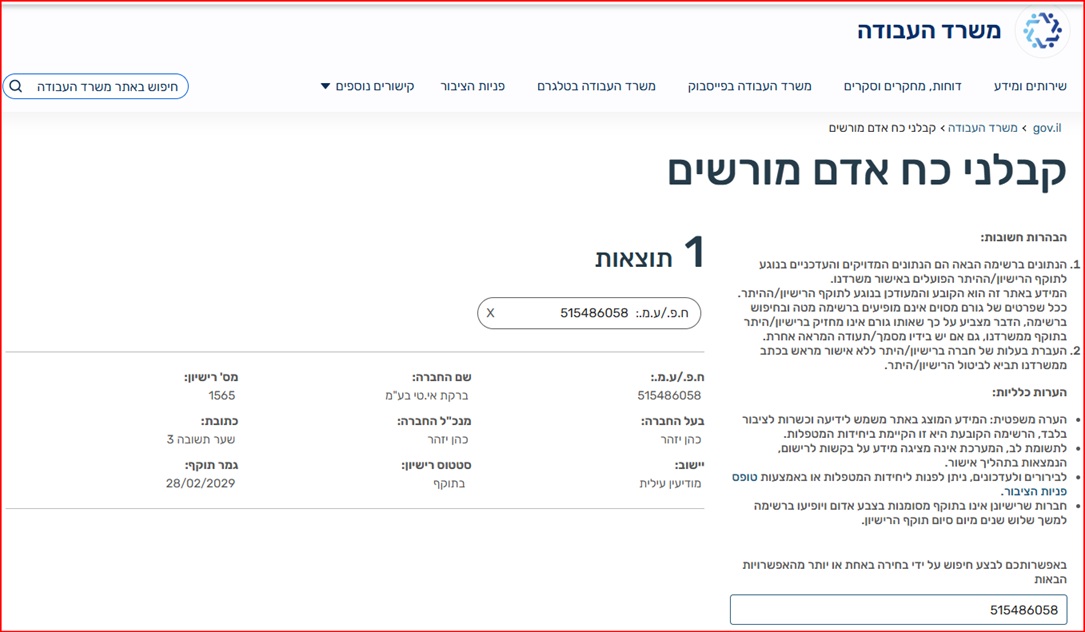
Running a business in Israel means mastering the employer side of Israeli labor law: a written notice of terms within 30 days, minimum wage, overtime, mandatory pension, lawful payslips, and the correct way to end employment. This guide walks through every obligation · and how NETO lets a foreign company employ in Israel, fully compliant, without opening a subsidiary.

Every statute, extension order, ruling and current figure · in one place, each with its source.
AI summary · employer obligations under Israeli labor lawClick to read the page summary
Israeli labor law places a broad set of duties on the employer, from the first day of work to termination. In short: register with the Tax Authority and National Insurance and open a withholding file; give the employee a written notice of employment terms within 30 days and collect tax Form 101; pay at least the statutory minimum wage and calculate overtime at 125% then 150%; make mandatory pension and severance contributions (employer 6.5% + 6%, employee 6%); issue a lawful monthly payslip and pay on time or risk a delay-of-wages penalty; grant paid annual leave, holidays and sick days; and, when ending employment, give statutory notice, hold a hearing, and pay severance (about one month per year of service). Sectoral extension orders can add rights on top. A foreign company can meet all of this without a local entity by employing through an Employer of Record like NETO (license 1565).
- Hiring · written notice of terms + Form 101 within 30 days.
- Pay · at least the statutory minimum wage; overtime 125% then 150%.
- Pension · 6.5% + 6% employer, 6% employee, on the insured wage.
- Payslip · lawful monthly payslip, paid on time or it is "delayed wages".
- Ending work · hearing + notice + severance and final documents.
- Foreign employer · employ through an EOR, no subsidiary needed.
- The rules in numbers
- What is Israeli labor law?
- Why compliance pays off
- Hiring: the mandatory documents
- Reporting to the authorities
- Minimum wage
- Working hours & overtime
- Pension contributions
- Payslip & delayed wages
- National Insurance & health
- Extension orders
- Leave, holidays & sick days
- Lawful & unlawful deductions
- Notice, severance & termination
- Enforcement & sanctions
- How to employ compliantly
- Foreign employers: employ without an entity
- Frequently asked questions
Employer duties in numbers
What is Israeli labor law, and why is it critical for an employer?
Israeli labor law is the body of statutes, regulations, extension orders and court rulings that governs the relationship between employer and employee. Its central aim is to protect employees · which is why these are known as "protective laws". For the employer the meaning is direct: failing to comply exposes you to claims, fines and even criminal proceedings.
The framework rests on a set of core statutes, each with its own plain-English guide:
- Minimum Wage Law, 1987 · the floor on pay
- Hours of Work and Rest Law, 1951 · hours, overtime, weekly rest
- Wage Protection Law, 1958 · on-time pay, payslips, deductions
- Severance Pay Law, 1963 · severance on dismissal
- Mandatory Pension Extension Order · pension and severance deposits
- Annual Leave Law, Sick Pay Law and the Advance Notice Law round out the picture
The Ministry of Labor's Regulation and Enforcement Administration polices these rules and runs regular audits.

Why knowing the law pays off for your business
Compliance is not only a legal duty · it is a smart investment. An employer who knows the rules and follows them enjoys a fair, efficient workplace, protects its reputation, and heads off expensive disputes before they start. It also underpins your own employer rights in Israel and lets you run the business with confidence.
Correct paperwork and pay remove the most common grounds for labor-court lawsuits.
Employees talk. A reputation for fair, lawful employment helps you attract and keep talent.
Knowing the true cost of employment lets you budget accurately · see the employer cost guide.
Hiring a new employee · the mandatory documents
The moment you take on a new employee, the law requires you to give a written "notice to employee" within 30 days of the start date. See the full onboarding checklist for the practical steps.
The written notice must set out the material particulars of the job:
- Employer identity and the employment start date
- Job description and the direct supervisor
- Salary and its components, and working hours
- Weekly rest days and social rights
- Applicable collective agreement, if the sector has one
Failing to deliver the notice can itself be grounds for a claim · see the notice-to-employee rules on Kol Zchut.
Form 101 is mandatory for every employee, completed within 30 days of starting work. It sets the income-tax credit points and the tax calculation.
- Renewed and re-signed every year at the start of the tax year
- Credit points depend on the employee's personal data
- Special benefits need documents · new immigrants, priority-area residents, discharged soldiers, degree holders
Employees with more than one income source should also check tax coordination.
Beyond the legal minimum
It is worth adding to the notice a few clauses the statute does not require: an overtime policy, work-from-home rules, attendance-reporting procedures, and a company-equipment policy. Documenting these up front prevents misunderstandings and disputes later. Not sure the worker is even an "employee"? Misclassification is one of the costliest mistakes in Israel · use the employee vs contractor test.
Reporting to the authorities when you take on staff
Before the first payroll runs, an employer must be registered with the Tax Authority and the National Insurance Institute (Bituach Leumi), and must report each new hire.
Register with the Tax Authority and National Insurance if you do not already hold a file.
Enter the employee in the employer system with their details, start date and estimated salary.
File monthly reports and payments to National Insurance, income tax and the pension provider.
Neglecting these reporting duties can trigger fines and delays in paying the employee's rights. For the full payroll picture · payslips, withholding and reporting · see the Israel payroll guide. A foreign company that does not hold Israeli registrations can meet all of this through an Employer of Record, which is already registered as the employer of record.
Minimum wage · Minimum Wage Law, 1987
"An employee who has completed the age of 18 and is employed on a full-time basis is entitled to receive from the employer a wage that is no less than the minimum wage per month; an employee paid on an hourly basis is entitled to no less than the minimum hourly wage."
Summary translation of the Minimum Wage Law, 5747-1987, s. 2. Binding text: Hebrew (Reshumot).
Every employer in Israel must pay at least the minimum wage, and it applies to every employee · full-time, part-time or hourly. The law sets a monthly floor for a full-time role and an hourly floor; part-time pay is pro-rated but the hourly rate can never drop below the statutory minimum. The shekel amounts are set by statute and updated periodically, and sectoral extension orders can set a higher figure · never a lower one. Because the exact figure changes, confirm the current amount at the official source before you rely on it.
The figures you have to know
Amounts and deadlines in force today · each with its effective date and source.
Working hours & overtime · Hours of Work and Rest Law, 1951
Work day (s. 2): "A work day shall not exceed eight hours; on night work, and on the day before the weekly rest or a festival, it shall not exceed seven hours."
Work week (s. 3): "A work week shall not exceed forty-five hours."
Overtime pay (s. 16): "For the first two overtime hours on a given day the employer shall pay not less than 1¼ of the regular wage, and for each additional overtime hour not less than 1½ of the regular wage." Under s. 18, the "regular wage" includes every supplement the employer pays.
Summary translation of the Hours of Work and Rest Law, 5711-1951, ss. 2, 3, 16, 18. Binding text: Hebrew (Reshumot).
Overtime is any hour worked beyond the regular day or week. It is paid at 125% for the first two overtime hours each day and 150% for each hour after that. In practice, extension orders shortened the customary week to 42 hours (about 182 hours a month), so many payslips calculate overtime beyond that lower threshold. Getting overtime wrong is one of the most common triggers of labor-court claims, so it must be tracked and computed carefully · and always on the "regular wage" including fixed supplements, not base pay alone. See the hours of work and rest guide.
Common mistake · "global" overtime
A "global overtime" arrangement · a fixed monthly sum paid in advance for overtime · is permitted, but only under specific conditions. The amount must genuinely reflect the hours actually worked and cannot be used to cover underpayment. Many employers hit legal trouble when the global figure does not match reality. Record actual attendance and reconcile it periodically.
Mandatory pension · Pension Extension Order
Pension is set not by a Knesset statute but by a general collective extension order that binds every employer in Israel.
"Every employee shall be insured under a comprehensive pension arrangement. The employer shall contribute to the pension savings, the employer shall contribute in respect of severance, and the employee shall contribute from wages, at the rates fixed in the order."
Minimum contribution rates: employer 6.5% to pension, employer 6% in respect of severance, and employee 6% · a total of 18.5% of the insured wage.
Summary of the general Extension Order for Comprehensive Pension Insurance in the Economy. Binding text: Hebrew (Reshumot).
Every employer must pay into the pension fund the employee chooses. Timing depends on the employee's pension status: entitlement begins after six months of work, or immediately if the employee already holds an active pension arrangement. Missing contributions or paying them late is a serious breach of the employer's duties. The 6% severance portion links to Section 14 of the Severance Pay Law, below.
The payslip and on-time pay · Wage Protection Law, 1958
Time of payment (s. 9): "Wages paid on a monthly basis shall be paid at the end of the month for which they are due." Wages unpaid by the ninth day after that date become "delayed wages", carrying a delay-of-wages penalty.
Payslip (s. 24): "An employer must keep a wage ledger and give every employee a written payslip, including the particulars listed in the Schedule to the Law."
Deductions (s. 25): "No sums shall be deducted from wages other than those specified" in the Law.
Summary translation of the Wage Protection Law, 5718-1958, ss. 9, 24, 25. Binding text: Hebrew (Reshumot).
A detailed written payslip is mandatory every month and must reach the employee no later than the 9th of the following month. It has to show the statutory particulars: employer and employee details, the pay period, days and hours worked, base pay and every component, deductions, pension contributions, and the net amount. Salary that is still unpaid by the 9th becomes "delayed wages", exposing the employer to a significant penalty · up to 20% of the wage per week of delay in the first month, and more after that. Beyond the money, delayed wages damage trust and reputation. A tidy process · close attendance, manager approval, prepare payroll, review · prevents this.
National Insurance & health · the employer's duty
The employer must deduct the employee's share of National Insurance and health-insurance contributions from wages and transfer it, together with the employer's share, to the National Insurance Institute.
The deduction is taken from every wage component that is liable for contributions, at the rates fixed by law. The employer pays its own portion on top. Failing to transfer the funds on time can trigger fines and interest. National Insurance is what funds the employee's entitlements · maternity, injury at work, unemployment and more · so accurate, timely reporting protects both sides.
Extension orders · why the statutes are not the whole story
Israeli labor law is not only statutes · it also includes extension orders that apply the terms of collective agreements to whole sectors or to the entire economy. An extension order can grant rights the basic law does not, and in sectors like security, cleaning and catering it can substantially change the cost of employment.
| Topic | Basic statute | Extension order (example) |
|---|---|---|
| Annual leave days | From 12 days in year one | Up to 16 days in some sectors |
| Recuperation pay days | 5 days per year | 7 days per year in some sectors |
| Employer pension | 6.5% | Up to 7.5% in some sectors |
Leave, holidays & sick days · what employees are entitled to
Employees are entitled to paid annual leave, paid sick days and paid public holidays. The employer must track and grant all three.
Accrues by seniority · from 12 days in the first year up to 28 days after 14 years. Unused days are redeemed on termination.
Accrue at 1.5 days per month up to a cap of 90. Day 1 unpaid, days 2 and 3 at 50%, from day 4 at 100%, with a medical certificate.
Paid according to the employee's religion · for example nine Jewish holidays · and the relevant holidays for employees of other faiths.
What you may and may not deduct from wages
Deductions from wages are allowed only where there is a legal basis or the employee's explicit written consent. The list is closed, and unlawful deductions are a major source of legal risk.
- Income tax
- National Insurance and health contributions
- Pension contributions
- Debts the employee approved in writing
- Fines
- Damage to equipment
- Till shortfalls
- Any unilateral deduction the employee did not agree to
Continue from here
Three ways to go deeper · pick what fits you now.
Notice, severance & termination · doing it lawfully
Advance notice is a mutual duty: both employer and employee must give notice before ending the relationship. The number of days depends on seniority and the type of pay.
| Seniority | Monthly-paid employee | Daily / hourly employee |
|---|---|---|
| Up to 6 months | 1 day per month | 1 day per month |
| 6 to 12 months | 6 days + 2.5 per extra month | 6 days + 2.5 per extra month |
| One year and over | One full month | Two and a half weeks (14 calendar days) |
Separately from the statute, Israeli labor-court case law requires the employer to hold a hearing before dismissing: a written invitation stating the reasons for the planned dismissal, and a genuine chance for the employee to respond. Dismissal without a real hearing can be ruled unlawful and carry extra compensation beyond severance.
"A person who has worked one year continuously with one employer, or at one workplace, and is dismissed, is entitled to severance pay. The rate is one month's wage for each year of employment for a monthly-paid employee, with a proportional amount for part of a year."
Under Section 14, deposits to a pension or provident fund can stand in place of the severance lump sum where a collective agreement or ministerial approval so provides.
Summary translation of the Severance Pay Law, 5723-1963, ss. 1, 12, 14. Binding text: Hebrew (Reshumot).
An employee dismissed after one continuous year is entitled to severance of about one month's last wage per year of service. Where Section 14 applies, the 6% monthly severance deposit into the pension fund makes up the severance, and the fund passes to the employee at the end of employment. Make sure the deposits were made on time and in the right amounts. See the Severance Pay Law guide.
On ending employment the employer must give the employee several documents:
- Form 106 (by 31 March of the following year)
- Employment certificate confirming the period of work
- Form 161 to the tax authorities · filed digitally since January 2024
Who enforces the law · and what breaches cost
Who enforces it
The Ministry of Labor enforces labor law through its Regulation and Enforcement Administration. It runs proactive audits, handles employee complaints, and imposes financial sanctions on employers who breach the rules. Complaints can come from employees, workers' organizations, or other parties.
What breaches cost
Breaking the rules can lead to administrative fines of tens of thousands of shekels, civil claims for compensation, and in serious cases criminal proceedings. The reputational damage can be just as costly · an employer that violates rights struggles to recruit and keep good people.

How to employ someone in Israel compliantly
Put the statutes together and the employer's path is a clear sequence · from registration to a lawful exit.
- Register as an employer. Open a withholding tax file with the Tax Authority and register with National Insurance before the first payroll · or appoint an Employer of Record that already holds these registrations.
- Give written notice of terms. Provide a written notice of employment terms within 30 days of the start date, and have the employee complete Form 101.
- Track attendance and run a lawful payslip. Record clock-in and clock-out daily, pay at least the minimum wage, calculate overtime correctly, and issue a detailed monthly payslip on time.
- Make mandatory contributions and report. Deposit pension and severance, deduct income tax and National Insurance, and file monthly reports to the authorities and the pension provider.
- End employment lawfully. Hold a hearing where required, give statutory notice, pay severance, release the pension and severance funds, and issue the final tax and employment documents.
Employ in Israel without a local entity
Every obligation on this page · registration, notices, minimum wage, overtime, pension, payslips, reporting, notice and severance · falls on the legal employer. For a company based outside Israel, setting up a subsidiary just to hire a few people is slow and expensive. There is a simpler route.
How an Employer of Record works
With an Employer of Record (EOR) such as NETO, the EOR becomes the legal employer of record in Israel. It holds the withholding file and National Insurance registration, runs payroll, makes pension and severance contributions, issues compliant payslips, and files every report. Your company keeps the day-to-day working relationship; NETO carries the legal and administrative load.
- No subsidiary · start employing in weeks, not months
- Full compliance · every statutory duty handled under license 1565
- One clear cost · the client company pays a 5% commission on the invoice (pre-VAT); nothing is ever charged to the worker
- Local expertise · support that understands Israeli labor law
Weighing the options? Compare EOR vs a subsidiary in Israel, or read about EOR services for foreign companies and hiring Israeli employees easily.
Every employer duty handled · you just manage the work
Notices, minimum wage and overtime, pension, payslips, reporting and severance · NETO runs the entire employment process from A to Z, under manpower contractor license #1565, supervised by the Ministry of Labor, since 2016. Employ in Israel with no local entity. The client company pays a 5% commission on the invoice (pre-VAT); nothing is ever charged to the worker.
Employer obligations in Israel · frequently asked questions
What are the core obligations of an employer in Israel?
Can a foreign company employ workers in Israel without a local entity?
How much notice must an employer give before dismissal?
When must an employer start making pension contributions?
Is it allowed to deduct damage caused by an employee from wages?
When does unpaid salary become "delayed wages"?
Does the pension duty apply to part-time employees?
How do I know whether an extension order applies to my business?
More guides for employers in Israel
Employer of Record in IsraelEmploy workers in Israel without a local entity.Read more
EOR vs SubsidiaryWhich route into the Israeli market fits you.Read more
Employer Cost in IsraelWhat an employee really costs beyond gross salary.Read more
Israel Payroll GuidePayslips, withholding and reporting in Israel.Read more
 Employer Rights in IsraelWhat employers may require, monitor and decide.Read more
Employee vs ContractorClassification in Israel and why it matters.Read more
Pension ContributionsEmployer and employee pension duties in Israel.Read more
Severance Pay LawWhen severance is due and how it is calculated.Read more
Ending EmploymentHearings, notice and final payments done right.Read more
Hiring StudentsWhat changes when you employ students.Read more
Labor Law at a GlanceEmployee rights and employer duties in one guide.Read more
Employer FAQQuick answers for hiring through NETO.Read more
Employer Rights in IsraelWhat employers may require, monitor and decide.Read more
Employee vs ContractorClassification in Israel and why it matters.Read more
Pension ContributionsEmployer and employee pension duties in Israel.Read more
Severance Pay LawWhen severance is due and how it is calculated.Read more
Ending EmploymentHearings, notice and final payments done right.Read more
Hiring StudentsWhat changes when you employ students.Read more
Labor Law at a GlanceEmployee rights and employer duties in one guide.Read more
Employer FAQQuick answers for hiring through NETO.Read more
The law requires 6% · at NETO it is 8.33%
The mandatory pension extension order obliges every employer to contribute 6% of salary to the severance component, and section 14 of the Severance Pay Law applies to that money automatically. NETO contributes the full severance component by default · 8.33% · so the ongoing contribution replaces severance pay in full and no top-up is due when the employment ends. An employer contributing less than 8.33% must top up severance at the end of the employment relationship.
A worker who declares they have no active pension fund, in a one-off engagement · there the contribution obligation begins only after six months of work. A worker with an active pension arrangement is entitled from day one, with contributions made retroactively after three months or at the end of the tax year, whichever is earlier.
General information · not legal advice. The binding text is the statute and the extension order themselves.
Test yourself
Five questions from NETO's labour law compendium. Every answer comes with an explanation and a link to the full item.
Need a labour law lawyer?
Tell us briefly what happened. We will understand the picture and connect you with a specialist. There is no commitment, and this is not legal advice from us.
Received · thank you
Your request is saved. We will be in touch to connect you with a suitable lawyer. If it is urgent · +972-8-976-1874.
General information · not legal advice. The binding text is the statute and the ruling themselves.
Before you move on
The information on this page is correct as of the verification date below, and is general by nature. The outcome in a concrete case turns on seniority, sector, the applicable collective agreement and the exact wording of the contract · details a page cannot verify for you.
Every statute, ruling and figure in one place
This statute is one item in a full compendium · statutes, extension orders, leading rulings and current figures, each with an official source and a verification date, read from both the employer's and the worker's side.
Open the labour law centre