Onboarding New Employees in Israel
Onboarding a new employee involves a deductions file, Form 101, a monthly payslip and social rights. This employer guide walks through the process step by step · and shows how, through NETO, you can employ during a trial period with no employer-employee relationship: you receive an invoice, the worker receives a payslip with full rights.
AI Summary Smart overview of this page · click hereClick to read the page summary
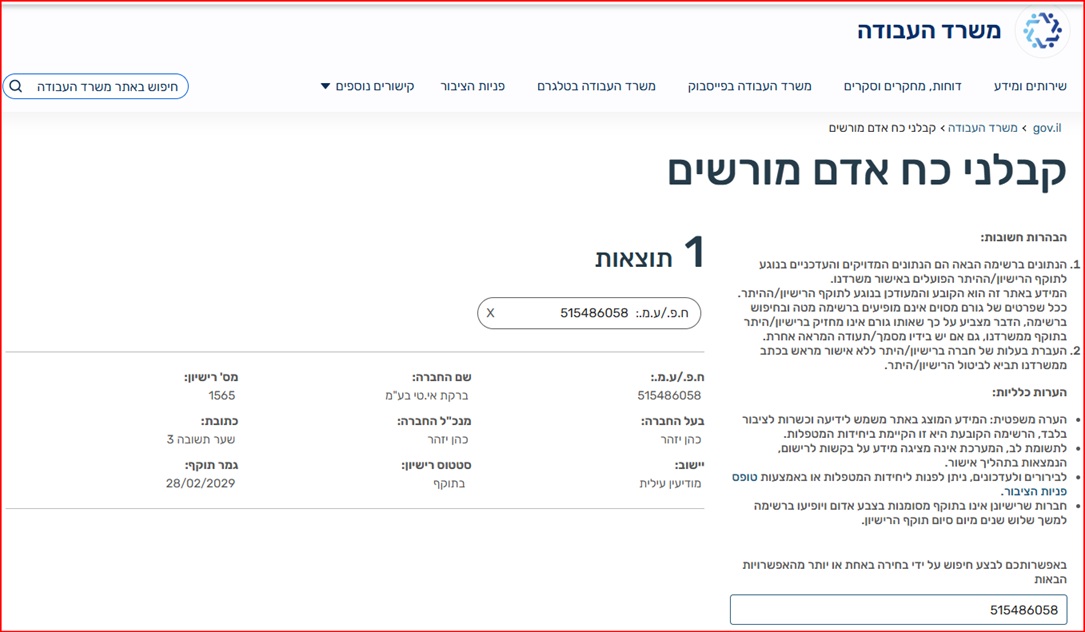
Onboarding a salaried employee in Israel starts with the paperwork. The employer must open a deductions file (Tik Nikuyim) with the Income Tax Authority and the National Insurance Institute, have the employee sign Form 101 (the employee card, on which the employee declares personal details, marital status and tax credit points), set them up in the bookkeeping, issue a monthly payslip and uphold their social rights. Form 101 must be signed at the start of employment and at the start of each year, as the basis for the tax withholding on the payslip. A prudent employer estimates the true employer cost at about 1.3 times the gross salary (roughly 130%). To try someone out before all of this, NETO · a licensed manpower contractor (#1565) · can employ the worker on your behalf during a trial period: you receive an invoice, the worker receives a payslip with full rights, there is no employer-employee relationship, and you pay only for work actually performed. When the fit is confirmed, you can hire them directly with no release fee and no minimum period.
This summary is generated from the page content and the linked sources · full detail below. It is not legal or accounting advice.
Hiring - or looking for a job?
Live listings with pay shown on every job - the employer's stated salary or a clearly marked estimate. Posting is free for employers, and applying costs nothing.

Guide Summary
The common question: what must an employer do when onboarding a new employee? In brief:
- Open a deductions file with Income Tax and National Insurance.
- Have every new employee sign Form 101 · the employee card.
- Employer cost is estimated at about 130% of the gross salary (a factor of 1.3).
- Through NETO · the worker gets a payslip, you get an invoice.
Onboarding New Employees · What Must an Employer Do?
Onboarding new employees is not always simple. A small business that grows and wants to start employing salaried workers must open a deductions file (Tik Nikuyim) with the Income Tax Authority and the National Insurance Institute, and each month report and pay the tax withheld at source from the employee. Beyond that, the employee must be set up in the bookkeeping, the salary must be produced, and their social rights must be upheld.
Sometimes it is worth avoiding an employer-employee relationship and employing through outsourcing until you are sure the employee is a good fit. NETO offers a digital solution that lets you employ workers during a trial period without taking them into your organizational systems and without worrying about an employer-employee relationship · at least until you are sure. And it is all done at the click of a button.
When Is It Worth Hiring Another Employee?
Before onboarding, it is worth asking a few practical questions:
Will hiring the extra employee justify the investment and grow the business?
A trial period helps you test the value of the hire in practice, before full onboarding.
Check that the employee fits the role and the business before full onboarding.
The employer cost has components beyond the gross salary · plan for them in advance.
Employer Duties When Onboarding · and the Risks to Know
Taking on a salaried employee calls for bureaucratic preparation · and alongside it, a few exposures a prudent employer should know in advance:
- Form 101 · the employee card. Every new employee declares their personal details, marital status and tax credit points on Form 101. The employer must have it signed at the start of employment and at the start of each year, as the basis for the tax withholding on the payslip.
- Rising and unexpected employer costs. An extra employee means extra costs, and it does not end with the gross salary. A prudent employer estimates the employer cost as a factor of about 1.3 times the gross (130%) · but this does not capture every parameter and can lead to under-pricing.
- Exposure to unpleasant surprises. If the employee falls ill during the trial period, or is involved in an accident and is absent, in some cases the employer must still pay them.
- Legal exposure · not knowing the law is no excuse. There is a great deal to know in labor law. It is worth reviewing employee rights in Israel to avoid costly mistakes.
Form 101 · Step by Step
Form 101 (the employee card) is the basis for calculating tax withholding. Here is how it works, step by step:
- 1 · The employee fills in personal details. Full name, ID number, address and contact details, along with the start date of employment.
- 2 · The employee declares marital and family status. Marital status and children, which affect entitlement to tax credit points.
- 3 · The employee declares other income and status. Whether this is the only or the main income, and whether there is other income · relevant to tax coordination.
- 4 · The employee claims tax credit points. Credit points to which they are entitled, with supporting documents where required.
- 5 · The employee signs and dates the declaration. The signature confirms the accuracy of the details, which the employer relies on for the payslip.
- 6 · The employer keeps it and renews it yearly. The employer must have every employee sign Form 101 at the start of employment and at the start of each year.
Trial Employment Through NETO · 3 Steps
Instead of getting tangled in high costs and bureaucratic steps, you can employ workers during a trial period through NETO · an online manpower company. It is all done at the click of a button, from a phone or computer.
Found a suitable candidate? Register and define the employment · NETO will employ them on your behalf during the trial period.
Throughout the period, the worker receives a payslip from NETO with all the attached rights · you receive an invoice, with no employer-employee relationship and no bureaucracy.
Once you have verified the fit, you can hire the employee directly · with no release fee and no minimum period.
Comparison Table · Direct Hire vs Employment Through NETO
| Criterion | Trial via NETO | Direct salaried hire | Traditional manpower firm |
|---|---|---|---|
| Opening a deductions file | Not required from you | Required | Not required |
| Employer-employee relationship | None | Created | None |
| Payslip and rights for the worker | NETO issues | Employer issues | Firm issues |
| Payment during absence | Only for work done | Sometimes required | Varies |
| Direct hire later | No release fee | Not applicable | Usually a release fee |
| Cost and management | Known and final | High and variable | High |
* A general comparison only · the exact terms depend on the circumstances of employment and the agreement.
Employer Cost and Savings
Employing workers during a trial period through NETO leads to significant savings · chiefly a reduction of employer costs by about 75% compared with traditional manpower companies:
The worker receives a payslip, and you receive an invoice · with no employer-employee relationship.
Approving timesheets, viewing a payslip simulation, and even a hearing and termination · all in the system.
The cost is known and final in advance · no unexpected expenses.
No payment is made when a worker is absent due to illness or accident.
Trial Employment · When Does It Fit?
NETO's digital solution is relevant to a wide range of hiring situations:
Before salaried employment with all the attached bureaucracy.
Even before a deductions file is opened and the preparations are complete.
Students, young workers, stand-ins and project-based workers.
Seasonality and busy periods · exactly the number of workers you need.
Watch · how employers work with NETO
Two minutes that show exactly what happens from signup to payslip · before you commit to anything.
Frequently Asked Questions
What must an employer do when onboarding a new employee in Israel?
An employer taking on a salaried employee must open a deductions file (Tik Nikuyim) with the Income Tax Authority and the National Insurance Institute, have the employee sign Form 101, set them up in the bookkeeping, issue a monthly payslip and uphold their social rights by law.
What is Form 101 and why is it required when onboarding?
Form 101 is the employee card on which the employee declares their personal details, marital status and tax credit points. The employer must have every employee sign it at the start of employment and at the start of each year, as the basis for calculating the tax withholding on the payslip.
How can I employ during a trial period without an employer-employee relationship?
Through NETO. NETO employs the worker on your behalf during the trial period, issues them a payslip with all the attached rights, and you receive an invoice, with no employer-employee relationship and no bureaucracy. Payment is made only for work actually performed.
How much does it cost an employer to onboard a new employee?
A prudent employer estimates the employer cost as a factor of about 1.3 times the gross salary (roughly 130%). Through NETO, employer costs can be reduced by about 75% compared with traditional manpower companies, with a known, final cost set in advance.
What happens if the employee is absent due to illness or accident during the trial period?
When employing through NETO you pay only for work actually performed, so no payment is made when the employee is absent due to illness or accident. This avoids surprises and unexpected costs during the trial period.
What happens when I want to hire the employee directly after the trial period?
Once you have verified that the employee fits your needs, you can hire them directly, with no release fee and no minimum period.
Summary
Onboarding a new salaried employee requires opening a deductions file, Form 101, a payslip and upholding social rights · resources you may not want to invest before it is clear the employee is staying for the long term. NETO's solution lets you employ during a trial period with no employer-employee relationship: the worker receives a payslip with full rights, you receive an invoice, employer costs drop by about 75% compared with traditional manpower companies, and the cost is known and final in advance.
When the fit is confirmed, you can hire the employee directly · with no release fee and no minimum period. NETO is a licensed manpower contractor (#1565) supervised by the Ministry of Labor. Start with NETO and employ at the click of a button, or talk to us.
Last updated: 09/07/2026 · general information, correct for 2026 and updated periodically.
Onboard Your Next Employee · Without the Bureaucracy
Let NETO employ your candidate during the trial period · a payslip for the worker, an invoice for you, and no employer-employee relationship. Register free, or ask us on WhatsApp.
Hiring - or looking for a job?
Live listings with pay shown on every job - the employer's stated salary or a clearly marked estimate. Posting is free for employers, and applying costs nothing.