Hiring students · how to recruit the bestYoung, flexible manpower · legal, orderly and worthwhile · and NETO runs the payroll and reporting
Everything an employer needs to know to hire students the smart way · which roles fit, what the law says, how to calculate the true cost, and how to prepare for exam periods without hurting the business.
Already working with us? Client login
AI summary · hiring studentsClick to read the page summary
A student is an employee in every respect · all labour laws apply to them (minimum wage, working and rest hours, pension, sick pay and recuperation pay). The advantage: young manpower, high motivation, up-to-date academic knowledge and employment flexibility. The true cost is 30-40% higher than the gross wage · a rule of thumb for planning: multiply the hourly wage by at least 1.35. Before the first day of work you must arrange Form 101 and written terms of employment, and report on Form 102 to National Insurance. The main challenge is exam periods · solved by planning ahead and mutual flexibility. NETO manages the employment, payroll, attendance and reporting to the authorities for you · automatically and without mistakes.
- A full employee · all labour laws apply to a student.
- True cost · 30-40% higher than gross · multiply by 1.35.
- Paperwork in advance · Form 101 and terms of employment before day one.
- Exam periods · plan ahead and mutual flexibility.
- Proper reporting · Form 102 to National Insurance and Income Tax.
- The information is general only · not legal or accounting advice.
- Key points
- Why students
- Suitable roles
- What the law says
- A common paperwork mistake
- Calculating the true cost
- Student vs full-time
- Reporting to the authorities
- Weekend work
- Where to post jobs
- An effective job ad
- Screening criteria
- Exam periods
- Preventing early departure
- How to start · step by step
- Frequently asked questions
Key points
Hiring students has become one of the smartest strategies for businesses in Israel · young manpower, high motivation and employment flexibility. But between the opportunity and its realisation there is a gap that requires understanding the legal, operational and financial aspects. Here is the essence.
- Students are employees in every respect · all labour laws apply to them.
- The true cost is 30-40% higher than the gross wage.
- Planning ahead for exam periods is critical to success.
- Clear expectations and mutual flexibility reduce turnover.
- Students bring up-to-date academic knowledge and a fresh perspective.
Why students can be the answer to your manpower needs
When a business looks to expand or handle seasonal loads, students offer a unique solution. They arrive with up-to-date academic knowledge, youthful energy and a willingness to learn and develop. Unlike experienced workers who sometimes come with fixed habits, students are open to adopting your organisational culture from day one.
Employment flexibility is another significant advantage. Students are available for part-time roles and flexible hours, which lets a business adjust its manpower to changing needs. Exam period requires fewer hours? You can flex. Peak sales season? You can scale up. That is exactly the dynamism small and medium businesses need.
Which roles are especially suited to student jobs?
Not every role suits a student, but when you match the role to the student's abilities well, the results can be surprising. These are the areas where students excel.
Administrative and operational support
An excellent starting point · students take on routine tasks and free the veterans for more complex work.
Marketing and digital
They live and breathe social media, understand trends before everyone else, and contribute fresh ideas to campaigns.
Customer service
A field where students excel, especially when it comes to a young target audience that speaks their language.
Research and development in their field
Students in relevant fields bring up-to-date theoretical knowledge from the campus straight to the desk.
What does the law say about hiring students in Israel?
The most important starting point is that a student is an employee in every respect. All labour laws that apply to regular employees apply to them too. The Hours of Work and Rest Law sets clear limits on daily and weekly working hours, and defines the supplements required for overtime.
Minimum wage applies to students exactly like to any other employee · there is no discount because it is student work. The right to a weekly rest of at least 36 consecutive hours applies too, and if a student is employed on the rest day appropriate compensation must be paid. In certain cases a special permit is required from the Ministry of Labor for employment on overtime or during the weekly rest.
When do you need approval from the academic institution?
Some academic institutions require prior approval to employ students, especially when the employment is within the institution itself or in projects related to the studies. It is advisable to check the specific procedures in advance with the student and the institution to avoid problems later.
Starting to employ before the paperwork is in order
One of the most common mistakes among employers is to "let the student start working and sort out the paperwork later". This is a dangerous approach that can lead to legal and tax problems. Before the first day of work, you must make sure the student has filled in Form 101, which is the basis for calculating income tax and credit points.
The duty to notify the employee obliges the employer to hand the student detailed written notice of the terms of employment · wage, working hours, job description and social rights. Failing to hand over such notice is an offence under the law and can lead to claims.
| Required document | Purpose | When to obtain it |
|---|---|---|
| Form 101 | Tax calculation and credit points | Before the first day of work |
| Written terms of employment | Legal compliance and transparency | Within 30 days of starting work |
| Study confirmation | Verifying student status | Before starting work |
| Bank account details | Salary transfer | Before the first payment |
| Copy of ID card | Identification and reporting | Before the first day of work |
How do you calculate the true cost of employing a student?
Many employers focus only on the hourly wage and are surprised when the actual cost is higher. The true cost includes many components beyond the base wage. The employer's share of National Insurance contributions is a significant addition, and its rate varies with the level of the wage.
Pension contributions under the extension order apply to students too after a certain qualifying period. Travel allowance, pro-rata recuperation pay, accrual of vacation days and sick days · all of these add up to a total cost that can reach 30-40 percent above the gross wage.
Employing a student vs a full-time employee
| Criterion | Student (part-time) | Full-time employee |
|---|---|---|
| Hour flexibility | Very high | Limited |
| Average monthly cost | Relatively lower | Higher |
| Availability during exam periods | Reduced | Stable |
| Potential for permanent hire | High (prior acquaintance) | Not relevant |
| Training investment | Needed, but focused | Needed, more comprehensive |
| Innovative ideas | Fresh perspective | Established experience |
How to report correctly to National Insurance and Income Tax?
Reporting to the institutions is an integral part of proper employment. Form 102 is used to report and pay National Insurance and health contributions for all employees, including students. The report must be online and includes an itemised breakdown of each employee and their wage.
It is important to remember that even students who work a small number of hours must be reported. The insurance contribution rates for temporary employees may be slightly different, and it is advisable to keep updated on the National Insurance website or use a payroll system that calculates it automatically. Whoever uses the NETO system enjoys automatic reporting that prevents mistakes and helps ensure deadlines are met.
What happens when a student works on the weekend?
Suppose you have a shop open on Fridays and Saturdays, and a student wants to work those shifts. What do you need to know? First, working on the weekly rest day requires paying special compensation. Second, you must ensure the employee gets 36 consecutive hours of rest in another week.
In certain cases, the student may refuse to work on their weekly rest day for personal or religious reasons, and the employer must respect that right. If there is a critical business need, a special permit can be requested from the Ministry of Labor · but that is a process that requires planning ahead.
Where is it best to post student jobs?
Reaching students requires different thinking from recruiting regular employees. Facebook groups of academic institutions are a highly effective channel. Notice boards on campuses, both physical and digital, reach the target audience directly. Some job sites specialise in student roles and can bring relevant candidates.
The trick is to post in the right places with a clear message. Emphasise the flexibility, the opportunity to learn and develop, and the work environment. Students look for more than just a salary · they want an experience that will contribute to their future career.

What makes a job ad for students effective?
A good ad answers the questions a student asks themselves before sending a CV. How many hours a week? Is there flexibility during exam periods? What is the pay? What will I learn in the role? Is there an option to continue after studies?
Avoid vague wording like "flexible hours" without detail. Write explicitly: "a role of 15-20 weekly hours, full flexibility during exam periods". Add one screening question to the application form, for example "what is your minimum availability in a regular week?" · this will save you time on interviews with unsuitable candidates.
Fit check · three criteria for quick screening
To avoid wasting time on unnecessary interviews, define three essential criteria in advance. A short five-minute phone call can save an hour-long interview.
Minimum availability
Can the student commit to the number of hours you need?
Schedule fit
Do your shifts match their study timetable?
Motivation
Are they looking for a long-term job or just to "fill a gap" for a month?
How do you handle exam periods without hurting the business?
Exam periods are the biggest challenge in employing students. The solution is planning ahead and mutual flexibility. Set "blackout weeks" in advance where you know availability will be low, and build a team large enough to cover the gaps.
Creating a "swap bank" among the students can help · a student who needs to be released from a shift swaps with a student whose exams fall on other dates. This requires coordination, but works excellently when the team cooperates. The NETO system lets you manage shifts and attendance simply, so swaps and changes are documented automatically.
Why do students leave after a month and how do you prevent it?
High turnover is a common headache when employing students. The main reasons are mismatched expectations, lack of flexibility and a sense of meaninglessness. The solution starts already at the recruitment stage, with clear and realistic expectations.
Students who feel they are learning and developing stay longer. Invest in training, give regular feedback, and show them how their contribution affects the business. Recognising achievements, even small ones, builds motivation and loyalty.
Metrics for testing the success of a student employment programme
How do you know if the investment in students pays off? Define clear metrics and track them. Turnover rate is a key metric · how many students leave before completing six months? Recruitment and training cost is another metric · how much time and money is invested in each new student?
Role-specific performance metrics matter too. If a student works in customer service, what is the satisfaction score of the customers they handled? And do not forget the most important metric of all · how many of the students became permanent employees after their studies? That shows real success of the programme.
How do you get the most out of a student's academic knowledge?
Students arrive with up-to-date theoretical knowledge from the campus. Instead of asking them only to perform routine tasks, give them a chance to apply what they have learned. A marketing student can analyse campaign data, a computer science student can suggest technological improvements, and an economics student can help with financial analysis.
This approach serves both sides · the business gets new ideas and a fresh perspective, and the student gets practical experience that enriches their CV. It is a relationship where everyone wins.
How do you start hiring students the smart way?
Hiring students can be one of the smartest steps for your business · but only if you do it right. Five steps from planning to full onboarding.
Define the role and availability
Decide in advance how many weekly hours are needed, which shifts, and how much flexibility will be given during exam periods.
Prepare the paperwork in advance
Have Form 101 signed and hand over written terms of employment before the first day of work.
Post a focused ad
Post in the groups and boards of academic institutions, with a clear breakdown of hours, flexibility and pay.
Screen by three criteria
Check minimum availability, schedule fit and motivation in a short phone call before an interview.
Onboard, pay and report through NETO
Manage payroll, attendance and reporting to National Insurance and Income Tax automatically · with no bureaucracy and no mistakes.
Feel you need help managing the employment, payroll and reporting?
Open an employer account at NETO · free recruitment, payroll and reporting to the authorities automatically, and less bureaucracy. We are here for every question.
Watch · how you get paid through NETO
Two minutes that show exactly what happens from signup to payslip, before you commit to anything.
Frequently asked questions about hiring students
Is a student entitled to pension contributions?
Yes, students are entitled to pension contributions exactly like any other employee. The obligation to contribute applies after the qualifying period set in the extension order, and the contribution rates are identical to those of regular employees.
What happens if a student is injured at work?
A student injured at work is covered by the National Insurance work-injury insurance, exactly like any salaried employee. The employer must report the accident and make sure the student receives the required medical care.
Can a student be engaged as a freelancer instead of a salaried employee?
Legally, classifying a worker as a freelancer depends on the substance of the relationship and not on your agreement. If there is a clear employer-employee relationship, such as fixed hours, supervision and the employer's tools, it is salaried employment in every respect. A wrong classification can lead to claims and fines.
How much advance notice must be given to a student before dismissal?
The prior-notice period for dismissal depends on the employee's seniority. In the first months it is one day per month of work, and after a year of work the prior notice is a full month.
Is a student entitled to sick pay?
Absolutely. Students accrue sick days like any salaried employee, at a rate of a day and a half per month of work. Payment starts from the second or third day of illness, depending on seniority and agreements.
What if the student wants to work more hours than allowed?
There is no legal limit on the number of a student's working hours, but the daily and weekly working-hour limits set by law for every employee must be observed. Work beyond those hours requires overtime pay and sometimes a special permit.
In summary
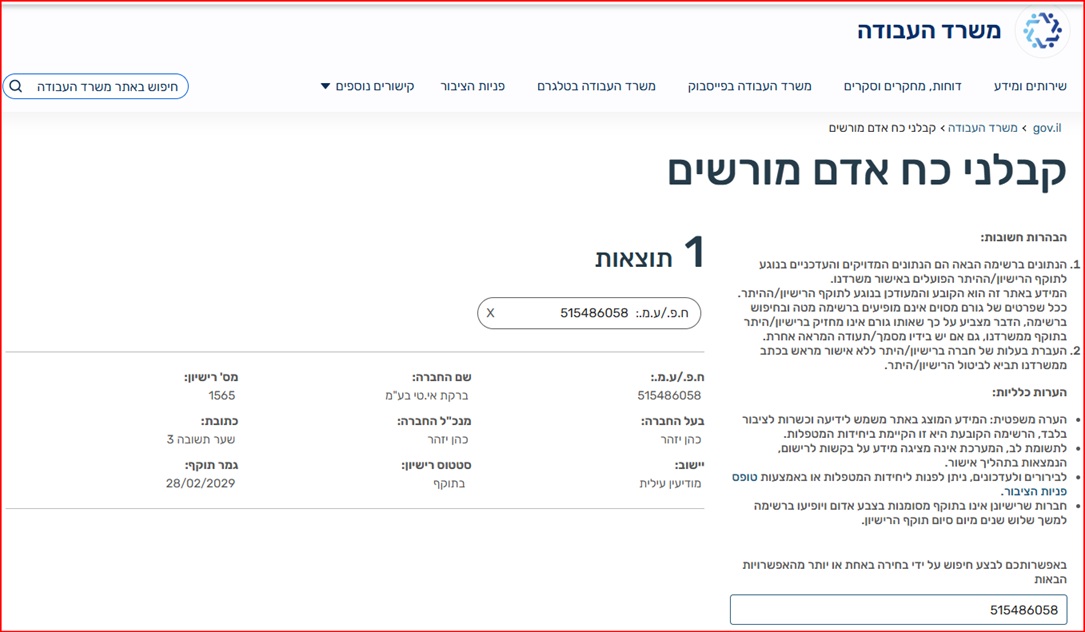
A student is an employee in every respect, and all labour laws apply to them. Their advantage · young manpower, high motivation, up-to-date academic knowledge and flexibility. Understanding the legal aspects, precise budget planning (the true cost is 30-40% higher than gross) and an orderly recruitment and onboarding process · these are the key to success. NETO, an automated employment system holding manpower contractor licence 1565 and operating since 2016, manages the employment, payroll, attendance and reporting to the authorities for you.
- A full employee · minimum wage, working and rest hours, pension and sick pay.
- Paperwork in advance · Form 101 and terms of employment before day one.
- True cost · multiply the hourly wage by at least 1.35.
- Exam periods · plan ahead, blackout weeks and a swap bank.
Articles that will interest you
Everything an employer needs to know about labour laws, worker classification, pension rights and hiring workers from abroad.
Hiring students · simple, legal and worthwhile
NETO manages recruitment, payroll, attendance and reporting to the authorities for you · you focus on the business. Open an employer account for free, or talk to us.