Hiring Foreign Workers in IsraelVisas, tax, permanent establishment & EOR · the complete employer guide
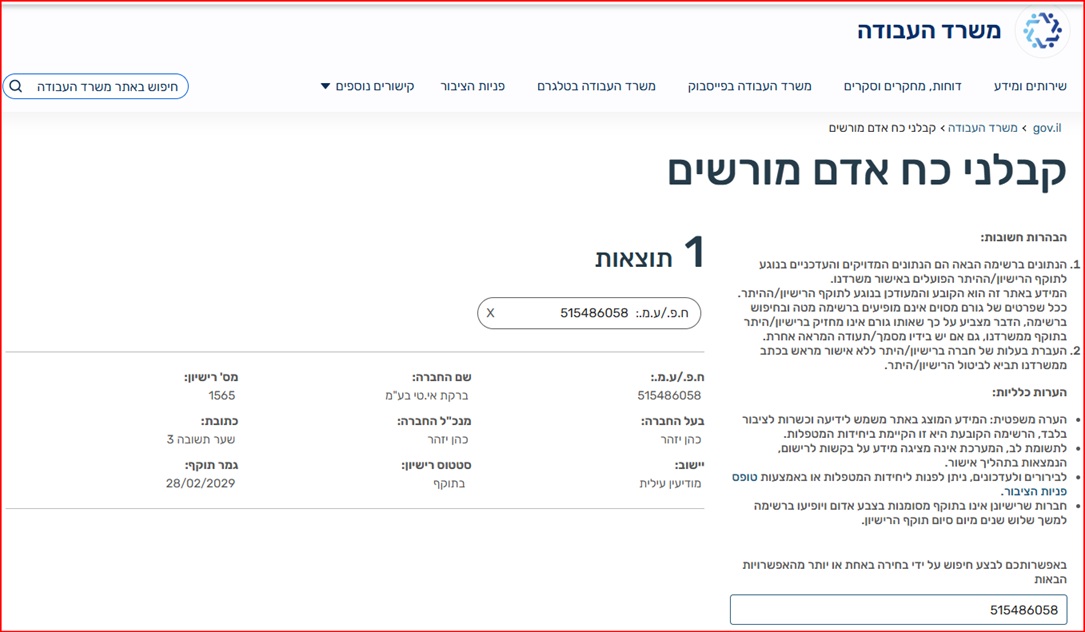
Whether the worker physically comes to Israel or works remotely from their home country · the regulatory and tax complexity demands careful planning. Here you will find everything you need to know, and how NETO simplifies legal employment under manpower license 1565.
AI summary · Hiring Foreign Workers IsraelClick to read the page summary
This guide covers hiring foreign workers in Israel, including visas and permits, and the legal difference between a foreign worker and a foreign resident. It explains withholding tax at source for foreign residents, permanent-establishment risk, and social benefits. A common mistake it warns against is paying without withholding tax at source. It compares direct hiring, contractor, and EOR, with NETO simplifying legal employment under manpower license 1565.
✦ AI Summary
How do you legally hire workers from abroad in Israel?
Hiring workers from abroad splits into two tracks · a foreign worker who physically comes to Israel (requiring an employment permit and visa from the Population and Immigration Authority, plus minimum wage and social benefits) and a foreign resident who works remotely (requiring attention to withholding tax at source, permanent-establishment risks and the labor law of their country of residence). The Employer of Record model lets you employ a person as a full salaried employee without opening a legal entity in their country. NETO accompanies employers along the entire employment chain under manpower license 1565, supervised by the Ministry of Labor.
The legal difference between a foreign worker and a foreign resident
The distinction between the two terms is critical for proper planning. A foreign worker is someone who is not an Israeli citizen and is physically present in Israel for work purposes with an appropriate residence visa. A foreign resident, by contrast, is someone whose center of life is not in Israel, regardless of citizenship. The definition directly affects the applicable tax, National Insurance and labor-law obligations.
A foreign worker who comes to Israel is subject to the Foreign Workers Law and its regulations. The employer must obtain an employment permit, meet specific minimum-wage conditions and secure extended social benefits. A foreign resident working remotely from their own country creates an entirely different set of obligations, mainly around tax law and permanent-establishment risks.
- The distinction between a foreign worker and a foreign resident determines tax obligations and social benefits.
- The permit and visa process varies by employment sector and takes between 2-12 weeks.
- Using an Employer of Record enables international employment without opening a legal entity.
Regulation, permits and visas for foreign workers
When a company wants to bring a foreign worker to work in Israel, it enters a complex regulatory track. The Foreign Workers Law sets a clear framework of conditions and permits that must be met. Breaching these conditions can lead to significant fines and even criminal proceedings against the employer.
The Israeli system distinguishes between employment sectors. Each sector has separate quotas, unique permit conditions and specific requirements. The industry sector, for example, requires one procedure, while the caregiving sector operates under different rules. Understanding the relevant sectoral framework is a necessary first step.
Steps to obtain a permit and work visa
Choose the sectoral framework
Identify the relevant sector (industry, caregiving, agriculture, construction) · each sector has separate quotas and permit conditions.
Apply for an employment permit
Submit an application to the Population and Immigration Authority, complete the dedicated forms and pay a fee. In caregiving, the application is filed for a specific care recipient.
Register worker details
After the permit is granted, register the workers' details and attach passport copies.
Issue the visa and work permit
Only after the permit can you proceed to issuing the visa and work license for the worker.
Register an entity number for tax reporting
For reporting to the tax authorities, a foreign resident needs an entity number. The Tax Authority operates an online service for allocating the number, used for ongoing reporting and withholding tax at source.
| Sector | Approving body | Main requirements | Estimated processing time |
|---|---|---|---|
| Industry | Population and Immigration Authority | Employer permit, worker details, fee | 4-8 weeks |
| Caregiving | Population and Immigration Authority | Care-recipient approval, eligibility check | 2-6 weeks |
| Agriculture | Population and Immigration Authority | Sectoral permit, seasonal quotas | 4-10 weeks |
| Construction | Population and Immigration Authority | Registered-contractor permit, quotas | 6-12 weeks |
The figures above are a general estimate that varies with the authority's workload and the complexity of the case · it is advisable to start the process as early as possible.

Early planning prevents delays
Processing times vary with workload and case complexity. In the caregiving sector the process is tailored to the care recipients' specific needs, and the application is filed for a specific care recipient rather than a general employer.
It is important to plan ahead and start the process well before the expected employment date, to avoid staffing gaps and breaches of the permit conditions.
Social benefits for foreign workers in Israel
A legally employed foreign worker in Israel is entitled to extensive labor rights. Minimum wage, vacation days, sick pay, severance pay and pension contributions apply to foreign workers as well. The employer is responsible for ensuring these rights are honored and can be fined for violating them.
Income-tax credit points for a foreign worker depend on the visa type. A worker with a valid, lawfully issued B/1 visa is entitled to certain credit points. Workers in specific sectors such as caregiving may be entitled to additional benefits. Full details are available on the Kol Zchut website.
Employer obligations for housing and related expenses
In some sectors the employer must provide housing for the foreign worker. Clear rules govern the amounts that may be deducted from the worker's wage for housing and related expenses. The caps are updated annually and differ between sectors · the amounts allowed for deduction in the general sector differ from those in agriculture.
The Commissioner for Foreign Workers' Labor Rights at the Ministry of Labor is responsible for overseeing the implementation of these rights. The Enforcement and Foreigners Administration at the Population and Immigration Authority handles enforcement against employers who break the law. The two bodies work in coordination to protect workers and enforce employer compliance.
NETO helps employers understand their full obligations and meet them through an organized system for managing rights and benefits. For more on relevant exemptions and deductions, visit the tax coordination and National Insurance refund page.
National Insurance contributions for foreign residents
An employer of a foreign resident must report and pay National Insurance contributions by the 15th of each month. Late payment triggers fines and index-linked surcharges. The National Insurance Institute operates a dedicated reporting and payment system for this category of workers. Contribution rates are split by wage levels relative to the national average wage.
Up to 60% of the average wage, reduced rates apply. Above that level, higher rates apply up to the wage ceiling subject to contributions. The split between the employer's share and the worker's share is fixed by law. Income subject to contributions includes all wage components except specific exceptions defined in the regulations. Official information is available on the National Insurance Institute website.
A common mistake · paying without withholding tax at source
Many employers assume that a payment to a foreign resident is exempt from withholding tax at source. That is a mistake that can prove costly. Israeli law requires withholding tax at source from a wide range of payments to foreign residents. Without prior checking and proper planning, the employer may face retroactive tax demands plus fines and interest.
The Tax Authority operates several mechanisms to reduce the burden. Form 2513 is used to declare a payment to a foreign resident and request a reduced withholding rate. Form 2542 is intended for requesting an exemption or general reduction of withholding tax at source. At year-end, Form 806 provides an annual certificate of the tax withheld.
Documents required to reduce risk
To benefit from tax relief under international treaties, you must hold the right documents. A tax-residency certificate from the worker's or supplier's country of residence is the foundation. Signed declarations of no other activity in Israel may be required. Documentation of the nature of the payment and the character of the services is essential for assessing eligibility for relief.
The application process for reduced withholding requires advance planning. It cannot be done retroactively after the payment has already been made. NETO gives employers organized tracking of residency documents and required certificates, so payment is made in accordance with the law at the click of a button.
Employing remote workers from abroad
The global remote-work trend has opened new possibilities. Israeli companies can recruit talent from anywhere in the world without bringing them physically to Israel. It is an opportunity to access a much wider talent pool, sometimes at competitive costs. That said, the model brings regulatory challenges that are entirely different from employing a foreign worker in Israel.
Remote workers abroad remain subject to the labor law of their country of residence. The Israeli company needs to understand the obligations that apply to it in that country. Tax risks, social-insurance requirements and restrictions on the type of engagement vary from country to country. The most central risk is creating a permanent establishment that would subject the company to tax obligations in the worker's country.

When does permanent-establishment risk arise?
Permanent establishment is a key term in international tax treaties. When a company creates a permanent establishment in a foreign country, it may become liable for tax in that country on profits attributed to the activity there. The OECD has published comprehensive guidance on the subject as part of the BEPS project against tax avoidance. Recent updates from November 2025 explicitly address cross-border remote work.
Warning signs include: a worker with authority to sign contracts on the company's behalf, managing local sales or customer service, a home office serving as a fixed place of business, and prolonged employment in the same country. Not every factor necessarily creates a permanent establishment, but a combination of them significantly raises the risk.
OECD updates on global remote work
The OECD updated its Model Tax Convention to address the new reality. The guidance clarifies when remote work may or may not create a permanent establishment. Context matters · an employee working from home for personal convenience creates less risk than one whom the company requires to work from a particular location. Understanding these distinctions is critical for proper planning.
Companies employing remote workers must examine each case on its merits. The worker's location, the nature of the role, the length of employment and the worker's level of autonomy all affect the analysis. NETO assists with risk assessment and with building an employment structure that reduces exposure. The process includes reviewing the specific country and the relevant tax treaties.
Must you comply with the worker's local labor law?
The short answer is yes. Even if the company is Israeli and the contract was signed in Israel, the worker enjoys the labor-law protections of their country of residence. Minimum wage, maximum working hours, vacation days, dismissal rules and social insurance are set by local law. Ignoring these obligations exposes the company to claims and fines.
The complexity grows when employing workers from many countries · each country with its own rules. A solution like an Employer of Record makes this complexity manageable. The EOR serves as the official employer in the worker's country and handles all local compliance aspects. For more on this model, see the outsourcing solutions page.
Comparison · direct vs contractor vs EOR
Three main models are available for hiring talent from abroad. Each has advantages and drawbacks · the choice depends on the company's needs, the worker's country and the nature of the engagement. A wrong decision can lead to misclassification and legal exposure.
| Criterion | Direct employment | Independent contractor | EOR |
|---|---|---|---|
| Legal responsibility | On the company | On the contractor | On the EOR |
| Local labor-law compliance | Required of the company | Not applicable | Handled by the EOR |
| Misclassification risk | Low | High | Low |
| Setup complexity | High (requires an entity) | Low | Low |
| Ongoing cost | High | Low | Medium |
| Termination flexibility | Limited | High | Medium |
Direct employment usually requires opening a legal entity in the worker's country · expensive, slow and demanding ongoing administration. Engaging an independent contractor is simpler but risky if an employment relationship exists in practice. An EOR lets you employ workers as full salaried employees without opening an entity, while transferring the legal and operational responsibility to a professional party.

Misclassification risk · when does a contractor become an employee?
Misclassification is one of the biggest risks in international hiring. A company that engages someone as an independent contractor but treats them like an employee exposes itself to claims. The worker can retroactively demand all the rights they were denied, and the authorities can demand payments that were never made.
The indicators include · fixed working hours set by the company, exclusivity of work for the company, equipment and infrastructure provided by the company, full integration into internal teams, close control over how the work is performed, and vacations coordinated with the company. The more indicators apply, the greater the risk.
The real cost of employing a remote worker
Salary is only part of the total cost. Employers who focus only on net salary discover after the fact that the budget was exceeded. A correct calculation must include all the components · local employer costs such as social insurance and pension, the EOR solution's fees or entity-management costs, currency differences and transfer fees, legal and tax advice, and equipment and infrastructure.
Common surprises include high employer taxes in certain countries, high mandatory pension contributions, and holiday and vacation payments that exceed what is customary in Israel. A sound budget accounts for the specific country and its requirements. NETO provides full transparency about the costs and lets you plan an accurate budget in advance.
Checklist for hiring a worker from abroad
Before making an offer to a candidate, it is important to run through an orderly checklist · early planning saves headaches later.
Check the country
Is there a tax treaty with Israel, what is the local labor law, and are there restrictions on employment by foreign companies.
Determine the status
Will the worker come to Israel or work remotely, and will the engagement be as an employee or as a contractor.
Currency and payment frequency
Define the payment currency and frequency, accounting for currency differences and transfer fees.
Prepare the right contract
An employment contract or services agreement, including intellectual-property and data-security provisions.
Plan the total budget
Calculate all the associated costs · employer taxes, pension, fees and more.
Choose the payment and compliance mechanism
Decide how payment, reporting and compliance will be handled · direct employment, contractor or EOR.
Challenges in international payroll accounting
Running payroll for an international worker is more complex than for an Israeli worker. Each country has its own rules for calculating tax, deductions and contributions. Reports are due to different authorities at different times. Time-zone and holiday differences affect payment timing. Mistakes in this area can lead to fines in both countries.
Paying workers abroad requires attention to technical aspects. The choice of transfer channel affects costs and how quickly the money arrives. Currency differences can create volatility in the actual cost. Full documentation of every payment is required both for tax purposes and for internal audit. The NETO system centralizes all the processes in one place and simplifies the administration.

How does an EOR solution solve the complexity?
Employer of Record is a model in which a professional company serves as the worker's official employer in their country. The Israeli company remains the worker's day-to-day manager, while the legal and operational responsibility passes to the EOR. This makes it possible to employ workers as full salaried employees in dozens of countries without opening an entity in any of them.
The advantages are clear · a dramatic reduction in compliance risks, savings in time and resources, fast access to new talent markets, and flexibility. The EOR handles employment contracts, salary payments, social-insurance contributions and reports to the local authorities · while the Israeli company focuses on managing the work itself. For a deeper look, visit the what is outsourcing page.
Why is NETO right for employers of workers from abroad?
NETO offers a comprehensive solution for employing workers from abroad in Israel and from Israel. The system supports managing foreign workers who physically come to Israel as well as remote workers in other countries · from defining the worker's status through to the monthly salary payment.
The practical advantages include handling every aspect of Israeli regulation (permits and reports to the National Insurance Institute and the Tax Authority), managing complex payroll with precise tax calculations and deductions, and helping reduce compliance risks. The digital system provides full transparency and real-time control · instead of wrestling with bureaucracy, HR managers focus on recruiting and managing the people themselves.
| Business need | How NETO helps in practice |
|---|---|
| Defining worker status | Advice and correct classification between foreign worker, foreign resident or contractor |
| Permits and visas | Guidance through the process with the Population and Immigration Authority |
| Reports to the authorities | Ongoing filing with the National Insurance Institute and the Tax Authority |
| Payroll management | Calculation, deductions, payslips and payment at the click of a button |
| Risk reduction | Tracking regulatory updates with real-time alerts |
Frequently asked questions
Can an Israeli company employ a worker abroad without opening a company there?
Yes, through Employer of Record services. The EOR serves as the official employer in the worker's country and handles all local compliance aspects. The Israeli company manages the worker day to day without needing a legal entity in their country.
What is the risk of paying a foreign resident without withholding tax at source?
The risk is significant. The Tax Authority may demand the tax that was not withheld plus fines and interest. Check the withholding obligation in advance and apply for a reduction where relevant. Proper documentation and residency certificates are essential protection against exposure.
How long does it take to get a permit to employ a foreign worker in Israel?
The timeline varies by sector and by the workload at the Population and Immigration Authority. In industry it is typically 4-8 weeks, in caregiving 2-6 weeks, and in other sectors the process may take longer. It is advisable to start the process as early as possible.
Is a remote worker abroad entitled to Israeli employee rights?
No. A worker working remotely from another country is subject to the labor law of their country of residence, not Israeli labor law. The Israeli company needs to make sure it meets the local legal requirements of that country.
What happens if a foreign worker in Israel loses their work visa?
The employer must stop the employment immediately. Employing a foreign worker without a valid visa is a legal offense that can lead to heavy fines and criminal proceedings. Track visa validity on an ongoing basis and renew visas on time.
How do you avoid double taxation when the worker is abroad and an Israeli company pays?
The first step is mapping the worker's tax residency and the country where the income is sourced. Tax treaties between countries set credit or exemption mechanisms that prevent double payment. Professional tax advice and correct advance planning are essential to avoid surprises.
What is the practical difference between direct employment, a contractor and an EOR?
In direct employment the company carries the full responsibility and usually has to open an entity in the worker's country. An independent contractor is simple to engage but carries misclassification risk. An EOR lets you employ someone as a full salaried employee without opening an entity, while transferring the legal and operational responsibility to a professional party.
In summary
- The distinction between a foreign worker and a foreign resident determines tax, National Insurance and rights obligations · and requires different planning for each track.
- Employing a foreign worker physically in Israel requires a permit, a visa and compliance with social benefits · according to the sector and quotas.
- Remote employment requires attention to withholding tax at source, permanent-establishment risks and the labor law of the worker's country.
- EOR lets you employ someone as a full salaried employee without opening an entity · and NETO accompanies the entire employment chain under manpower license 1565.
Want to hire workers from abroad with confidence?
Sign up as an employer with NETO · and we will accompany you along the entire employment chain, from permits and visas to salary payment, under manpower license 1565 and Ministry of Labor supervision.
Need help? NETO support is available at +972-8-976-1874
The law requires 6% · at NETO it is 8.33%
The mandatory pension extension order obliges every employer to contribute 6% of salary to the severance component, and section 14 of the Severance Pay Law applies to that money automatically. NETO contributes the full severance component by default · 8.33% · so the ongoing contribution replaces severance pay in full and no top-up is due when the employment ends. An employer contributing less than 8.33% must top up severance at the end of the employment relationship.
A worker who declares they have no active pension fund, in a one-off engagement · there the contribution obligation begins only after six months of work. A worker with an active pension arrangement is entitled from day one, with contributions made retroactively after three months or at the end of the tax year, whichever is earlier.
General information · not legal advice. The binding text is the statute and the extension order themselves.