Employer Cost · How Do You Calculate It Right?How much an employee really costs beyond gross salary · the complete 2026 guide
The gross salary you agree with an employee is not the final cost. The true cost of employment runs 20%–30% higher · National Insurance, pension, severance and recuperation pay. Here you calculate what an employee really costs · and see how NETO bundles calculation, contributions and reporting into one invoice.
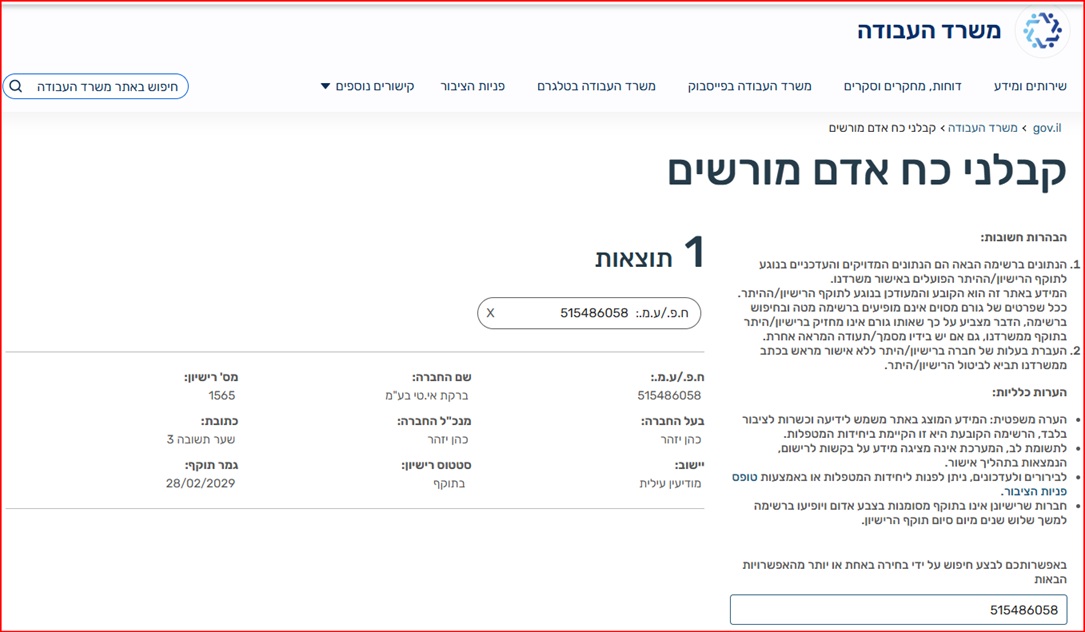
Manpower licence no. 1565
Ministry of Labor supervision
Why is it important to understand "employer cost"?
When you agree a gross salary with an employee, the most common mistake is assuming that is the final cost. In fact, every employer in Israel is required to pay additional amounts beyond the salary · National Insurance, pension, severance, recuperation pay and travel reimbursement · these are mandatory social benefits set by law. That is why the true employer cost runs 20%–30% above the agreed gross.
Accurately understanding the cost of employment is essential for budgeting recruitment, pricing projects correctly and avoiding end-of-month surprises. With NETO the client sees the full cost up front · in one transparent invoice, as part of the payroll services that bundle calculation, contributions and reporting.

What are the employer cost components? (2026)
Beyond the gross salary, every employer in Israel is required to pay the following by law · for broader background see Israeli labor law in a nutshell:
Employer National Insurance
Tiered · 4.51% on salary up to ILS 7,703 per month, and 7.6% on the portion from ILS 7,703 up to the ILS 51,910 ceiling (2026). No employer contribution above the ceiling. The rate depends on the worker's classification · see self-employed vs. salaried under National Insurance.
Pension · employer contributions
A mandatory deposit of at least 6.5% of gross · a central part of the employment cost. When exactly the obligation kicks in · employee pension contributions.
Severance
6% minimum by law · 8.33% (full severance) is recommended for complete coverage per year of service. The legal basis is the Severance Pay Law and the Severance Pay Regulations.
Vacation and sick leave
Paid days without actual work · an employee right counted inside the cost. See employee rights and the Hours of Work and Rest Law.
Recuperation pay
ILS 451.50 per day in 2026 · 5 days in the first year = ILS 2,258 per year. More detail · recuperation pay (havra'a).
Travel
Up to ILS 22.60 per actual travel day, per the current rate for travel expense reimbursement.
The law requires 6% · at NETO it is 8.33%
The mandatory pension extension order obliges every employer to contribute 6% of salary to the severance component, and section 14 of the Severance Pay Law applies to that money automatically. NETO contributes the full severance component by default · 8.33% · so the ongoing contribution replaces severance pay in full and no top-up is due when the employment ends. An employer contributing less than 8.33% must top up severance at the end of the employment relationship.
A worker who declares they have no active pension fund, in a one-off engagement · there the contribution obligation begins only after six months of work. A worker with an active pension arrangement is entitled from day one, with contributions made retroactively after three months or at the end of the tax year, whichever is earlier.
General information · not legal advice. The binding text is the statute and the extension order themselves.
Employment cost table by salary level · 2026
The table shows the estimated employer cost by gross salary level · from the minimum wage line upward. The figures are calculated on 2026 rates · tiered employer National Insurance (4.51% up to ILS 7,703, 7.6% above and up to the ILS 51,910 ceiling), pension 6.5%, severance 8.33% and monthly recuperation · a full breakdown of the structure in the extended employer cost guide:
| Gross salary | National Insurance (tiered) | Pension + severance (14.83%) | Monthly recuperation | Total cost | % added |
|---|---|---|---|---|---|
| ILS 6,443.85 (minimum) | ILS 291 | ILS 956 | ILS 376 | ~ILS 8,067 | 25% |
| ILS 10,000 | ILS 522 | ILS 1,483 | ILS 376 | ~ILS 12,381 | 24% |
| ILS 15,000 | ILS 902 | ILS 2,225 | ILS 376 | ~ILS 18,503 | 23% |
| ILS 20,000 | ILS 1,282 | ILS 2,966 | ILS 376 | ~ILS 24,624 | 23% |
| ILS 30,000 | ILS 2,042 | ILS 4,449 | ILS 376 | ~ILS 36,867 | 23% |
How to calculate employer cost · step by step
Calculating the cost of employment means adding the mandatory components on top of the gross salary. Here is how to do it right:
Start from the gross salary
The baseline is the gross salary agreed with the employee · before deductions. For example: ILS 10,000.
Add employer National Insurance
Tiered · 4.51% up to ILS 7,703 and 7.6% on the portion above it up to the ILS 51,910 ceiling · on ILS 10,000 that is ILS 522 (347 + 7.6% on ILS 2,297).
Add pension and severance
6.5% employer pension contributions and 8.33% full severance · together about 14.83% of gross (about ILS 1,483).
Add recuperation and travel
Recuperation pay of ILS 451.50 per day (about ILS 376 on a monthly basis) and travel reimbursement per actual working days.
Sum up to the total cost
The sum of all components is the employer cost · on a gross of ILS 10,000 you reach about ILS 12,381, roughly 24% above gross.
Or · let NETO calculate
Instead of tracking every rate and ceiling, NETO's payroll system calculates, contributes and reports automatically · one invoice.
Worked example · what an employee actually costs (gross ILS 10,000)
When you agree a gross salary of ILS 10,000 with an employee, the typical total cost is about ILS 12,300–12,500. Here is the component breakdown:
National Insurance · ILS 522
Tiered · 4.51% up to ILS 7,703 and 7.6% above · the employer's share of National Insurance contributions.
Pension · employer share · ILS 650
6.5% of gross · the employer's deposit into the pension fund.
Full severance · ILS 833
8.33% of gross · severance accrual for every month of work.
Recuperation pay (monthly) · ILS 376
ILS 451.50 per day · a monthly spread of the annual recuperation entitlement.
Self-managed payroll vs. NETO · a full comparison
Many employers ask whether to manage payroll themselves, hand it to a payroll service or move to a full outsourcing model. The comparison shows the key differences:
| Parameter | Self-managed | NETO · automatic |
|---|---|---|
| Payroll cost calculation | Manual · error-prone | Automatic and accurate |
| Pension contributions | Employer's sole responsibility | Automatic every month |
| Payslips | Requires a payroll accountant | Generated automatically |
| Legal compliance | Risk of misses | Built into the system |
| Cost transparency | Not always clear | Cost shown up front |
| Reporting to the authorities | Manual · time-consuming | Automatic to the authorities |

With NETO it's simpler · one invoice for the entire employment cost
The employer pays against a single invoice covering all employment costs · a model of employing a worker against an invoice. NETO deposits into the funds, reports to the authorities and issues the paperwork · see also invoice vs. payslip · everything automatic and bureaucracy-free.
For employers · pay casual workers like freelancers
A short walkthrough · how to pay a casual worker against an invoice, without running payslips and contributions yourself. The same way you can also hire freelancers · and the rights of a temporary worker are preserved.
Watch · how employers work with NETO
Two minutes that show exactly what happens from signup to payslip · before you commit to anything.
Frequently asked questions · calculating employment costs 2026
What is the difference between gross salary and employer cost?
Gross salary is the amount agreed with the employee before deductions. The employment cost is the total the employer actually pays: gross + National Insurance + pension + severance + recuperation + travel. On average the total cost runs 20%–30% above gross · which is why calculating it correctly is essential when budgeting recruitment.
How do you calculate an accurate employer cost in 2026?
Gross + employer National Insurance (tiered · 4.51% up to ILS 7,703 and 7.6% up to the ILS 51,910 monthly ceiling) + pension (6.5%) + severance (8.33%) + recuperation (ILS 451.50 per day ÷ 12) + travel. It usually comes to 22%–30% above gross. For a calculation tailored to salary and seniority · start through NETO.
What is the employer National Insurance ceiling in 2026?
Employer National Insurance contributions are calculated in two brackets: 4.51% on the portion of salary up to ILS 7,703 per month (reduced bracket), and 7.6% on the portion above it up to the maximum income ceiling of ILS 51,910 per month (January 2026 update). Above the ceiling there is no employer contribution at all. The rates are updated every January.
What happens if the employer does not contribute to a pension?
Failure to make pension contributions is a breach of the employer's duty and exposes them to civil claims, fines and liens · see also employer rights and obligations. Through NETO the pension contributions are made automatically every month · dramatically lowering the risk of a miss.
Can employer cost be reduced legally?
Yes. Costs can be optimized legally: a correct salary structure (base + components), adjusting the scope of the position, using employer tax benefits, and an automated system like NETO that prevents double payments and errors. Weighing direct employment vs. outsourcing is part of the calculation. Always act in accordance with the law and labor law.
Does the employer cost include VAT?
No. Wages, National Insurance and pension payments are not subject to VAT. With NETO the employer receives an invoice on which VAT is charged only on the service fee, while the salary payment itself carries no VAT.
What is the difference between employer cost and social cost?
Employer cost includes all direct costs: gross + National Insurance + pension + severance + recuperation + travel. Social cost ("social expenses") usually refers only to the components beyond gross · that is National Insurance, pension, severance, recuperation and travel alone · these are the mandatory social benefits.
How does NETO simplify calculating the employer cost?
NETO centralizes all payroll management: one invoice, automatic contributions to all funds, digital payslips and reports to the authorities. So the employer knows exactly what each employee's total cost is, with no manual calculations. More questions · employers' Q&A, or join now.
The two questions employers ask us at this point
How much does NETO cost?
The fee is 5% on top of the employment cost · what it would have cost you to employ the worker directly, plus 5%. The fee derives from the invoice the employer pays · the employee pays nothing. No subscription fees and no joining or leaving fees. The full details · employers' Q&A.
Is it legal?
Yes. NETO operates under manpower contractor licence no. 1565 and under Ministry of Labor supervision · employment through a licensed manpower contractor is subject to the Manpower Contractors Law, and a worker employed via a manpower agency retains full rights.
Want to employ without wrestling with calculations?
NETO calculates, contributes and reports · you pay one transparent invoice. Join the employers already working with NETO, or ask us anything about employment costs.
Phone support · 089761874