Mandatory Employee Benefits in IsraelThe 2026 guide for foreign employers · pension, severance, National Insurance, leave & travel
Hiring in Israel? The monthly cost is not just gross salary. This guide breaks down every mandatory benefit a foreign employer must budget for in 2026 · with the real 2026 figures and worked cost examples in shekels.

AI summary Smart overview of this page · click hereClick to read the page summary
Employing someone in Israel means budgeting well beyond gross salary. Mandatory components include pension and severance, National Insurance, paid vacation, sick leave, convalescence and public holidays, plus travel reimbursement · so the real employer cost is higher than the headline wage. For a foreign company these have to be planned and documented before work begins, and NETO handles them under licensed contractor #1565.
This summary is based on the page content
Quick answer · in five points
Mandatory employee benefits in Israel are part of the payroll structure, not an optional add-on. When a foreign company hires in Israel, the total employer cost includes several legally required components on top of gross salary · and each of them needs to be planned before work begins.
- Minimum wage: 6,443.85 ILS/month or 35.40 ILS/hour (2026) · a legal floor.
- Pension: 18.5% of salary in total, split between employer and employee.
- Severance: one month's salary per year of service · 8.33% monthly.
- Also mandatory: National Insurance, vacation, sick leave, convalescence and travel.
- Travel: reimbursed up to 22.60 ILS per working day, on top of salary.
What foreign employers must budget for
When a foreign company hires in Israel, the monthly cost should not be calculated from gross salary alone. Israeli employment includes several payroll and benefit components that must be planned before work begins · they sit at the heart of Israeli labor law and shape the full employer cost in Israel.
| Component | What it means | Why it matters |
|---|---|---|
| Payslip & payroll reporting | Local salary slip, tax withholding and payroll records. | Creates proper employment documentation. |
| National Insurance | Israeli social security reporting and payments. | Required for the local employment workflow. |
| Pension & severance | Employer and employee pension deposits, plus the severance component. | A core cost item · see pension contributions and severance pay. |
| Vacation & sick leave | Paid leave rights under Israeli employment rules. | Affects cost, documentation and termination planning. |
| Convalescence & holidays | Convalescence pay and paid public holidays. | Recurring annual costs that add to total employer cost. |
| Travel reimbursement | Cost of getting to and from work, up to 22.60 ILS/day. | Paid on top of salary · see the travel reimbursement rules. |
The mandatory benefits in numbers
These are the core Israeli figures for 2026. The wage numbers are legal floors · many roles pay above them · but every employer must plan for at least these amounts.
297.41 ILS for a 5-day week and 257.75 ILS for a 6-day week · the daily floor for full-day work in 2026.
Capped at 22.60 ILS per working day, paid on top of salary to cover getting to and from work.
Employee 6% + employer 6.5% + employer severance component 6% · a 12.5% employer share in total.
What a new hire really costs
Three worked examples using the 2026 figures above. Every number is calculated from gross salary · so you can see exactly how mandatory benefits add to total employer cost.
Example 1 · full-time worker at minimum wage
A foreign company hires a full-time worker at the 2026 minimum wage of 6,443.85 ILS/month. Here is the employer's mandatory social cost on top of gross salary.
Employer pension (6.5%) = 6,443.85 × 0.065 = 418.85 ILS
Severance provision (8.33%) = 6,443.85 × 0.0833 = 536.77 ILS
Employer pension + severance = 955.62 ILS / month
Total before National Insurance & travel = 6,443.85 + 955.62 = 7,399.47 ILS
Add employer National Insurance and travel reimbursement (up to 22.60 ILS/day) on top · the take-home salary is only part of the story.
Example 2 · where the 18.5% pension goes
On the same 6,443.85 ILS salary, this is how the mandatory 18.5% pension contribution splits between the parties.
Employer share (6.5%) = 6,443.85 × 0.065 = 418.85 ILS
Employer severance component (6%) = 6,443.85 × 0.06 = 386.63 ILS
Total into the pension fund (18.5%) = 1,192.11 ILS / month
Employer portion of that total (12.5%) = 805.48 ILS
The employer pays 12.5% and the worker 6% · together the full 18.5% goes into the worker's pension and severance savings.
Example 3 · part-time hourly worker + travel
A part-time worker is hired at the 2026 hourly minimum of 35.40 ILS and works 100 hours across 20 days in a month.
Employer pension (6.5%) = 3,540.00 × 0.065 = 230.10 ILS
Severance provision (8.33%) = 3,540.00 × 0.0833 = 294.88 ILS
Travel (20 days × 22.60) = 452.00 ILS
Employer add-ons = 230.10 + 294.88 + 452.00 = 976.98 ILS
Total before National Insurance = 3,540.00 + 976.98 = 4,516.98 ILS
Even a part-time role carries pension, severance and travel · the mandatory benefits scale with the hours worked.
Why this is hard for a foreign company
A foreign company may understand salary and invoices, but Israeli payroll uses local rules, local reporting and local employment documentation. Improvising the process can create confusion around net salary, employer cost, social contributions and termination obligations.
- Budget gap: the approved salary is not the same as total employer cost · a simulation is needed before signing.
- Documentation gap: employment terms, payroll records and benefits must be documented clearly from the start.
- Reporting gap: National Insurance, tax withholding and pension deposits are filed locally, on Israeli timelines.
Rather than set up a local entity, many foreign companies work through an Employer of Record in Israel or use EOR services for foreign companies to keep the workflow compliant.
How NETO helps
NETO lets foreign companies work with Israeli talent through a local employment and payroll structure. The foreign company receives an invoice, while the worker receives an Israeli payslip and the whole payroll workflow · National Insurance, pension, severance, leave and travel · is handled in Israel.
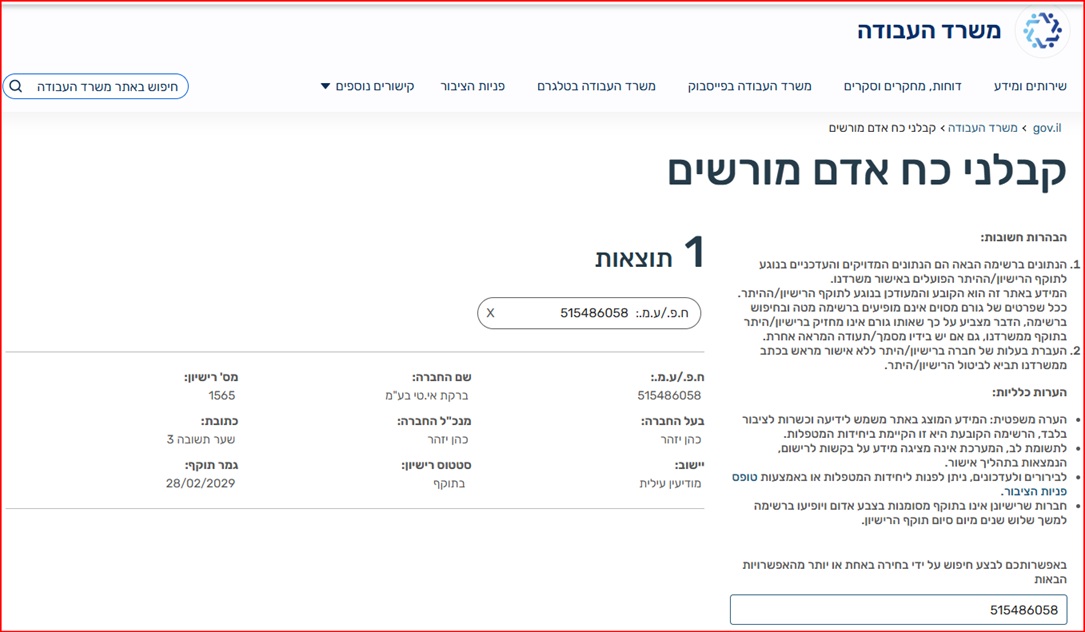
NETO is a licensed manpower contractor (#1565), supervised by the Ministry of Labor and operating since 2016. The service costs the client company a simple 5% commission on the invoice (pre-VAT), billed to the client · the worker never pays it. It covers payroll, payslips and every mandatory benefit on this page.
NETO employer guide · registration, worker details, cost simulation and local payroll
Watch · in under 2 minutes, see how simple it is to pay a worker in Israel · with every mandatory benefit included · through NETO.
Frequently asked questions
What benefits are mandatory for employees in Israel?
What is the minimum wage in Israel in 2026?
How much do pension and severance cost an employer?
Is travel reimbursement mandatory in Israel?
Does a foreign employer manage Israeli benefits directly?
Can NETO help foreign companies with Israeli payroll?
Mandatory benefits, handled for you
Hire in Israel without a local entity. NETO · a licensed manpower contractor (#1565) operating since 2016 · handles payslips, National Insurance, pension, severance, leave and travel for the workers you employ. You receive one invoice; the worker gets a fully compliant Israeli payslip.
Related guides for employers in Israel
Israeli Labor Law OverviewEmployee rights and employer obligations in one guide.Read more
 Employer Cost in IsraelWhat an Israeli employee really costs beyond gross salary.Read more
 Severance Pay LawOne month per year, the 8.33% Section 14 arrangement.Read more
 Pension ContributionsThe 18.5% split between employer and employee.Read more
 Hours of Work and Rest LawThe working week, overtime rates and mandatory rest.Read more
 Employer of Record in IsraelEmploy in Israel without a local entity · the full guide.Read more
 Israel Payroll GuidePayslips, withholding and reporting, explained.Read more
 EOR for Foreign CompaniesWork with Israeli talent without setting up an entity.Read more
 Travel ReimbursementThe mandatory travel allowance and how it works.Read more
 Recruitment in IsraelFind and hire Israeli workers the compliant way.Read more
Salary Payment by InvoicePay Israeli workers against a single invoice.Read more
Manpower Contractor LicenseLicense #1565, supervised by the Ministry of Labor.Read more
Recruitment in IsraelFind and hire Israeli workers the compliant way.Read more
Salary Payment by InvoicePay Israeli workers against a single invoice.Read more
Manpower Contractor LicenseLicense #1565, supervised by the Ministry of Labor.Read more