Freelance work while on unemployment?You may work and report · without losing your unemployment benefits
A freelance project came up in the middle of your unemployment period? You may take it · but the income is offset against the benefit and must be reported to the National Insurance Institute. With NETO the client receives an invoice and you receive net pay on a payslip · without opening a business file.
Already registered? Client loginAI summary · Freelancing while on unemploymentClick to read the page summary
You may work as a freelancer while on unemployment · but you need to know how. The benefit does not vanish the moment there is income · it is offset on a daily basis according to the income level. The duty to report to the National Insurance Institute applies to every shekel, regardless of the amount, and attendance at the Employment Service continues as usual. Whoever reports correctly and on time receives both a benefit and the project income · whoever hides it may discover a retroactive debt with interest. For a one-off project you can receive an invoice and payslip through NETO instead of opening a business file. The information is general · verify with the National Insurance Institute before making a decision.
- You may work · freelancing while on unemployment is legal, without losing eligibility.
- Daily offset · the income reduces the benefit, it does not cancel it entirely.
- Duty to report · on every shekel, with no minimum threshold.
- Attendance · continues even while working in parallel.
- NETO route · invoice and payslip for a one-off project, without a business file.
- The information is general · verify with the National Insurance Institute, it is not advice.
Want to check whether the route suits you?
NETO can issue an invoice to the client and pay you net on an orderly payslip for reporting to the National Insurance Institute · without opening a business file. Leave your details or start a quick sign-up, and we will check the fit together.
Prefer to talk? Call 08-976-1874
Freelancing while on unemployment · the short answer
You were laid off, filed an unemployment claim, and then a short project offer arrived. You may work as a freelancer while on unemployment without losing eligibility · but there is an offset mechanism at the National Insurance Institute that you must understand before issuing a first invoice. Whoever reports correctly receives both a benefit and the project income. Whoever hides it may discover a retroactive debt a few months later.
You may work
Freelancing while on unemployment is legal · the benefit is not revoked because of income from a project.
The income is offset
The income reduces the benefit on a daily basis · it does not cancel it entirely.
You must report
The duty to report applies to every shekel · non-reporting leads to a debt with interest.
How the offset mechanism of work and unemployment benefits works
The principle is simple. Unemployment benefits are an income replacement for a period without work. The moment there is income · and it does not matter whether it is from a new employer, from self-employment or from a pension · it is offset against the benefit. It is not a fine and not a punishment. It is a mechanism built into the law.
The calculation is done on a daily basis. The National Insurance Institute takes the daily unemployment benefit you are entitled to, subtracts from it the average daily income you generated from freelancing, and pays the difference. If the daily income from work is higher than the daily unemployment benefit, you will not receive a benefit for that month. If it is lower, you will receive the difference.
Here a substantial difference between an employee and a self-employed person comes in. An employee with a monthly payslip · the offset is made in real time according to the employer's report. A self-employed person, by contrast, is based on annual income. The final calculation is sometimes made only after filing the annual return to the Income Tax Authority (the assessment), and then the National Insurance Institute compares what you reported in real time with the actual income. If you reported less · a debt demand. If you reported more · a credit. The difference between someone who was already self-employed before the unemployment and someone who begins to work as a freelancer only now is important, because the initial status determines the calculation method vis-à-vis the National Insurance Institute.
In simple terms · the benefit does not vanish the moment there is income. It is reduced in proportion to the income level. The official source explaining the deduction appears on the income during the unemployment period page of the National Insurance Institute.
Casual work while unemployed · what is important to know before you start
Casual work while unemployed is not a precise legal definition, but in practice this is what most people mean · a short project, a one-off consultation, a workshop, a commissioned article, or a day of work at a client. The amounts are sometimes small, and people tend to assume it is too negligible to require reporting.
This is one of the most expensive mistakes. The duty to report to the National Insurance Institute exists for every shekel, regardless of the amount. The moment you did not report, the National Insurance Institute will see the income in your annual return or in the client's report, and will come back to you with a demand for a retroactive refund of the unemployment benefits paid in excess · sometimes also with a fine. This is a classic scenario of losing unemployment benefits that could easily have been prevented.
There are special cases worth knowing. The National Insurance Institute's insured-classification order determines that certain professional groups · such as lecturers, artists, tour guides and instructors · are treated as employees for the purpose of paying insurance contributions, even when they work as freelancers. The practical meaning is that the income is reported and calculated differently from a regular freelancer's income. The full details appear on the official insured-classification order page.
The eligibility conditions and the duty of attendance at the Employment Service
Before any discussion of freelancing, you must make sure the eligibility itself is established. Unemployment benefits are paid only to someone who meets the threshold conditions · a qualifying period of work as an employee in the months preceding the dismissal, registration with the Employment Service, and physical or digital attendance on the set days. The details of the up-to-date threshold conditions appear on the eligibility conditions for unemployment benefits page of the National Insurance Institute.
This duty continues even while working as a freelancer in parallel. The Employment Service reports to the National Insurance Institute on the attendance days, and the benefit is paid on the basis of that report. If you missed an attendance because of a day of work at a client, you lost the payment for those days. You can arrange in advance a change of the attendance date, but this requires a proactive approach before and not after.
Full familiarity with the rights of someone who was dismissed is important here, because eligibility for unemployment benefits is only one part of the package · there is also a duty of prior notice, severance pay, redemption of vacation days and convalescence pay. You can go deeper into all of these in the guide ending employment and rights of a dismissed employee.
How to report freelance income to the National Insurance Institute
Reporting is done in several stages · from the moment the claim is filed until the final calculation at the end of the year. Correct action at each stage prevents a retroactive debt.
State already when filing the claim that you work as a freelancer
When filing the unemployment claim, state that you intend to work or already work as a freelancer · so the calculation is done correctly in advance.
File an income declaration in every month with income
In every month with income from self-employed work you file an income declaration (declaration of income from self-employed work form). You file online or at a branch. The duty to report applies to every shekel.
Track the benefit that changes according to the report
A month with high income · the payment will decrease or be cancelled. A month with no income · you will receive the full benefit. Everything derives from the monthly report.
Clarify the final calculation against the assessment at year-end
After filing the assessment to the Income Tax Authority a final calculation is made. If the monthly reports matched the annual income · no surprises. If not · a debt demand or a refund.
A comparison of the reporting routes for a freelancer while on unemployment
Not every freelancer on unemployment needs to open a file at the Income Tax Authority. There are three ways to receive payment for one-off or casual work, and each affects the benefit and the bureaucracy differently.
| Route | Opening a file at the Income Tax Authority | Effect on the unemployment benefit | Suitable for whom |
|---|---|---|---|
| Osek patur or osek murshe | Required | Offset by annual income in the assessment | A regular freelancer with ongoing activity |
| Invoice as an employee through NETO | Not required | Offset by a monthly payslip | Casual work during the unemployment period |
| Non-reporting | Not required | Retroactive debt and fines | No one · it is not a legal option |
The invoice-as-an-employee service is especially relevant for someone who takes one or two projects during the unemployment period and does not plan to become a permanent self-employed person. In this model, NETO is the freelancer's legal employer for that project. The client receives a proper tax invoice, the freelancer receives a payslip, and the National Insurance Institute sees the income as an employee's income. The offset from the benefit is calculated on the basis of the monthly payslip · which simplifies the reckoning and prevents end-of-year surprises.
A project during the unemployment period · without a business file
NETO lets you issue an invoice as an employee with a check of a suitable route · the client receives a proper tax invoice and you receive a payslip for orderly reporting to the National Insurance Institute. Leave your details or start a quick sign-up.
Common mistakes that may lead to losing unemployment benefits
Non-reporting of small income
People assume a small amount will not move the system. In practice the National Insurance Institute cross-references data from the Income Tax Authority and the banks · the gap is usually discovered months later, after you have already spent the money.
Missing attendance because of a work day
The Employment Service does not know about your projects. If an attendance was set and you traveled to a client, the payment for that week falls. Arranging a change of date is done in advance, not retroactively.
Confusion between gross and net
The offset is calculated on the basis of gross income, not on what remains after expenses. Deduction of expenses is made only in the annual assessment against the Income Tax Authority, and only then is the National Insurance also updated.
Working too long at a single client
Continuous work at a single client may cause the National Insurance Institute to classify you as their employee · even with an invoice · and then the benefit may stop entirely.
The effect of the reasons for stopping work and returning to it on eligibility is detailed on the reasons for stopping work page of the National Insurance Institute.
Practical scenario · a graphic designer who was laid off
Let us imagine an illustrative case. A graphic designer who was laid off from a studio after several years of work filed an unemployment claim and began receiving a monthly benefit. Two weeks after the dismissal a client approached her with a small logo-design project.
If she opens an osek patur and issues an invoice · she will report the income to the National Insurance Institute, which will be offset against that month's benefit. At the end of the year she will have to file an annual return, even if she had only a single invoice.
If she uses NETO's invoice-as-an-employee service · the client will receive a proper invoice from NETO, she will receive a payslip for that amount, and the National Insurance Institute will see the income as an employee's income with orderly monthly reporting. The offset is identical, because the calculation is based on gross, but there is no file at the Income Tax Authority, no annual return, and no risk of a retroactive debt following an assessment. For a single project, the difference in the bureaucratic burden is significant.
When it is worth taking a project and when it is better to pass
This question is not purely mathematical. If the project offers entry to a large client that may become a permanent employer, the temporary loss in the benefit is an investment. If it is a one-off project that will not lead to a continuation, it is worth calculating carefully.
The practical rule · if the daily income from the project is significantly higher than the daily unemployment benefit, it is worth taking it. Even if the benefit zeroes out for that month, the total income is higher. If the daily income is close to or lower than the daily unemployment benefit, the consideration is more complex · sometimes it is better to focus on searching for a full-time position and not waste the eligibility days.
Transparency with the authorities is not only a matter of law, it is also financial logic. A debt demand from the National Insurance Institute that arrives a year after the event charges interest and linkage, and sometimes also a fine. Regarding tax considerations specific to your circumstances, it is recommended to consult an accountant before making decisions.
Freelancing while on unemployment · a tutorial video for freelancers
Before you decide whether to open a business, work with an invoice or receive a payslip through NETO · it is worth watching the short explanation for freelancers.
Freelancing while on unemployment · questions and answers
May I work as a freelancer while on unemployment?
Is there a minimum income from which you must report?
How is the offset from the unemployment benefit calculated?
What happens if you do not report a small income?
What is the difference between an invoice as an employee through NETO and opening an osek patur?
Do you need to keep attending the Employment Service while working?
Is payment from a client abroad subject to reporting?
I was self-employed before the unemployment · does that matter?
In summary
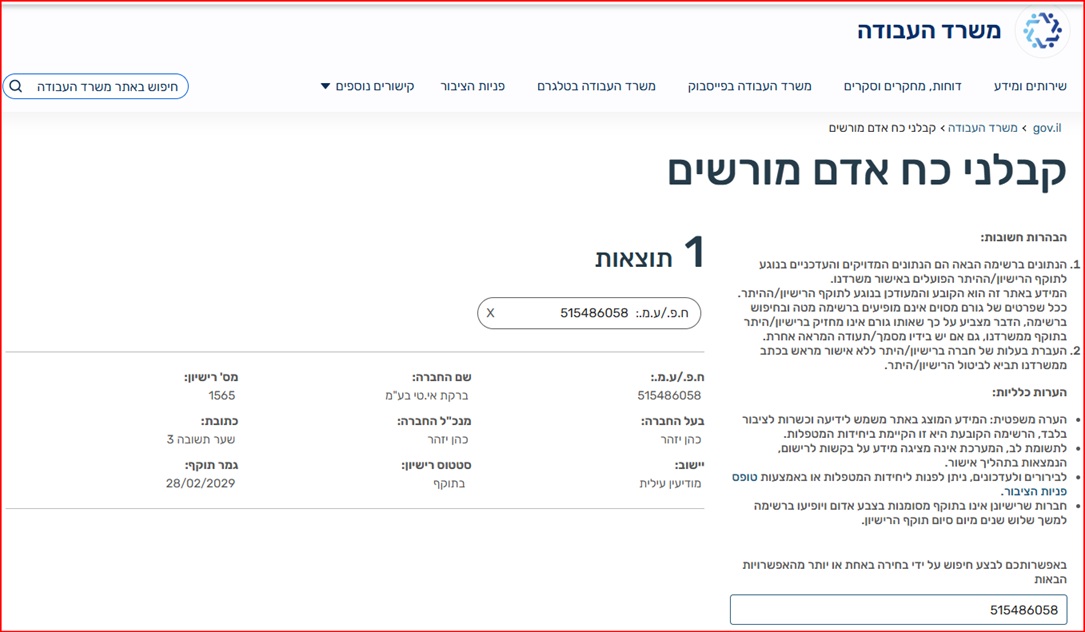
A freelancer while on unemployment can work and receive both a benefit and income from projects. The mechanism is clear · the offset is calculated on a daily basis, the duty to report applies to every shekel, and attendance at the Employment Service continues unchanged. Whoever reports correctly and on time takes no risk · whoever hides income risks a debt that arrives with a delay and with interest. For a one-off project, an invoice and payslip through NETO simplify the reporting without opening a business file. NETO, an automated employment system, operates under manpower-contractor license 1565 since 2016, subject to an individual check. The information is general · verify with the National Insurance Institute.
- You may work · freelancing while on unemployment is legal, without losing eligibility.
- Daily offset · the income reduces the benefit, it does not cancel it.
- Duty to report · on every shekel, and attendance continues as usual.
- NETO route · invoice and payslip for a single project, without a business file.
The law requires 6% · at NETO it is 8.33%
The mandatory pension extension order obliges every employer to contribute 6% of salary to the severance component, and section 14 of the Severance Pay Law applies to that money automatically. NETO contributes the full severance component by default · 8.33% · so the ongoing contribution replaces severance pay in full and no top-up is due when the employment ends. An employer contributing less than 8.33% must top up severance at the end of the employment relationship.
A worker who declares they have no active pension fund, in a one-off engagement · there the contribution obligation begins only after six months of work. A worker with an active pension arrangement is entitled from day one, with contributions made retroactively after three months or at the end of the tax year, whichever is earlier.
General information · not legal advice. The binding text is the statute and the extension order themselves.