Zero-VAT on Export of Services from Israel
Invoicing a foreign client from Israel? In certain cases, the export of services qualifies for VAT at a zero rate. This careful guide explains when it applies, the conditions, the documentation the tax authority expects, the common pitfalls, and how NETO issues a compliant zero-rated export invoice · without you opening a business file.
AI Summary Smart overview of this page · click here
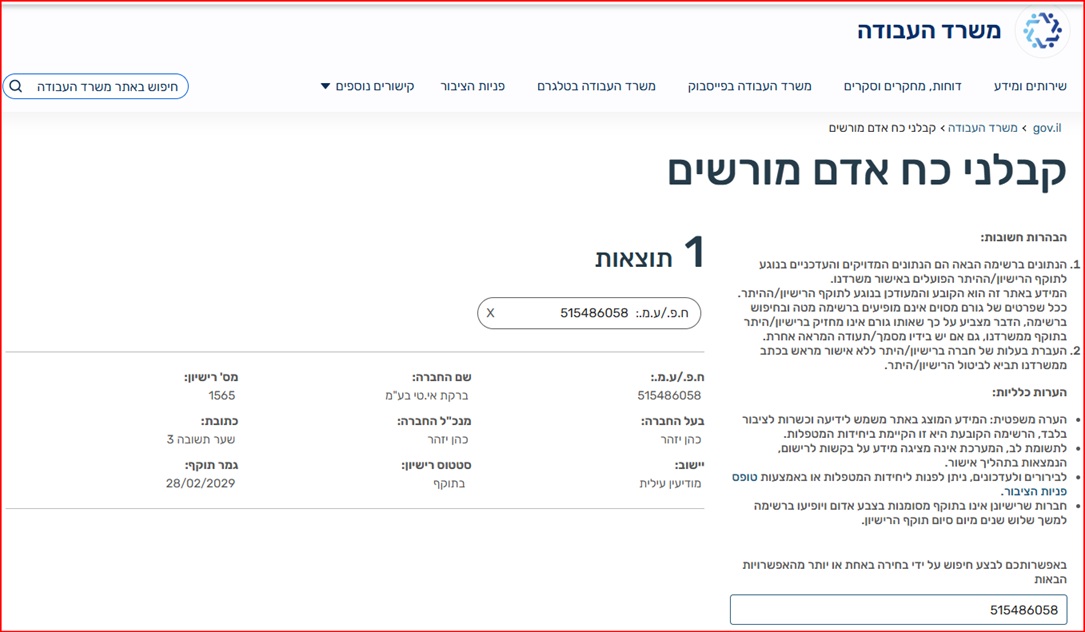
Export of services from Israel can, in certain cases, be taxed at a zero VAT rate. The idea is that a service provided from Israel to a foreign resident and consumed abroad should not carry Israeli VAT, so Israeli exporters stay competitive. Broadly, the recipient must be a foreign resident who is not present in Israel, the service must not relate to an asset located in Israel, and the benefit must be enjoyed abroad rather than effectively consumed in Israel. A zero rate is not the same as an exemption: a zero-rated transaction is still taxable at 0%, so the business normally keeps the right to recover input VAT, while an exempt transaction does not · a distinction that can be worth real money. The classification is fact-specific and rests on the documentation: the agreement, the invoice with its reference number, proof the client is a foreign resident and proof the money arrived from the client's bank abroad. Through NETO, a licensed manpower contractor (#1565), you can invoice the foreign client without opening a business file: NETO issues a proper invoice in English in the foreign currency, keeps the documentation, handles the bank compliance, and pays you as a payslip with full social rights. Because the rules turn on the exact facts, confirm your case with an accountant or tax lawyer before you rely on the zero rate.
This summary is generated from the page content and the linked sources · full detail below. It is not legal, tax or accounting advice.
Guide Summary
Export of services from Israel at a zero VAT rate · what it means, when it applies, and how to stay compliant. In brief:
- A zero rate may apply to services provided to a foreign resident and consumed abroad.
- Zero-rate is not exemption · a zero-rated deal stays taxable at 0% and usually keeps input-VAT recovery.
- The classification stands or falls on the documentation you keep.
- Through NETO you invoice the foreign client without opening a business file.
Table of Contents
- Why Israel Grants a Zero Rate on Exported Services
- The Conditions for the Zero Rate
- When a Service Counts as Consumed in Israel
- Zero-Rate vs Exemption · the Money Difference
- What the Invoice Must Show
- The Costly Bank-and-Reporting Pitfall
- Verifying Your Client Is a Foreign Resident
- How to Issue a Compliant Invoice · Step by Step
- Checklist Before Your Next Invoice
- Frequently Asked Questions
- Summary
Why Israel Grants a Zero Rate on Services Exported Abroad
VAT is designed to tax consumption that happens in Israel. When an Israeli freelancer or business sells a service that is really consumed outside Israel · to a client who lives and operates abroad · charging Israeli VAT would tax consumption that is not taking place here, and it would make Israeli exporters more expensive than their competitors in other countries. To avoid that, Israeli VAT law lets the export of services be taxed, in defined cases, at a zero rate rather than the standard rate.
The practical effect is that the foreign client is not billed Israeli VAT, while the transaction stays inside the VAT system as a taxable event. That last point is the part people miss: a zero rate is a genuine tax classification with its own conditions and its own paperwork · it is not a loophole and it is not automatic. Get the facts or the documentation wrong and the tax authority can reclassify the transaction and demand VAT after the fact.
- The purpose is to keep Israeli exporters competitive and to avoid taxing consumption that happens abroad.
- The zero rate is conditional · it depends on who the client is, where the service is consumed and what you can prove.
- It applies to services exported abroad · a related but separate regime governs the export of goods.
The Conditions the Zero Rate Depends On
Israeli VAT law sets out the case of a service given to a foreign resident. In broad terms, and without turning general information into a ruling on your specific deal, the conditions the tax authority looks at are cumulative · they generally all need to hold together:
The recipient of the service is a resident of another country · not an Israeli individual or an Israeli-registered company.
The client is not physically in Israel in connection with the service and is not registered with the Israeli tax authorities for it.
The service does not relate to an asset located in Israel · for example property or equipment physically here.
The real benefit of the service is enjoyed outside Israel, and the service is not effectively provided to, or also serving, someone in Israel.
A Real Scenario · When the Service Is Treated as Consumed in Israel
The condition that trips people up most is the last one · where the service is really consumed. It is easy to assume that if the invoice is addressed to a company abroad, the service is automatically an export. The tax authority looks deeper: it asks who actually enjoys the benefit of the work.
Take a designer in Israel hired by a foreign company. If the design is used by that company at its offices abroad, the picture points to consumption abroad. But if the same work is really serving the foreign company's Israeli branch, or an Israeli end-customer, or a property located in Israel, the authority may take the view that the service was consumed here · and that the zero rate does not fully apply, even though the client paying the invoice sits overseas. The label on the invoice does not decide it; the substance of who benefits does.
Zero-Rate vs Exemption · the Difference That Is Worth Money
People use "no VAT" loosely, but in VAT law a zero rate and an exemption are two different things · and for an exporter the gap can be worth real money. A zero-rated transaction is still a taxable transaction; the rate just happens to be 0%. Because it is taxable, the business normally keeps the right to recover the input VAT it paid on its own expenses. An exempt transaction is outside the taxable base, so as a rule the related input VAT cannot be recovered.
| Aspect | Exempt transaction | Zero-rated export of services |
|---|---|---|
| VAT charged to the client | None | None (rate is 0%) |
| Is it a taxable transaction? | No | Yes, taxable at 0% |
| Recover input VAT on expenses? | Generally no | Generally yes |
| Reported in VAT returns? | Yes, as exempt | Yes, as zero-rated |
| Depends on documentation? | Yes | Yes · strictly |
General comparison for orientation only · the treatment of your specific transaction depends on the VAT Law and its circumstances.
What a Zero-Rated Export Invoice Should Show · and the Documentation Behind It
A zero-rated export invoice is not just an ordinary invoice with the VAT line set to zero. The regulations expect the transaction to be documented so the zero-rate classification can be supported if it is ever reviewed. What most write-ups leave out is that the paperwork is not a formality · it is the thing that actually protects the rate. If the file is thin, the rate is fragile.
- A proper tax invoice with a reference number (an Israeli invoice), issued in English and in the foreign currency.
- The client's details as a foreign resident · name, country and address abroad, clearly identifying them as non-Israeli.
- The agreement and the work order describing what was done, for whom and where the benefit is enjoyed.
- Proof the funds arrived from abroad · a transfer from the client's own bank in their country.
- Correspondence and evidence supporting that the client is a foreign resident and that the service was consumed outside Israel.
The Costly Mistake · When the Bank Gets Dollars but the Reporting Does Not Add Up
There is a second layer beyond the tax classification: the money still has to arrive. Banks in Israel and abroad are bound by their regulators to check the source of cross-border funds · a process called compliance · to prevent money laundering and the financing of crime. When dollars or euros land in an Israeli account, the bank wants to see that the payment matches a real, documented transaction.
The expensive scenario is when the two layers disagree: the invoice claims a zero-rated export, but the supporting picture is inconsistent · the payer is not clearly the foreign client, there is no agreement or work order on file, the invoice has no reference number, or the details do not match the records. At that point the transfer can be delayed or held, and separately the VAT position can be questioned. Getting paid and staying compliant are the same job done well.
- The payer matches the client · money comes from the foreign client's own bank in their country.
- Every document tells the same story · agreement, work order, invoice and reference number line up.
- Supplier and client details are verified and match the authorities' records with a clean history.
How to Verify Your Client Really Is a Foreign Resident
Because the whole zero rate hangs on the client being a genuine foreign resident consuming the service abroad, it pays to establish that up front rather than assume it. None of these steps is a legal test on its own · together they build the evidence file that supports the classification.
Keep the client's incorporation or registration details showing a registered address abroad and no Israeli registration for the service.
Document that the work is used by the client outside Israel · not by an Israeli branch, an Israeli customer or an asset located in Israel.
Payment should come from the client's own bank in their country · a consistent trail that the bank's compliance check can follow.
How to Issue a Compliant Zero-Rated Invoice · Step by Step
Through NETO you can invoice a foreign client · as a salaried employee, without opening a business file · while the invoice, the documentation and the bank compliance are handled for you:
- 1 · Confirm the client is a genuine foreign resident · not present in Israel, not registered here for the service, and keep the evidence.
- 2 · Confirm the service is consumed abroad · the benefit is enjoyed outside Israel and not in respect of an Israeli asset or an Israeli party.
- 3 · Register with NETO · sign up as an employee in the NETO freelancer system, free of charge, and fill in Form 101.
- 4 · Issue the invoice · enter the client and transaction details; NETO issues a proper tax invoice in English in the foreign currency, marked as a foreign-client invoice.
- 5 · Keep the documentation · agreement, work order, invoice with reference number and proof of payment from the client's bank abroad · all retained to support the classification.
- 6 · Get paid as a payslip · once payment arrives and the work is confirmed, the funds reach your Israeli account with a payslip including National Insurance, pension and social rights.
A Practical Checklist Before You Issue the Next Invoice
Run through this before you treat a transaction as a zero-rated export. It is a prompt to think, not a go-ahead on its own · when in doubt, get it checked.
- Is the client a foreign resident, not present in Israel and not registered here for the service?
- Is the benefit of the service enjoyed abroad, with no Israeli branch, Israeli customer or Israeli asset also served?
- Do you have the agreement and work order describing the service and who benefits?
- Is the invoice proper and referenced, in English and in the foreign currency?
- Will payment arrive from the client's own bank abroad, matching the invoice?
- Have you confirmed the classification with a professional for anything non-obvious?
For an occasional export · a one-off project for a client abroad rather than an ongoing business · opening a full business file just for that can be heavier than the job warrants. Working through NETO lets you issue a single compliant invoice as a salaried employee and receive a payslip, without the overhead of registration and returns. See how to issue a one-time invoice and salary payment by invoice.
Frequently Asked Questions
What is zero-VAT on export of services?
It is a VAT rate of 0% that may apply, in certain cases, to a service provided from Israel to a foreign resident that is consumed abroad. It is not the same as an exemption: a zero-rated transaction is still a taxable transaction, which normally lets the business recover input VAT, whereas an exempt transaction does not. The classification depends on the VAT Law and the circumstances, so consult an accountant or a tax lawyer.
What conditions must be met for the zero rate to apply?
Broadly, the recipient must be a foreign resident who is not present in Israel, the service must not relate to an asset located in Israel, and the benefit of the service must be enjoyed abroad rather than effectively consumed in Israel. These conditions are cumulative and fact-specific · each case should be examined on its own merits and confirmed with a professional before you issue the invoice.
What is the difference between a zero rate and an exemption?
A zero rate means the transaction is taxable at 0%, so the business typically keeps the right to recover input VAT on its expenses. An exemption means no VAT is charged but input VAT generally cannot be recovered. For an exporter of services the difference can be worth real money, which is why the correct classification matters.
When is a service treated as consumed in Israel even though the client is abroad?
If the real benefit of the service is enjoyed in Israel, or the service also serves an Israeli resident or an asset located in Israel, the tax authority may take the view that the service was consumed in Israel and that the zero rate does not fully apply. This is a fact-specific question that should be checked with a professional.
What documentation should I keep for a zero-rated export invoice?
Keep the agreement with the client, the work order, the invoice with its reference number, correspondence showing the client is a foreign resident, and proof that the payment arrived from the client's bank abroad. Solid documentation is what supports the zero-rate classification if the transaction is later reviewed.
Can I invoice a foreign client at a zero rate without opening a business file?
Yes. Through NETO you are a salaried employee: NETO issues the tax invoice to the foreign client, handles the reporting and the bank compliance, and pays you as a payslip with full social rights, so you do not need to open a business file yourself.
Does NETO decide the VAT classification for me?
NETO issues a proper, compliant invoice and keeps the supporting documentation, but the correct VAT classification of your specific transaction depends on the VAT Law and its circumstances. For a binding answer, consult an accountant or a tax lawyer who specializes in international taxation.
Summary
Export of services from Israel can, in defined cases, be taxed at a zero VAT rate · the way the law keeps Israeli exporters competitive by not taxing consumption that really happens abroad. The rate is conditional: broadly, the client must be a foreign resident who is not present in Israel, the service must not relate to an Israeli asset, and the benefit must be consumed abroad and not effectively enjoyed in Israel. It is not an exemption · a zero-rated deal stays taxable at 0% and normally preserves input-VAT recovery, which is why the classification is worth getting right. And it lives or dies on the documentation: the agreement, the work order, a proper referenced invoice and proof the money arrived from the client's bank abroad.
Through NETO · a licensed manpower contractor (#1565) supervised by the Ministry of Labor · you can invoice a foreign client without opening a business file. NETO issues the invoice in English in the foreign currency, keeps the documentation, meets the bank compliance requirements, and pays you as a payslip with National Insurance, pension and full social rights. Because the outcome turns on the exact facts of your deal, confirm the VAT position with an accountant or a tax lawyer before you rely on it · then talk to us to issue the invoice.
Last updated: 10/07/2026 · general information, correct for 2026 and updated periodically.
Invoice Your Foreign Client · Compliantly and Without a Business File
A quick, free sign-up and within minutes you can issue a proper invoice in English, receive the payment to your Israeli account and get a payslip · with the documentation handled for you.
Related guides worth reading

Invoicing Foreign Clients
Issue a legal invoice to an overseas client in English and get paid · without a business file.
Read more
Salary Payment by Invoice
Get paid by invoice and receive a payslip · without opening a business file.
Read more
Issue a One-Time Invoice
A single compliant invoice for an occasional job · no business file required.
Read moreFreelancer · How to Start
The steps to start freelancing in Israel · without the bureaucracy.
Read more
NETO FAQ
Common questions about how NETO pays freelancers with full rights.
Read more