
Privacy Protection Law
The full text of Israel's Privacy Protection Law, 5741-1981 · the principles under which these Regulations were made.
Read moreWe use essential cookies to make the site work. With your consent, we also use measurement and advertising cookies from Google and Microsoft to understand how the site is used, improve it and measure our advertising. We never sell your data.
You can change your choice at any time via “Cookie settings” at the bottom of every page.

Log in to your account, or sign up in a minute.
Pick whatever works for you · we're here.
Everything about NETO · transparent and available
Pick a convenient time · we'll confirm by phone/email
The verbatim Hebrew of each key regulation, topic by topic · and, right beside it, an unofficial English translation and a plain-English explanation with an example. See exactly what the Regulations say, and what that means in practice for anyone managing a database in Israel.
The Protection of Privacy (Data Security) Regulations, 5777-2017 ("תקנות הגנת הפרטיות ("אבטחת מידע"), התשע״ז-2017") were made under the Protection of Privacy Law, 5741-1981 ("חוק הגנת הפרטיות, התשמ״א-1981") and set practical data-security duties for anyone who manages a database. The core: three security levels (basic, medium, high · regulation 1) derived from the characteristics of the database; the database definitions document (regulation 2); access-permission management by role (regulation 8); documenting and handling security incidents with immediate notice to the Registrar of a serious incident (regulation 11); and periodic audits once every 24 months (regulation 16). Below · the verbatim Hebrew of each key regulation, an unofficial English translation, a plain-English explanation, two worked examples and a short knowledge check.
The Protection of Privacy Law, 5741-1981 sets the principles · and the regulations made under it turn them into practical duties. The Protection of Privacy (Data Security) Regulations, 5777-2017, are the central regulations in the field: they apply to anyone who manages a database in Israel and set out exactly what must be done to secure it.
On this page, for each key topic, we first give an unofficial English translation of the regulation, and right beside it the verbatim Hebrew of the regulation (in the orange box), followed by a plain-English explanation with an example (the teal box). This is especially relevant to employers · including foreign companies hiring Israeli workers through an Employer of Record · who hold employees' personal data. As the legal employer, NETO manages that personal data in line with the Law and these Regulations on the client's behalf · access control, incident handling and respecting data-subject rights. See also our privacy policy.

The level is derived from the characteristics of the database under the First and Second Schedules.
Or more than 100 authorised persons in the database · then the high level applies.
In a medium or high database · an internal or external audit at least once every 24 months.
The database owner notifies the Registrar immediately and reports on the steps taken.
The Regulations do not impose the same burden on every database. Regulation 1 defines three security levels, and the level is set by the characteristics of the database · under the First and Second Schedules.
"Databases subject to the basic security level" – databases that are not of the types listed in the First or Second Schedule and are not a database managed by an individual;
"Databases subject to the medium security level" – databases of the types listed in the First Schedule that are not a database managed by an individual;
"Databases subject to the high security level" – databases of the types listed in the Second Schedule;
”מאגרים שחלה עליהם רמת האבטחה הבסיסית“ – מאגרי מידע שאינם מן הסוגים המפורטים בתוספת הראשונה או השנייה ואינם מאגר המנוהל בידי יחיד;
”מאגרים שחלה עליהם רמת האבטחה הבינונית“ – מאגרי מידע מן הסוגים המפורטים בתוספת הראשונה ואינם מאגר המנוהל בידי יחיד;
”מאגרים שחלה עליהם רמת האבטחה הגבוהה“ – מאגרי מידע מן הסוגים המפורטים בתוספת השנייה;
Databases subject to the high security level –
(1) a database as referred to in item 1(1) or (3) of the First Schedule, including a database of a public body within the meaning of section 23(1) of the Law that meets what is stated in items (1) or (3), which contains information about 100,000 people or more;
(2) a database as referred to in item 1(1) or (3) of the First Schedule, including a database of a public body within the meaning of section 23(1) of the Law that meets what is stated in items (1) or (3), in which the number of authorised persons exceeds 100.
מאגרי מידע שחלה עליהם רמת האבטחה הגבוהה –
(1) מאגר מידע כאמור בפרט 1(1) או (3) בתוספת הראשונה, לרבות מאגר של גוף ציבורי כמשמעותו בסעיף 23(1) לחוק המקיים את האמור בפרטים (1) או (3), שיש בו מידע על אודות 100,000 אנשים ומעלה;
(2) מאגר מידע כאמור בפרט 1(1) או (3) בתוספת הראשונה, לרבות מאגר של גוף ציבורי כמשמעותו בסעיף 23(1) לחוק המקיים את האמור בפרטים (1) או (3), שמספר בעלי ההרשאה בו עולה על 100.
Before you can secure a database you have to know what is in it. Regulation 2 requires every owner to prepare a document mapping the information, the purposes, the risks and the people responsible.
(a) A database owner shall define, in a database definitions document (hereinafter – the database definitions document), at least all of the following matters:
(1) a general description of the collection and use operations of the information;
(2) a description of the purposes of using the information;
(3) the various types of information contained in the database, having regard to the list of information types in item 1(3) of the First Schedule;
(4) particulars of any transfer of the database, or a substantial part of it, outside the borders of the State, or use of the information outside the borders of the State, the purpose of the transfer, the destination country, the manner of transfer and the identity of the transferee;
(5) information-processing operations carried out through a holder;
(6) the main risks of harm to the security of the information, and the manner of dealing with them;
(7) the name of the database manager, of the holder of the database and of the person in charge of information security in it, if such a person has been appointed.
(b) A database owner shall update the database definitions document whenever a significant change is made to the matters listed in sub-regulation (a), and shall examine the need for such an update, on account of technological or organisational changes or security incidents as referred to in regulation 11, each year by 31 December.
(c) A database owner shall examine, once a year, whether the information it keeps in the database is not more than is required for the purposes of the database.
(א) בעל מאגר מידע יגדיר במסמך הגדרות מאגר (להלן – מסמך הגדרות המאגר), את כל העניינים האלה לפחות:
(1) תיאור כללי של פעולות האיסוף והשימוש במידע;
(2) תיאור מטרות השימוש במידע;
(3) סוגי המידע השונים הכלולים במאגר המידע, בשים לב לרשימת סוגי המידע שבפרט 1(3) בתוספת הראשונה;
(4) פרטים על העברת מאגר המידע, או חלק מהותי ממנו אל מחוץ לגבולות המדינה או שימוש במידע מחוץ לגבולות המדינה, מטרת ההעברה, ארץ היעד, אופן ההעברה וזהות הנעבר;
(5) פעולות עיבוד מידע באמצעות מחזיק;
(6) הסיכונים העיקריים של פגיעה באבטחת המידע, ואופן ההתמודדות עמם;
(7) שמו של מנהל מאגר המידע, של מחזיק המאגר ושל הממונה על אבטחת מידע בו, אם מונה כזה.
(ב) בעל מאגר מידע יעדכן את מסמך הגדרות המאגר בכל עת שנעשה שינוי משמעותי בנושאים המפורטים בתקנת משנה (א), ויבחן את הצורך בעדכון כאמור, בשל שינויים טכנולוגיים ארגוניים או אירועי אבטחה כאמור בתקנה 11, בכל שנה עד 31 בדצמבר.
(ג) בעל מאגר מידע יבחן, אחת לשנה, אם אין המידע שהוא שומר במאגר רב מן הנדרש למטרות המאגר.
One of the central principles of data security · not everyone who works in an organisation needs access to all the information. Regulation 8 requires access to be granted by role, and only to the extent required.
(a) A database owner shall set the access permissions of authorised persons to the database and to the database systems, in accordance with job definitions; the access permission for each role shall be to the extent required for the performance of the role only.
(b) A database owner shall maintain an up-to-date record of roles, the access permissions granted to them, and the authorised persons filling those roles (hereinafter – the list of valid permissions).
(א) בעל מאגר מידע יקבע הרשאות גישה של בעלי הרשאות למאגר המידע ולמערכות המאגר, בהתאם להגדרות תפקיד; הרשאת הגישה לכל תפקיד תהיה במידה הנדרשת לביצוע התפקיד בלבד.
(ב) בעל מאגר מידע ינהל רישום מעודכן של תפקידים, הרשאות הגישה שניתנו להם, ושל בעלי ההרשאות הממלאים תפקידים אלה (להלן – רשימת ההרשאות התקפות).
When something goes wrong · a breach, unauthorised use, a leak · the Regulations set out what to document, how to respond, and when reporting to the Registrar is mandatory. This is the heart of dealing with security incidents.
(a) A database owner is responsible for documenting every case in which an event is discovered that raises a concern of harm to the integrity of the information, of its use without permission or of exceeding a permission (hereinafter – security incidents); as far as possible, that documentation shall be based on automatic logging.
(b) In the security procedure, the database owner shall also lay down provisions on dealing with information-security incidents, according to the severity of the incident and the degree of sensitivity of the information, including on the cancellation of permissions and other immediate steps required, and also on reporting to the database owner on security incidents and on the actions taken following them.
(c) In a database subject to the medium security level, the owner shall hold a discussion at least once a year on the security incidents and examine the need to update the security procedure; in a database subject to the high security level, such a discussion shall be held at least once a quarter.
(d) Where a serious security incident has occurred –
(1) the database owner shall notify the Registrar of it immediately, and shall also report to the Registrar on the steps it took following the incident;
(2) the Registrar may direct the database owner, other than a database owner of those listed in section 13(e) of the Law, after consulting the head of the National Cyber Directorate, to notify a data subject who may be harmed by the incident of the security incident.
(א) בעל מאגר מידע אחראי לתיעוד כל מקרה שבו התגלה אירוע המעלה חשש לפגיעה בשלמות המידע, לשימוש בו בלא הרשאה או לחריגה מהרשאה (להלן – אירועי אבטחה); ככל האפשר יבוסס התיעוד האמור על רישום אוטומטי.
(ב) בנוהל האבטחה יקבע בעל מאגר מידע גם הוראות לעניין התמודדות עם אירועי אבטחת מידע, לפי חומרת האירוע ומידת רגישות המידע, לרבות לעניין ביטול הרשאות וצעדים מיידיים אחרים הנדרשים וכן לעניין דיווח לבעל המאגר על אירועי אבטחה ועל פעולות שננקטו בעקבותיהם.
(ג) במאגר מידע שחלה עליו רמת האבטחה הבינונית, יקיים בעל המאגר דיון אחת לשנה לפחות באירועי האבטחה ויבחן את הצורך בעדכונו של נוהל האבטחה; במאגר מידע שחלה עליו רמת האבטחה הגבוהה, ייערך דיון כאמור אחת לרבעון לפחות.
(ד) אירע אירוע אבטחה חמור –
(1) יודיע על כך בעל המאגר לרשם באופן מיידי, וכן ידווח לרשם על הצעדים שנקט בעקבות האירוע;
(2) רשאי הרשם להורות לבעל מאגר המידע, למעט לבעל מאגר מידע מן המנויים בסעיף 13(ה) לחוק, לאחר שנועץ בראש הרשות הלאומית להגנת הסייבר, להודיע על אירוע האבטחה לנושא מידע שעלול להיפגע מן האירוע.
Security is not a one-off event. Regulation 16 requires a check from time to time · independently · that the measures really exist and function.
(a) In a database subject to the medium or high security level, the owner is responsible for ensuring that, at least once every 24 months, an internal or external audit is carried out, by a party suitably qualified to audit information-security matters who is not the security officer of the database, in order to verify its compliance with the provisions of these Regulations.
(b) In the audit report, the auditor shall report on the suitability of the security measures to the security procedure and to these Regulations, identify deficiencies and propose the measures required to remedy the situation.
(c) The database owner shall consider the audit reports transmitted to it, and examine the need to update the database definitions document or the security procedure in their light.
(d) A database owner subject to the high security level may fulfil the duty set out in this regulation as part of the conduct of a risk survey that satisfies what is stated in sub-regulation (b).
(e) An organisation that owns several databases may fulfil the duty set out in this regulation by means of a single audit covering all the databases in its possession that are at the same security level.
(א) במאגר מידע שחלה עליו רמת האבטחה הבינונית או הגבוהה, בעל המאגר אחראי לכך שתיערך, אחת ל־24 חודשים לפחות, ביקורת פנימית או חיצונית, על ידי גורם בעל הכשרה מתאימה לביקורת בנושא אבטחת מידע שאינו ממונה האבטחה של המאגר, כדי לוודא את עמידתו בהוראות תקנות אלה.
(ב) בדוח הביקורת ידווח המבקר על התאמת אמצעי האבטחה לנוהל האבטחה ולתקנות אלה, יזהה ליקויים ויציע אמצעים הדרושים לתיקון המצב.
(ג) בעל מאגר המידע ידון בדוחות הביקורת שיועברו לו, ויבחן את הצורך בעדכון מסמך הגדרות המאגר או נוהל האבטחה בעקבותיהם.
(ד) בעל מאגר מידע שחלה עליו רמת האבטחה הגבוהה, רשאי לקיים את החובה הקבועה בתקנה זו במסגרת עריכת סקר סיכונים שמתקיים בו האמור בתקנת משנה (ב).
(ה) ארגון שהוא בעל כמה מאגרי מידע, רשאי לקיים את החובה הקבועה בתקנה זו במסגרת ביקורת אחת לעניין כל מאגרי המידע שברשותו, המצויים באותה רמת אבטחה.
Two cases show how the same system of levels and duties works on different databases. The examples are for illustration only · the precise classification depends on the characteristics of the database under the Schedules.
NETO runs an employment and payments platform and manages personal data in line with the Law and the Regulations · data security, access management and respecting data-subject rights. For foreign companies hiring in Israel through our Employer of Record, NETO is the legal employer and handles privacy and data-security compliance for the employed worker on your behalf. Operating under Bareket I.T Ltd, manpower license #1565. Talk to us and we'll explain.
Five short questions on the main points of the Regulations. Choose an answer for each · the system will mark it immediately and show the relevant regulation.
1 How many security levels do the Regulations set?
Correct · regulation 1 sets three security levels: basic, medium and high, by the characteristics of the database.
2 When does a database fall into the high security level under the Second Schedule?
Correct · under the Second Schedule, the high level applies when the database holds information about 100,000 people or more, or the number of authorised persons exceeds 100.
3 Under regulation 8, how is the access permission for each role set?
Correct · regulation 8(a) provides that the access permission for each role shall be to the extent required for the performance of the role only.
4 What must the owner do when a serious security incident occurs?
Correct · regulation 11(d) requires notifying the Registrar immediately and reporting on the steps taken following the incident.
5 How often is a periodic audit required in a medium or high database?
Correct · regulation 16(a) provides for an internal or external audit at least once every 24 months, by a party who is not the security officer.
The Protection of Privacy (Data Security) Regulations, 5777-2017, are the practical side of securing databases in Israel · three security levels, a database definitions document, access management, incident handling and audits. For each topic on this page we gave the verbatim Hebrew of the regulation next to an unofficial translation and an explanation. NETO manages personal data in line with the Law and the Regulations, under manpower license #1565.
Further reading: Privacy Protection Law · the full text · NETO privacy policy · Wage Protection Law. Consolidated text: the Regulations on Nevo.
Last updated: 27 July 2026 · the regulation text was cross-checked against the consolidated Hebrew version on NevoThe full text of Israel's Privacy Protection Law, 5741-1981 · the principles under which these Regulations were made.
Read moreHow wages must be paid and protected in Israel · in plain language for employers and workers.
Read more
The main labor laws, regulations and orders · a convenient roundup for employers and workers.
Read moreThis page makes the law accessible · it summarizes, explains and gives examples so it is clear and simple to understand. At the same time we insist on accuracy and authenticity · because in law every word and comma can matter.
Full transparency on adjustments: the statutory wording is quoted from the official source. The only differences are visual house-style ones and did not change the words of the law, the section numbers or the substantive punctuation. This is an unofficial translation · the binding text is the Hebrew original.
 YC
YCEvery section, organized by topic. Browse the full hierarchy or jump straight in.
Adjust the site to your needs
Here you can ask to see the data we hold about you, correct it, delete it, withdraw consent you gave, or stop receiving our emails and alerts. We reply within 30 days, and handle removal requests within 7 business days. Privacy policy
Barkat I.T Ltd · trading as NETO · is a licensed manpower company (license 1565), supervised by the Israeli Ministry of Labor.
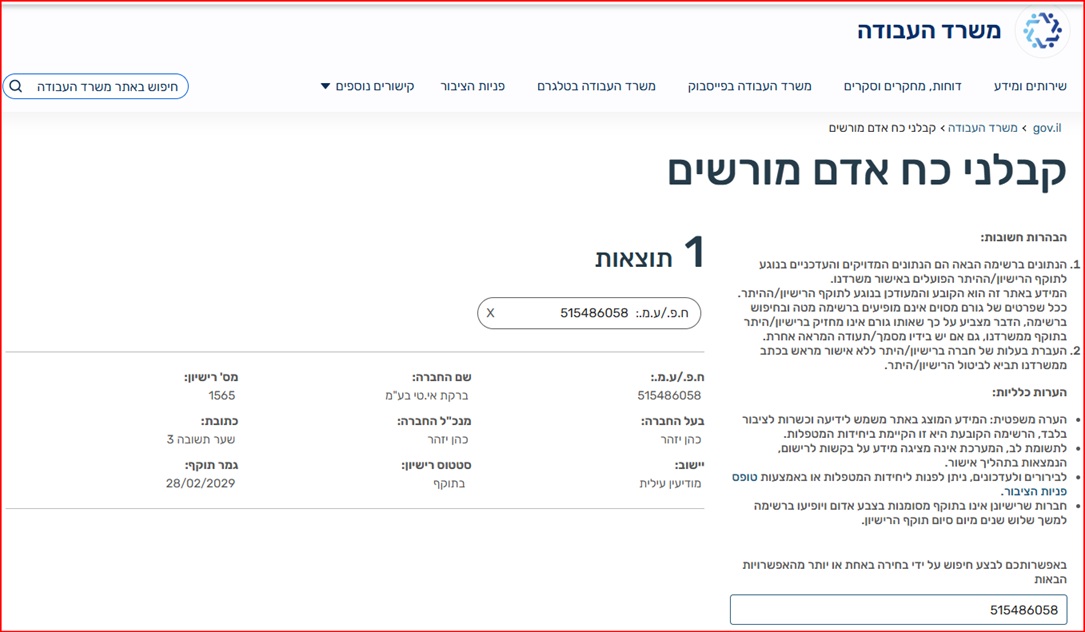 Verify the license on the Ministry of Labor website
Full details · Manpower contractor license page →
Verify the license on the Ministry of Labor website
Full details · Manpower contractor license page →